



Framed Canine Oil
Framed canine oil paintings capture the character and companionship of dogs through the enduring medium of nineteenth and twentieth-century brushwork.
Framed Canine Oil
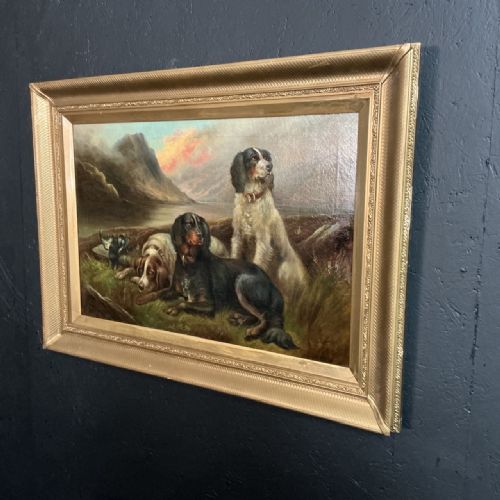
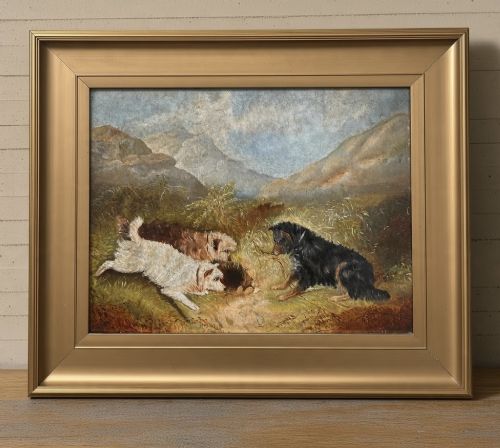
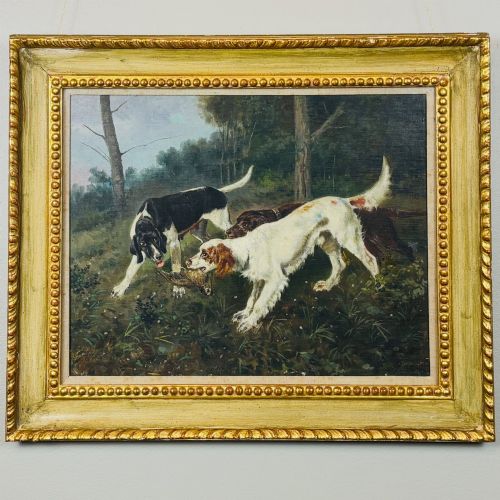
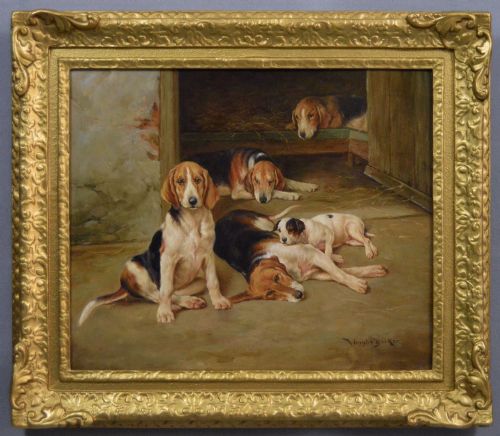
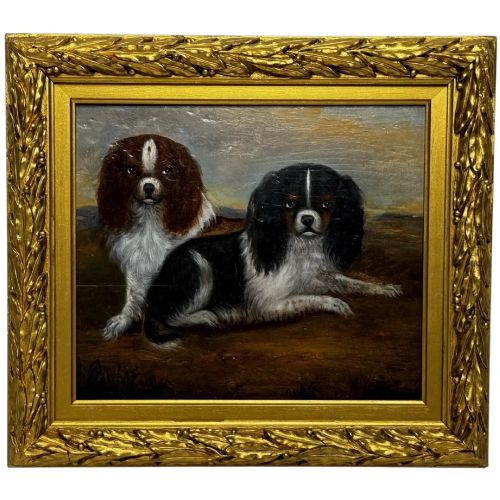
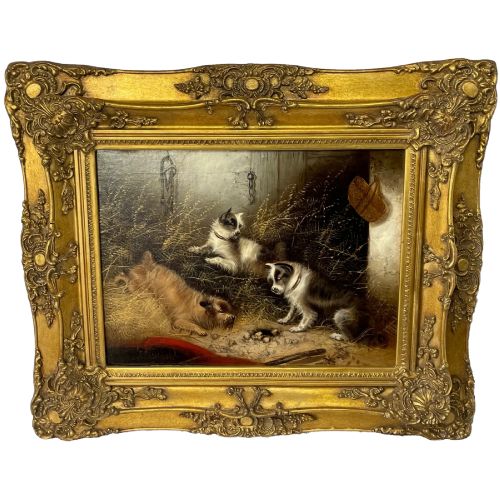
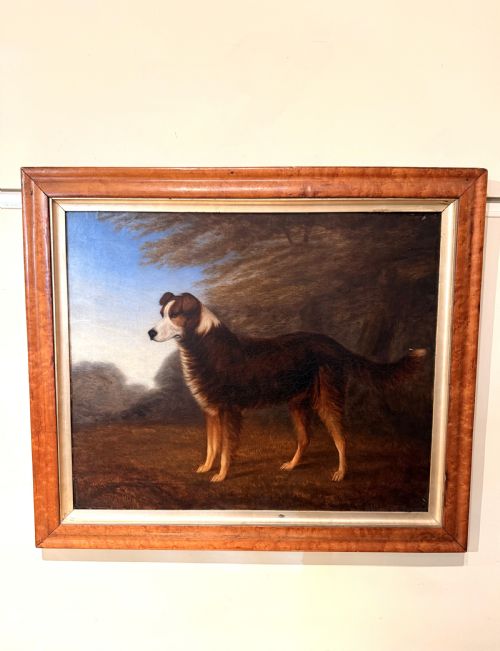
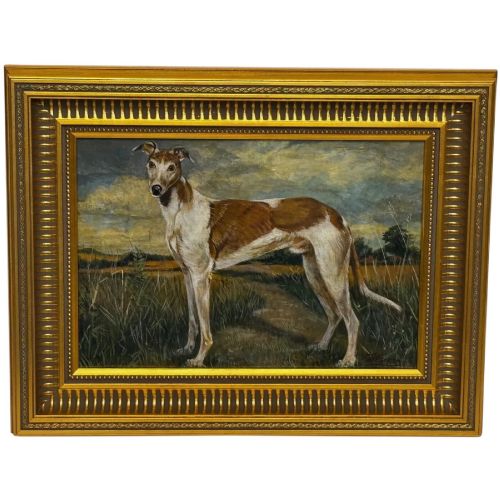
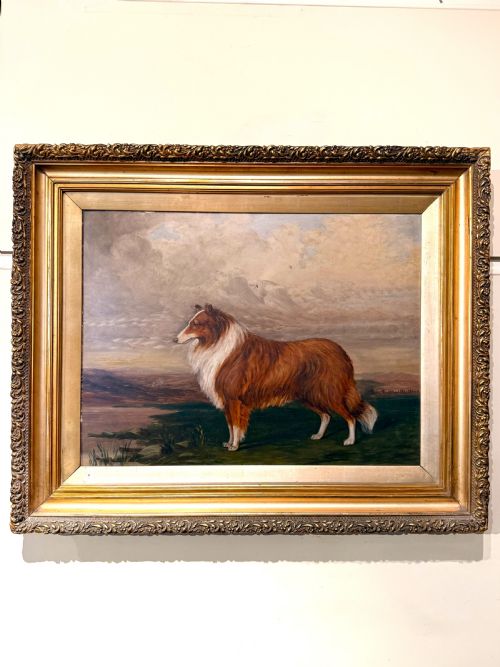
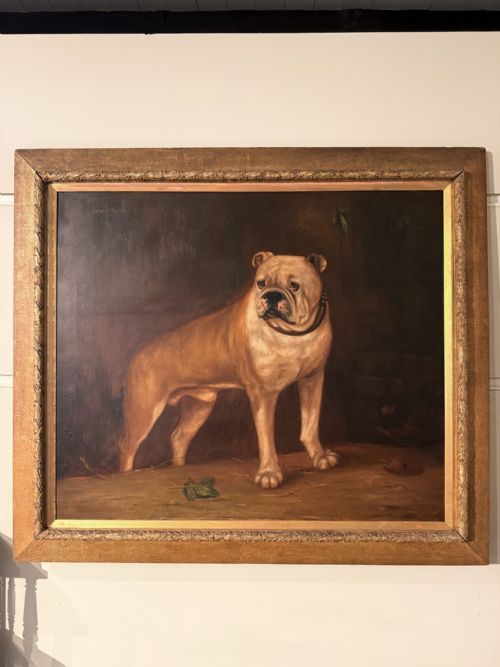
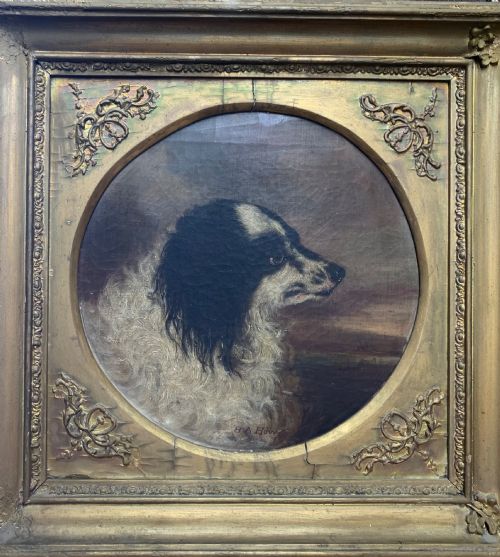
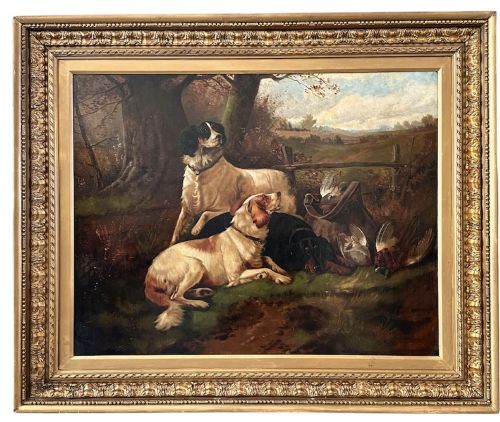
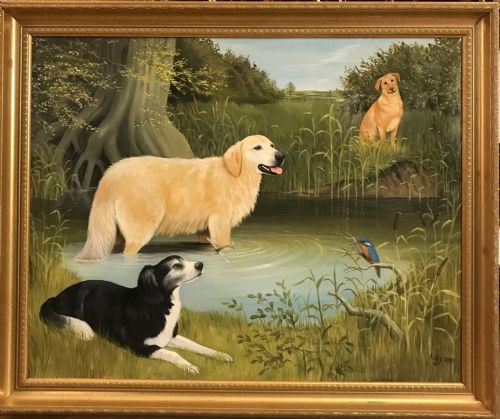
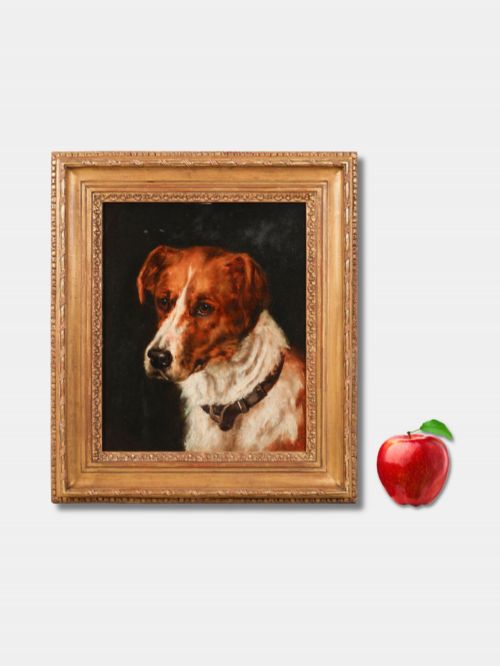
A framed canine oil presents a painted study of dogs, spanning individual portraits, working terriers, and sporting animals set within landscapes or courtyards. These works reflect both domestic affection and the traditions of British and French sporting art.
Nineteenth-century and Victorian examples dominate the selection, alongside pieces from the early and mid-twentieth century. Buyers frequently encounter spaniels, terriers, collies, and gun dogs rendered with varying degrees of academic precision.
The format ranges from intimate oil on board studies to large framed canvases that place the animal firmly at the centre of the composition. Each piece demonstrates how artists recorded specific breeds over successive eras.
Materials and technique
Painters applied oil paint directly onto stretched canvas or wooden boards, building up layers of pigment to capture the texture of a dog's coat and the play of light in a landscape. Brushwork varies from tight, detailed realism to looser, more expressive handling.
Surviving works are typically housed in wooden frames, frequently enhanced with gilt, gold leaf, or gilded wood finishes that complement the warm tones of the painted subjects.
Framed Canine Oil Retail Price Guide 2026
Typical asking prices for framed canine oil among the pieces listed under this phrase on Sellingantiques today, from the lower quarter to the upper quarter. They describe what is for sale here now, not the wider market.
Listings feature works from the Regency period through to the mid-twentieth century, executed in oil on canvas or board.
Judgement of quality
Quality rests upon the artist's command of anatomy, posture, and the intelligent expression of the animal rather than mere scale or subject matter. The most accomplished paintings capture the distinct personality and physical presence of the breed with anatomical conviction.
The integrity of the canvas and the preservation of the original paint layer determine the visual strength of the piece. Frame condition and the harmony between the moulding and the era of the painting further influence the overall character of the work.
Edward Armfield·Valentine T. Garland·John Sargent Noble·John Emms·John Frederick Herring Senior·William Barraud·Sir Edwin Landseer·Colin Graeme Roe·John Trivett Nettleship
The Framed Canine Oil Glossary
- Oil on canvas
- A traditional painting medium where coloured pigments are suspended in a drying oil and applied to a woven fabric support. This combination allows for rich colour blending and textured brushwork.
- Giltwood
- Timber carved and surfaced with a thin layer of gold leaf or metallic powder. It provides a reflective, decorative border that traditionally elevates the status of a framed painting.
- Sporting art
- A genre of painting dedicated to rural pursuits, hunting dogs, and working animals in natural environments. It gained immense popularity during the Victorian era.
- Primitive
- A descriptive term for paintings executed with a flat perspective and straightforward technique, often associated with provincial or self-taught artists.
Framed Canine Oil: Frequently Asked Questions
How do I date a canine oil painting?
Dating relies on examining the stretcher construction, canvas type, and the style of the gilt frame alongside any visible signatures or inscriptions. Clothing or landscape elements within the background also offer clues to the period.
Breed standards and popular types changed over the centuries, helping to narrow down the decade in which the portrait was painted.
Are these paintings original works?
The selection includes original painted portraits from life as well as period copies after well-known animal painters like Sir Edwin Landseer. Each piece represents a hand-painted work from its respective era.
Provenance and signature evidence help distinguish between primary studies and contemporary copies.
How should I hang a framed oil?
Position the painting away from direct sunlight and fluctuating heat sources to protect the canvas and the wooden frame. Adequate wall support is necessary due to the combined weight of the timber and the framed oil.
Keep the centre of the canvas at eye level to best appreciate the detail of the brushwork.
What subjects are most common?
Terriers, spaniels, and gun dogs dominate the visual record, reflecting the working and domestic roles of dogs in past centuries. Many are depicted outdoors in landscapes or guarding property.
Group portraits and dogs with game bags also appear frequently in nineteenth-century sporting art.