
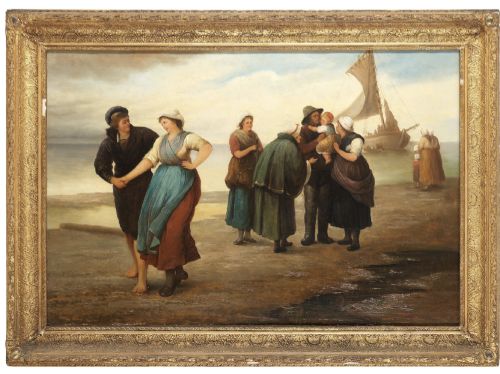
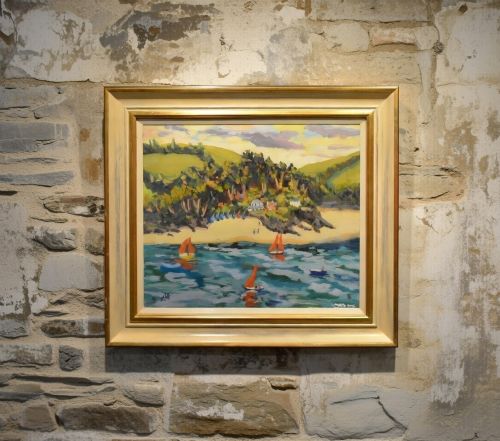
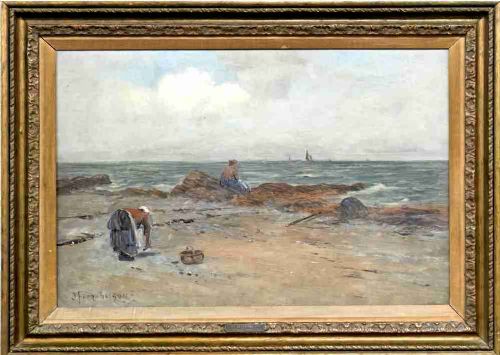


Framed Beach Picture
A framed beach picture brings the movement of coastal tides and shores straight into a room through oil and watercolour.
Framed Beach Picture
A framed beach picture captures coastal life, sandy shores, and marine harbours across various periods from the nineteenth century onwards. Buyers searching for a framed beach picture encounter traditional oil paintings, watercolours, and signed prints housed within protective surrounds.
The selection ranges from Victorian marine landscapes and British Impressionist coastal scenes to later twentieth-century interpretations of seaside life. Traditional subjects include fisher folk, beached fishing boats, children playing on the sand, and dramatic cliffs along British and European shores.
Materials and Technique
Artists record coastal scenes using oil paint applied to canvas or watercolour and pigment on paper. Support materials rely on sturdy wooden stretchers and heavy paper stocks suited to fluid washes and thick pigment layers.
Works are presented behind glass where works are on paper, or left open in the case of oil paintings on canvas. Moulded wooden frames, often finished with gesso or hand enamel, complete the construction.
Several Victorian artists evidently spent considerable time painting damp boots and sandy ankles on the shoreline.
Judging Quality
Quality rests in the handling of light, atmosphere, and maritime movement by the painter. Stronger examples demonstrate confident brushwork and accurate perspective in rendering figures, boats, and coastal topography.
The integrity and period appropriateness of the frame also contribute significantly to the piece. Original or complementary framing enhances the overall visual impact of the artwork.
Lucy Pratt·Joseph Farquharson·James Webb·Frederick William Hattersley·John Mitchell·Jeffrey Pratt·William Russell Flint·Owen Bowen·Madeline Hughes·William Greaves·Edmund Gouldsmith·William Shayer·Thomas Bush Hardy
The Framed Beach Picture Glossary
- Gesso
- A plaster-like material applied to wood frames to create a smooth surface for gilding or painting. It provides structural detail and decorative relief around the edge of the artwork.
- Impressionism
- An art movement focusing on transient effects of light and ordinary subject matter. Works in this style employ visible brushstrokes and natural lighting.
- Marine Landscape
- A genre of art depicting ships, seas, and coastal environments. These scenes focus on maritime activities, tides, and coastal architecture.
- Watercolour
- A painting method where coloured pigments are suspended in a water-based solution. Artists apply these transparent washes onto paper to achieve luminous effects.
Framed Beach Picture: Frequently Asked Questions
How do I date a framed beach picture?
Dating relies on stylistic clues within the brushwork, the clothing of figures depicted, and the framing materials. Signatures and gallery labels on the reverse also help establish the period.
Paper stock, canvas type, and backing boards offer further physical evidence for determining whether a piece originates from the Victorian era or later decades.
Where should I hang a beach painting?
These works suit spaces with good indirect natural light that enhances the pigments without causing fading. Wall placement away from direct heat sources protects both the canvas and the frame.
Consider pairing the artwork with neutral wall colours that allow the coastal tones and blues of the sea to stand out clearly.
Are watercolours framed differently from oils?
Watercolours require glass protection and mounts to keep the paper from touching the glazing. This barrier prevents moisture damage and preserves the delicate pigments.
Oil paintings on canvas are typically left unglazed to let the texture of the paint and canvas remain visible to the viewer.
What subjects appear in these coastal scenes?
Common motifs include working fishing boats at low tide, dramatic cliffs, lighthouses, and figures gathering shells or fish along the shore. Scottish and Welsh coastal locations frequently appear alongside French scenes.
Artists document both everyday coastal labour and leisurely seaside pastimes, reflecting the changing social attitudes toward the beach across different decades.