



Framed Barn Painting
These framed barn painting works capture rural life on canvas, paper and wood, offering a window into traditional agriculture and pastoral scenes.
Framed Barn Painting
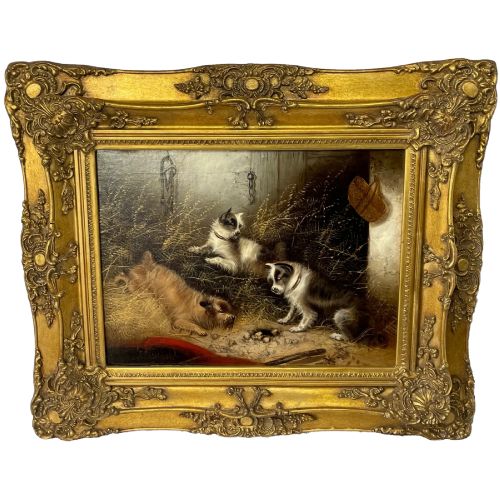
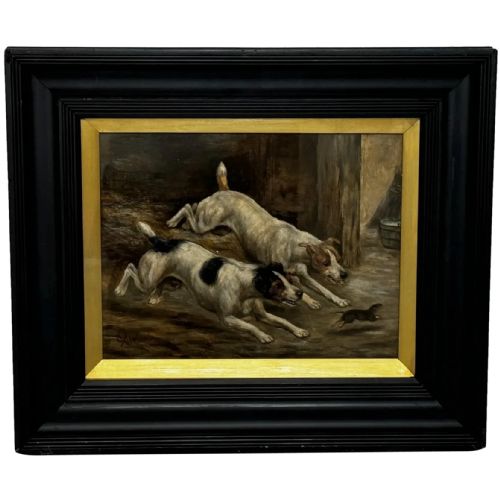
A framed barn painting depicts agricultural buildings, farmyards and rural livestock scenes across various periods from the eighteenth century to the mid-twentieth century. These artworks reflect the changing nature of rural life, recording everything from working terriers ratting in stables to quiet pastures with sheep and cattle.
The pieces appearing most frequently span the Victorian era and the early twentieth century, showing British Impressionism, Victorian realism and pastoral styles. Artists render these rustic structures in oil paint on canvas or panel, alongside watercolours framed behind glass.
Subjects range from quiet interiors with sheltering livestock to busy farmyard scenes featuring horses, sheep, dogs and farm workers. Each composition places the barn or stable at the heart of the rural economy, documenting historical farming methods and animal husbandry.
Materials and technique
Artists painted primarily in oil on canvas or wood panels, building up layers of pigment to create depth in the rustic textures of stone, timber and thatch. Watercolour paintings on paper provide a lighter alternative, often preserved beneath glass within burr wood or giltwood frames.
Giltwood and gold leaf frames frequently enclose these canvases, adding a formal boundary that contrasts with the earthy tones of the rural subject matter. Wood serves both as a rigid support for oil paintings and as the material for period frames.
Framed Barn Painting Retail Price Guide 2026
Typical asking prices for framed barn painting among the pieces listed under this phrase on Sellingantiques today, from the lower quarter to the upper quarter. They describe what is for sale here now, not the wider market.
Materials span canvas, wood, paper, gold leaf and giltwood, deployed across oils and watercolours.
Evaluating the work
Quality rests upon the artist's ability to render light, texture and anatomical proportion within animals and architectural structures. Stronger works display confident brushwork in the depiction of weathered timber and livestock, whereas weaker examples rely on formulaic compositions.
The integrity of the frame contributes significantly to the overall piece, with original giltwood or burr frames holding higher regard than later replacements. The handling of atmosphere, particularly in pastoral light and shadow, separates standard decorative works from accomplished fine art.
Edward Armfield·Harry Bright·James Kyd·Julius Caesar Ibbetson·Thomas Sidney Cooper·Robert Russell MacNee·John Percy Cooke·George Armfield·Ernest Higgins Rigg·Nora Munro Summers·Owen Bowen·Anthonij Anton Mauve·Frank Moss Bennett·Louis Marie Dominique Robbe·Thomas Blinks·William Shayer Snr
The Framed Barn Painting Glossary
- Oil on Canvas
- Pigment mixed with drying oil applied to a stretched woven fabric support. This combination allows for rich colour blending and textured impasto application.
- Giltwood
- Wood carved and coated with a thin layer of gold leaf or metallic powder. It provides a reflective, ornate border for traditional paintings.
- Victorian Genre Painting
- Artworks depicting scenes from everyday life, frequently featuring people, animals and domestic or agricultural settings. These pieces often tell a narrative story within a realistic domestic or rural environment.
- Watercolour Painting
- Pigments suspended in a water-soluble base applied to paper. It creates transparent washes of colour that require protective framing under glass.
- Burr Frame
- A picture frame constructed from wood veneer showing swirling, knotty grain patterns. It adds a decorative, organic texture around watercolours and fine art.
Framed Barn Painting: Frequently Asked Questions
What periods do these paintings cover?
The works span from the eighteenth century through the Victorian period and into the mid-twentieth century. They trace the evolution of rural painting styles from early pastoral scenes to British Impressionism.
Most examples date from the nineteenth and early twentieth centuries, reflecting changing approaches to agricultural subjects.
How should I care for an oil painting?
Keep paintings away from direct sunlight and fluctuating humidity levels to protect the canvas and wooden stretcher bars. Dust frames gently with a dry, soft cloth without applying cleaning liquids.
Avoid hanging pieces above active heat sources to prevent the oil paint and canvas from drying out and cracking.
Are watercolours framed differently from oils?
Watercolours on paper require glass protection and mounts to keep the paper away from the surface. Oil paintings on canvas remain unglazed to allow the paint surface to breathe.
Frames for watercolours often incorporate burr wood veneer, whilst oil paintings frequently feature gilded wooden moulding.
What subjects appear besides barns?
Barns share space with farmyard animals including sheep, cattle, horses and working terriers. Figures of shepherds, milkmaids and farm workers often appear tending to livestock.
Surrounding landscapes include rolling pastures, cart sheds, stable interiors and farmhouse yards.