


Framed Narrative Art
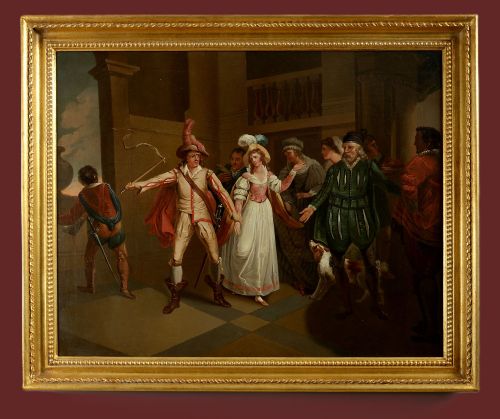
Framed antique narrative art captures a story upon canvas or paper, bringing historical, literary and domestic scenes into the home.
Framed Narrative Art
Framed antique narrative art encompasses works that tell a story, drawing from literature, mythology, religion, historical events and everyday domestic life. These pieces serve as visual storytelling mediums preserved across various formats from past centuries.
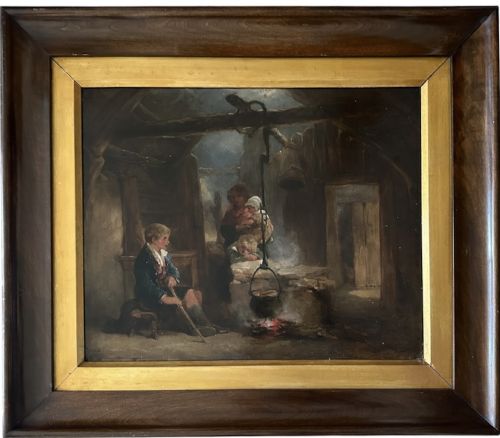
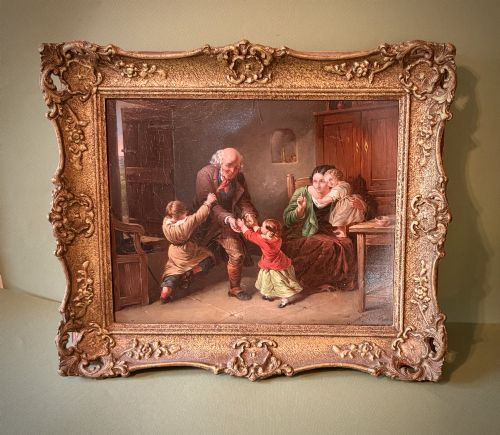
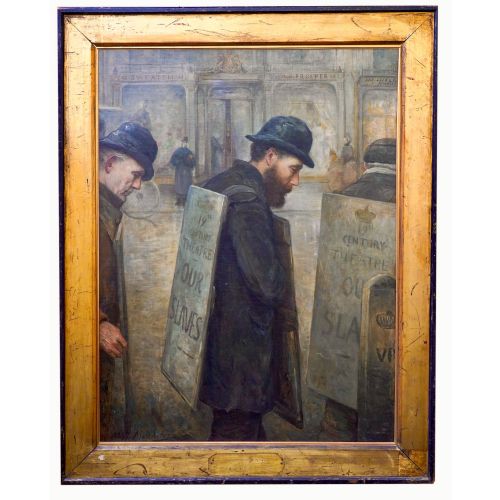
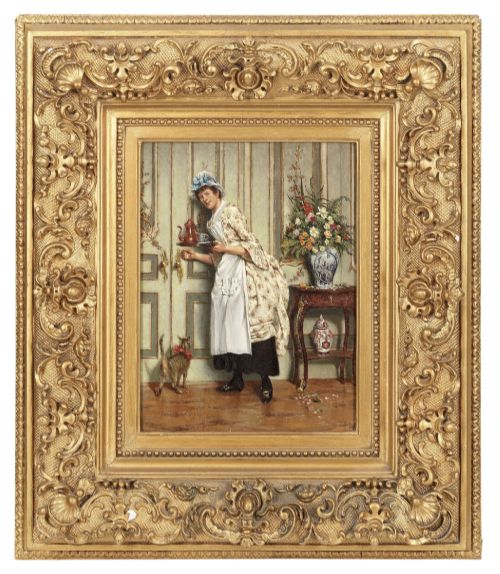
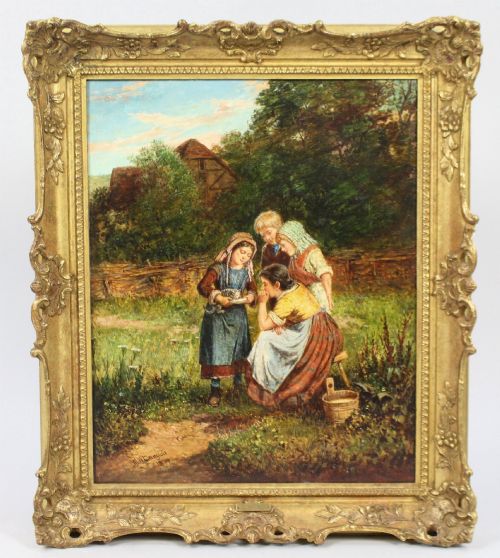
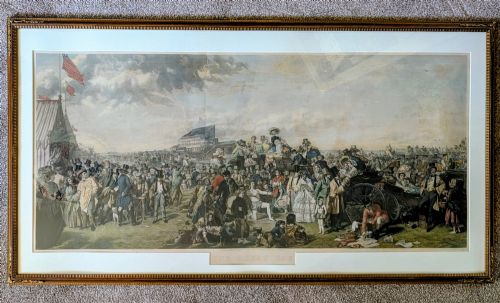
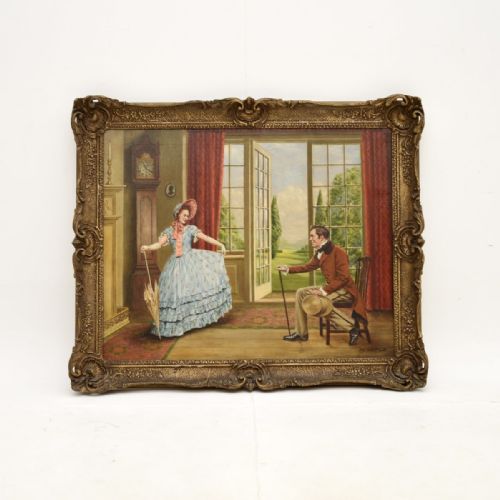
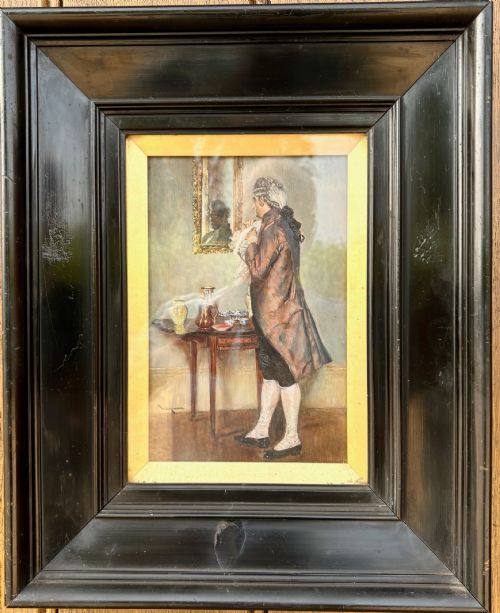
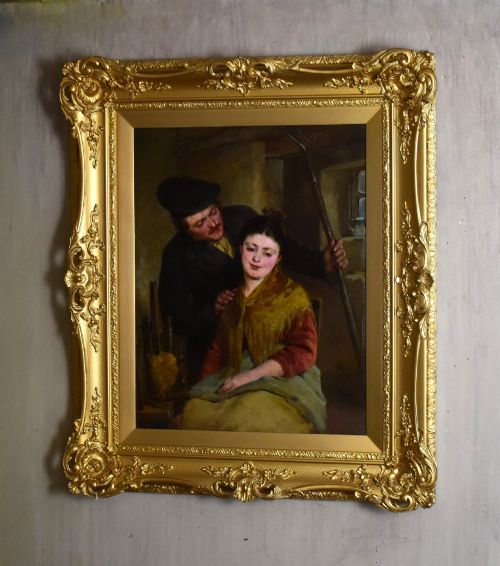
Buyers on this page are most likely to encounter nineteenth-century oil paintings and prints depicting genre scenes, literary adaptations and historical episodes. Victorian oil paintings of domestic interiors and social history subjects feature prominently among the available works.
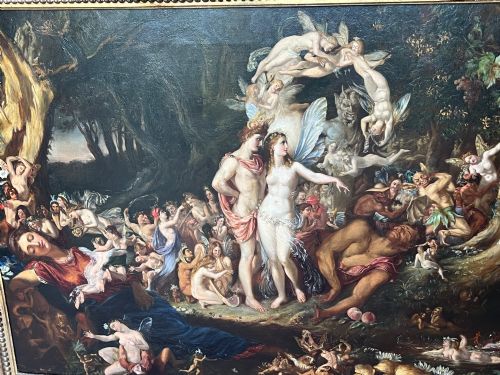
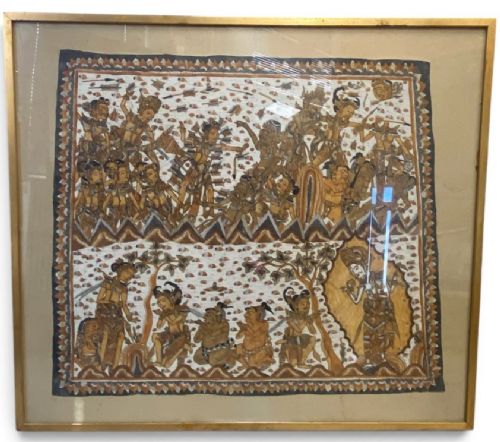
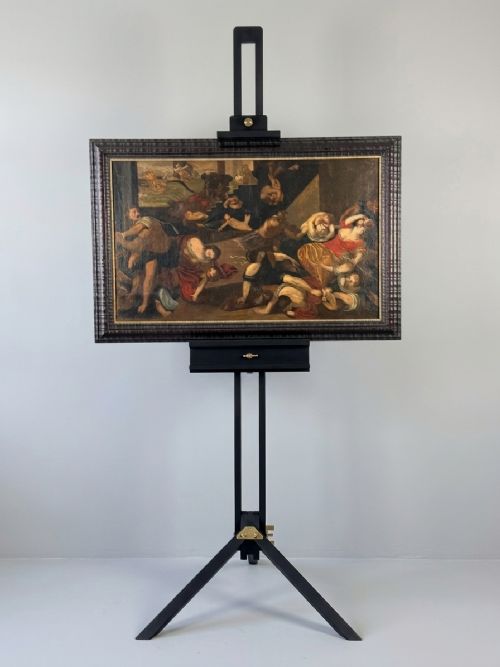
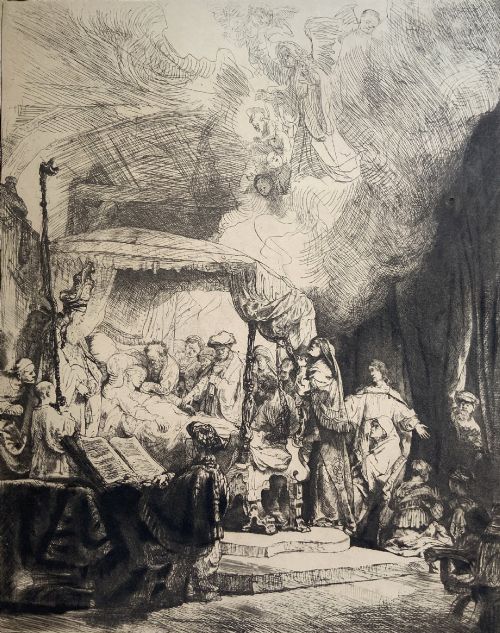
The selections range from grand classical and biblical compositions to intimate cottage scenes and prints after well-known artists. Works on canvas, panel and textile provide diverse physical expressions of narrative traditions.
Materials and Techniques
Artists primarily employed oil paint applied to canvas or wood panels, building up layers of pigment and glaze to achieve depth and detail. Watercolours and prints on paper also form a significant portion of the works, often incorporating etching or engraving techniques.
Frames play an integral structural and aesthetic role, frequently constructed from wood and embellished with gesso and gilt. Original frames such as Hogarth mouldings or heavy giltwood surrounds complete the presentation of these historical pieces.
Listings feature works spanning the nineteenth century, including Victorian genre scenes, Edwardian pieces and earlier Georgian works.
Assessing Quality
Quality in these works resides in the fidelity of the draughtsmanship, the expressive capability of the brushwork and the psychological depth of the figures portrayed. Superior pieces demonstrate confident handling of light, shadow and narrative tension within the composition.
The integrity of the original medium, the preservation of the paint surface and the matching historical context of the frame contribute to the overall standard of a piece. Works executed by established painters with documented exhibition histories display a higher degree of artistic execution.
Sir Joseph Noel Paton·Felix Stone Moscheles·Stephen Samuel Lewin·Mark William Langlois·Alfred Lyndon Grace·Howard Helmick·William Hogarth·James Hamilton·Charles Hunt·Abraham Cooper·Delapoer Downing·James Kyd·Harry Brooker·Byam Shaw·Charles Burton Barber·William Arthur Breakspeare·Charles Bellay·John Arthur Lomax·Charles Haigh Wood·Haynes King
The Framed Narrative Art Glossary
- Genre painting
- Depictions of everyday life, ordinary people and domestic interior scenes rather than grand historical or mythological subjects. These works offer a window into social history and common domestic routines.
- Giltwood
- Wood that has been covered with a thin layer of gold leaf. This material is commonly found on traditional frames surrounding fine art pieces.
- Gesso
- A plaster-like mixture used as a base for paint or moulded into decorative reliefs on wooden frames. It provides a smooth surface for gilding and ornamentation.
- Etching
- A printmaking technique where lines are incised into a metal plate with acid before ink is applied and transferred to paper. This method allows for fine, detailed narrative illustrations.
- Oil on canvas
- Pigments bound in a drying oil medium spread across a stretched woven fabric support. It remains one of the primary surfaces for historical paintings.
Framed Narrative Art: Frequently Asked Questions
What is narrative art?
Narrative art is visual work that tells a specific story, whether drawn from a literary source, historical event, religious text or daily domestic scene. These pieces invite the viewer to interpret an unfolding moment or recognise a familiar tale.
In antique works, this storytelling often reflects the moral, social or aesthetic values of the period in which the artist lived. Figures, expressions and settings are carefully arranged to communicate a clear plot or emotional atmosphere.
How do I date a framed narrative piece?
Dating relies on a combination of stylistic clues, artist signatures, framing materials and physical evidence on the reverse of the canvas or panel. Costume details, architectural elements and painting techniques often point to specific decades such as the Victorian era.
Records of exhibitions, artist life spans and historical printing methods help narrow down the timeframe. Examining the construction of the frame and the type of canvas stretcher used also provides reliable chronological markers.
Where should I hang a large oil painting?
Large oil paintings require a stable wall space away from direct sunlight, excessive moisture and rapid temperature fluctuations. Placing them in principal living areas or hallways allows the composition and its detailed narrative to be viewed comfortably.
Ensure the wall structure can support the weight of heavy giltwood frames and that the mounting hardware is securely fixed. Proper lighting enhances the texture of the oil paint without causing glare on the varnished surface.
What is the difference between an oil painting and a print?
An oil painting is a unique, hand-painted original where pigments are applied directly to a canvas or panel by the artist. Each brushstroke is singular, offering textured surfaces and distinct layers of colour.
A print is a reproduction or an original graphic work produced on paper using techniques such as engraving, etching or lithography. While prints can still be antique and highly detailed, they are produced in multiples rather than being a one-off painted creation.