




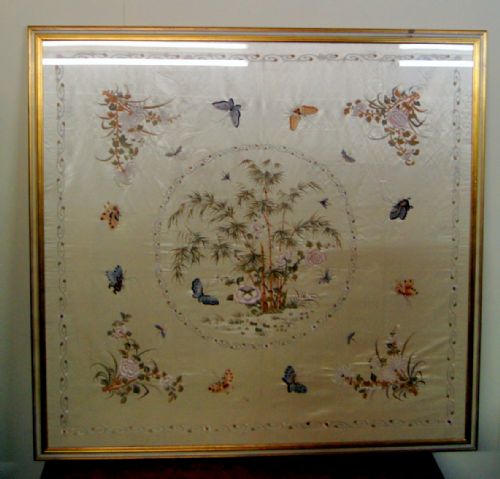
Framed Chinoiserie Panel
A framed antique chinoiserie panel brings decorative scenes of traditional East Asian motifs into domestic interiors.
Framed Chinoiserie Panel
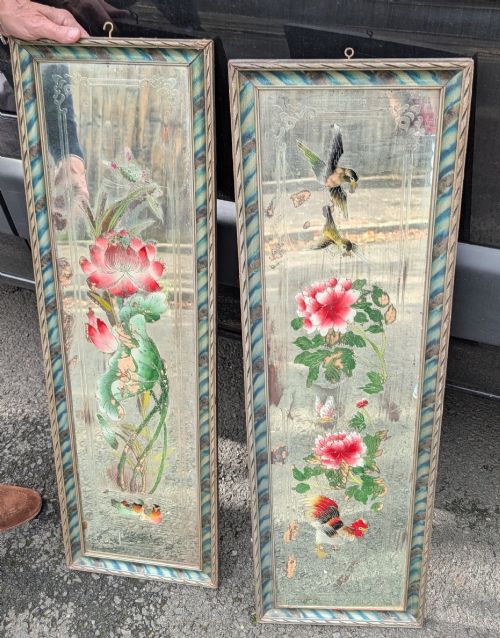
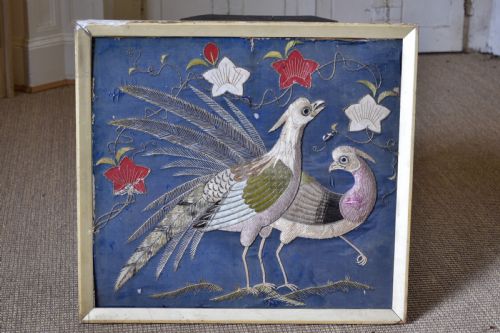
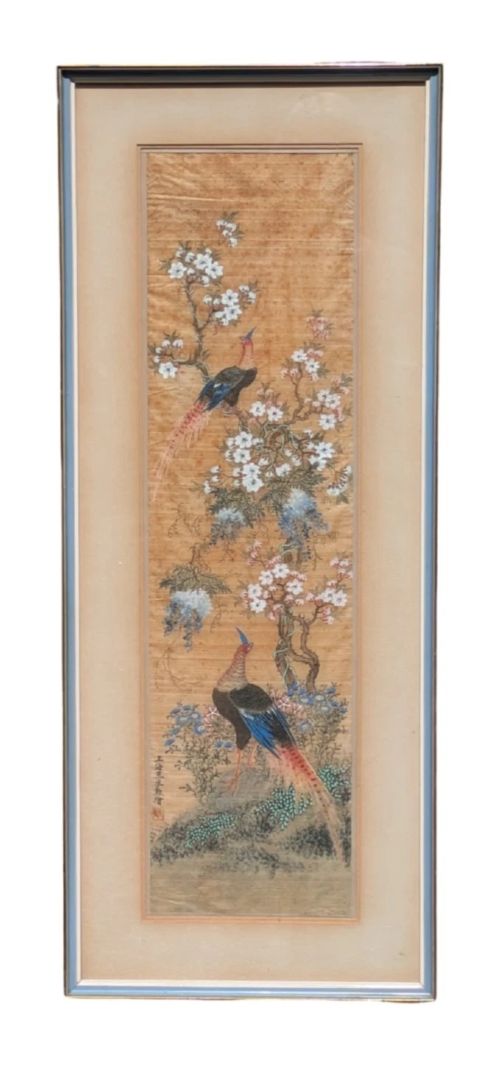
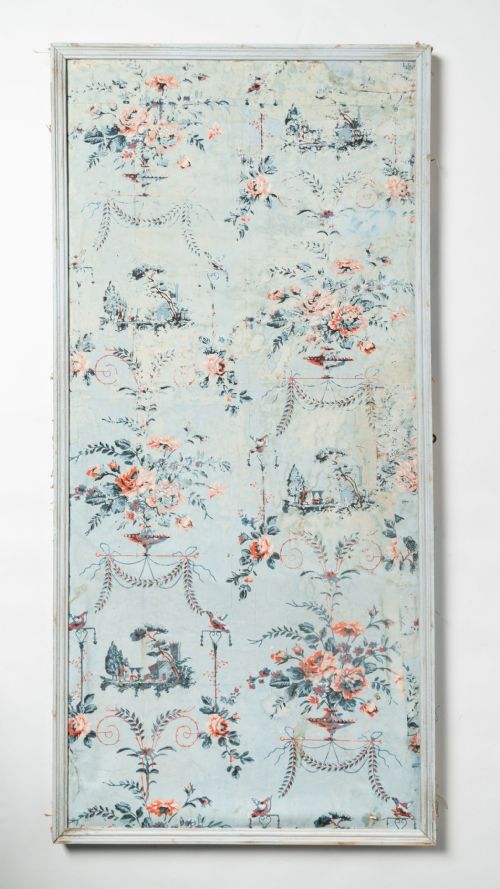
A framed antique chinoiserie panel gathers wall art, mirrors, and textiles produced across the eighteenth and nineteenth centuries. Buyers searching for a framed antique chinoiserie panel encounter hand-painted silks, embroidered textiles, reverse paintings on glass, and painted paper panels.
The nineteenth century provides the greatest share of surviving examples, alongside eighteenth-century works and later pieces from around nineteen hundred and nineteen forty. These objects typically take the form of wall hangings, mirrors, or framed canvases intended for interior display.
Materials and construction methods
These works rely on textiles such as silk and canvas combined with wood frames, often incorporating glass or mirror glass for protection and reflection. Pigment and paint are applied directly to canvas, paper, or silk surfaces.
Current listings feature materials including silk, canvas, wood, glass, and mirror glass across the eighteenth and nineteenth centuries.
Assessing the grade of a panel
Quality rests in the execution of the hand-painted or embroidered detail, where fine brushwork and dense needlework distinguish superior examples. The preservation of the original silk, canvas, or paper surface dictates the overall visual impact.
The integration of the frame, whether housing a mirror, an oil painting, or a textile, influences the coherence of the piece. Earlier eighteenth-century origins and French or Qing dynasty stylistic interpretations also shape the character of each example.
The Framed Chinoiserie Panel Glossary
- Chinoiserie
- European interpretation and imitation of traditional Chinese and East Asian artistic traditions. This style appears frequently across eighteenth and nineteenth-century panels.
- Reverse painting on glass
- An image painted directly onto the rear surface of a glass plate so that the finished composition is viewed through the transparent front. This technique produces a reflective and glossy finish.
- Mandarin duck
- A common subject in traditional textile embroidery representing fidelity and marital happiness. These birds frequently appear alongside garden scenes.
- Wall panel
- A flat decorative section intended for mounting on a wall surface. These items include framed canvases, embroidered textiles, and painted paper.
Framed Chinoiserie Panel: Frequently Asked Questions
What periods do these panels come from?
The pieces span from the eighteenth century through the nineteenth century, with specific examples dated around eighteen ninety, nineteen hundred, and nineteen forty.
Surviving works reflect various eras including the Qing dynasty and the Victorian period.
What materials were used?
Makers utilised wood, glass, mirror glass, silk, canvas, paint, and pigment. Textile panels feature detailed silk embroidery.
Other examples employ oil or watercolour paint applied to canvas, paper, or glass.
How were they displayed?
These panels function primarily as wall art and wall hangings. Some incorporate mirrors to combine decoration with reflective utility.
Others are framed as textiles, paintings, or decorative wall papers for interior display.
Are these French or Chinese origin?
The listings include both Chinese decorative works and French interpretations of chinoiserie style. French canvas panels sit alongside authentic Chinese embroideries and watercolours.
Both origins share the characteristic motifs associated with the aesthetic.