




Framed Cameos
Framed antique cameos bring classical mythology and portraiture inside the home through miniature works mounted for display.
Framed Cameos
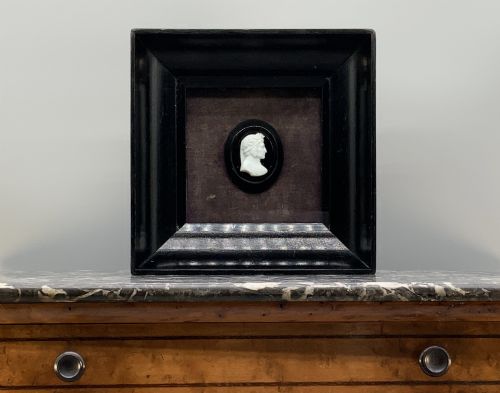
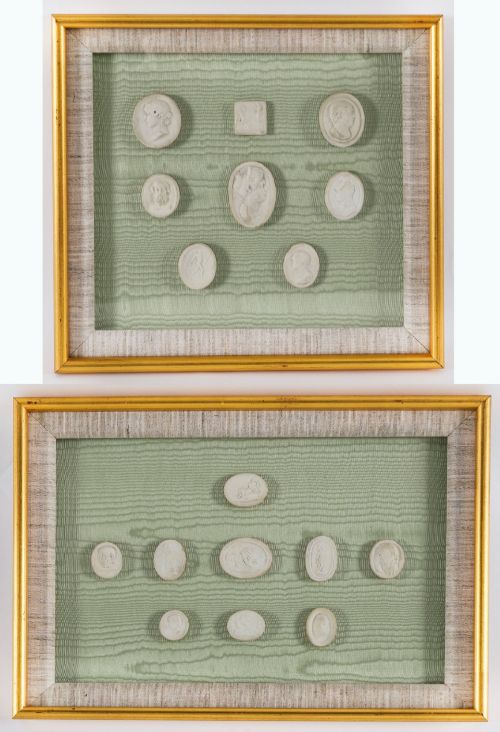
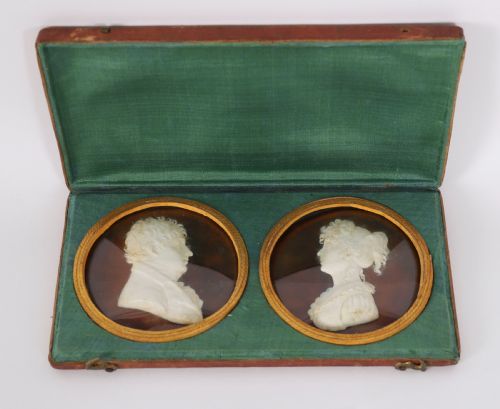
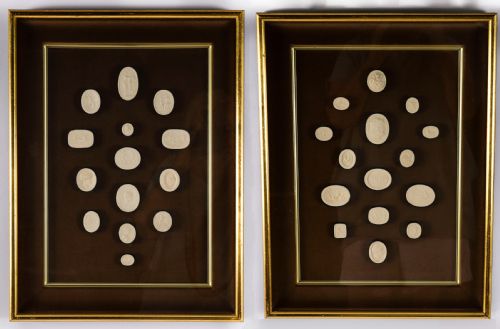
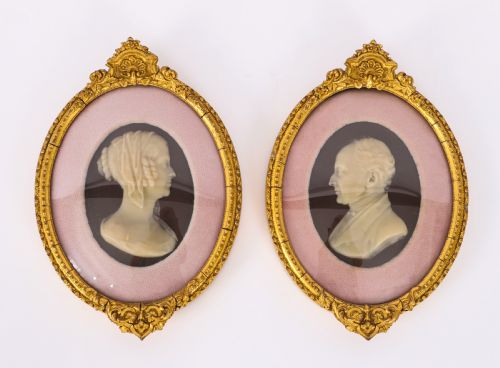
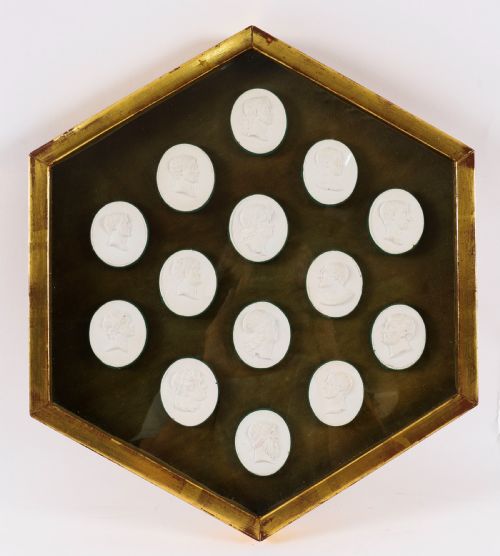
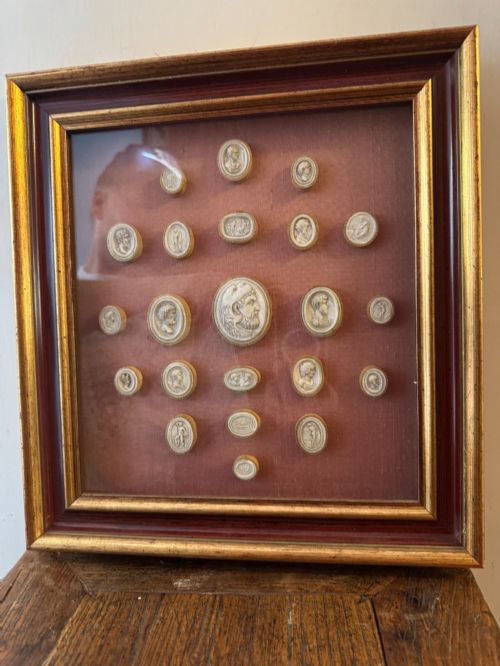
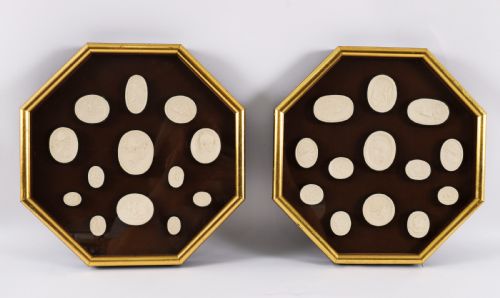
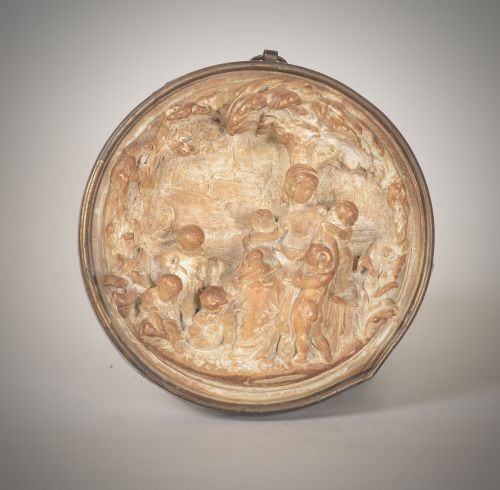
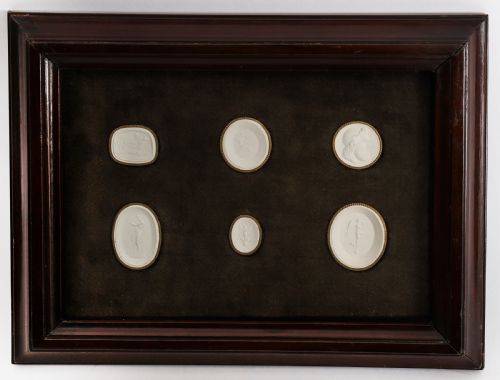
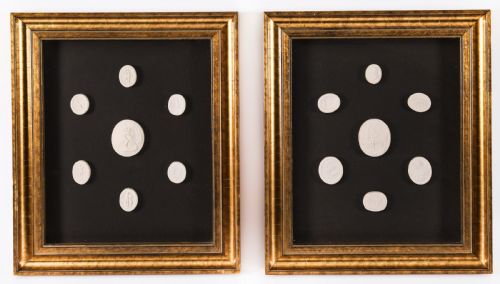
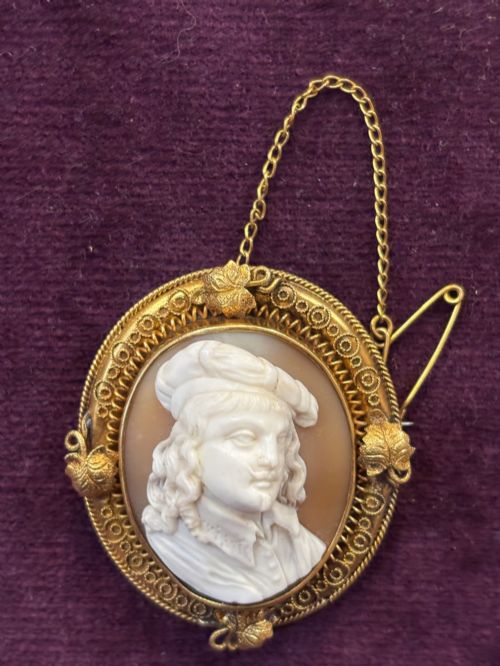
Framed antique cameos encompass wall plaques, shadow boxes, and collections of intaglios assembled during the eighteenth and nineteenth centuries, particularly through the tradition of the Grand Tour. These pieces range from single shell portraits mounted in gold to extensive sets of plaster and glass paste casts arranged in timber frames.
Buyers will most frequently encounter nineteenth-century plaster and sulphur casts produced by Italian workshops, alongside individual shell and hardstone carvings set into giltwood or velvet-lined boxes. These items served as both travel souvenirs and scholarly collections for European travellers.
The material evidence spans Georgian, Regency, and Victorian periods, with Neoclassical designs dominating the output. Makers such as Giovanni Liberotti and Pietro Bracci appear alongside anonymous studio productions of classical deities and historical dignitaries.
Materials and methods
The construction of these works relies on carved shell, hardstone, gypsum plaster, and glass paste, set against backgrounds of velvet, fabric, or painted wood. Plaster intaglios were cast from ancient originals and mounted in series within wooden frames, while wearable brooches utilised sardonyx, agate, and layered helmet shell.
Frames utilise giltwood, carved walnut, and gilt brass, often incorporating shadow box depths to accommodate multiple raised medallions. Backings frequently employ heavy paper or card over wooden panels, secured with period glazing and traditional fixings.
Framed Cameos Retail Price Guide 2026
Typical asking prices for framed cameos among the pieces listed under this phrase on Sellingantiques today, from the lower quarter to the upper quarter. They describe what is for sale here now, not the wider market.
Grand Tour travellers routinely bought plaster casts of Roman emperors just to prove to the folks back home they made it to Italy.
Distinctions in craftsmanship
The mountings also determine grade, separating mass-produced souvenir sets from signed studio pieces by makers like Giovanni Liberotti or Pietro Bracci, housed in substantial giltwood or fitted velvet frames.
Giovanni Liberotti·Pietro Bracci·R. Pernice·James Tassie·Minton
The Framed Cameos Glossary
- Intaglio
- An engraved gem or cast where the design is incised below the surface, allowing it to function as a seal or to produce positive impressions.
- Grand Tour
- An extended journey through Europe undertaken by upper-class young men during the eighteenth and nineteenth centuries to collect art and antiquities.
- Pate sur pate
- A ceramic decorating technique where liquid white clay is applied in successive layers upon a coloured body to create a low relief cameo effect.
- Glass paste
- A vitreous compound melted and poured into moulds to imitate carved gemstones and classical cameos.
- Pinchbeck
- An alloy of copper and zinc developed in the eighteenth century to resemble gold, commonly utilised for frames and mounts.
Framed Cameos: Frequently Asked Questions
How were framed cameos displayed?
Framed cameos were historically hung upon walls or displayed on cabinet surfaces as evidence of a classical education and travelled background.
Larger collections were arranged in grid formats within shadow boxes so scholars could study multiple mythological profiles at once.
What is the difference between a cameo and an intaglio?
A cameo projects outward in relief from its background, presenting a raised portrait or scene designed strictly for visual appreciation.
An intaglio carves the design inward below the surface plane, originally serving utilitarian functions such as sealing wax documents.
How do I date a framed plaster collection?
Dating relies heavily upon the framing materials, backing papers, and handwriting annotations found on the reverse of the mounting boards.
Early nineteenth-century examples often feature simple timber mouldings and handwritten paper labels identifying the classical subjects.
Are these pieces fragile?
Plaster and glass paste casts require careful handling to avoid chipping and should be kept away from excessive moisture and direct sunlight.
Wall-mounted frames should be secured using appropriate weight-bearing fixings to protect the antique timber and glass.