




Framed Abstract Wall Art
Framed abstract wall art brings mid-century modernism and mid-century abstract composition into interiors through canvas, board, and paper.
Framed Abstract Wall Art
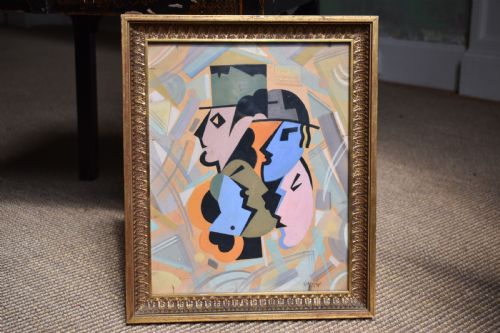
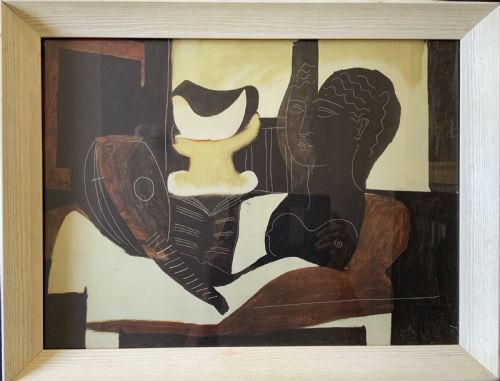
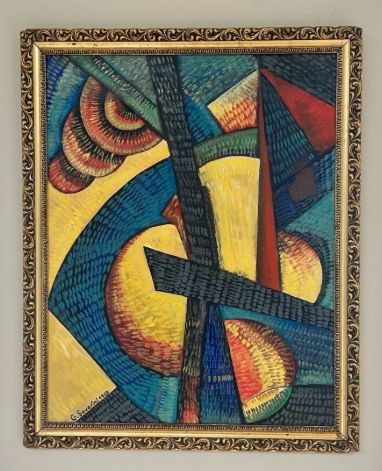
Framed abstract wall art encompasses paintings, prints, and drawings produced primarily across the 1920s, 1940s, 1950s, and 1960s. These pieces reflect modernist movements including cubism, abstract expressionism, and mid-century modernism.
The selection on this page consists heavily of mid-century abstract oil paintings on canvas and board, alongside works on paper using watercolour, gouache, and ink. Buyers encounter cityscapes, still lifes, portraits, and landscapes executed within these twentieth-century idioms.
Materials and construction methods
Artists painted primarily with oil and impasto onto wooden board or stretched canvas, building textured surfaces that define many mid-century pieces. Works on paper utilise watercolour, gouache, and ink, often mounted behind glass.
Wood frames enclose these paintings and prints, providing structural support and period context that complement the modernist compositions.
One canvas captures vowing solely to break vows, proving mid-century artists possessed a sharp sense of humour.
Distinctions in execution and depth
Quality rests in the handling of medium and form, distinguishing confident brushwork and impasto application from tentative execution. The cohesion of line, colour, and geometric or organic abstraction dictates the visual strength of each composition.
Provenance and documented artist attribution elevate individual works, connecting specific paintings to known schools such as St Ives or recognised regional modernists.
Mark Ingram·Pablo Picasso·Tony Giles·Denis Mitchell·Gino Severini·William Littlejohn·Edward Carter Preston·Derek Latimer Sayer·Horst·William McCance·Adrian Heath·Lester Epstein·Antonio Ferri·Leon Kossoff·Richards Rubin·William Ernst Burwell·Murphy
The Framed Abstract Wall Art Glossary
- Impasto
- Paint applied thickly to a canvas or board, standing out in relief from the surface and catching the light. This technique adds tactile dimension to mid-century abstract compositions.
- Gouache
- An opaque water-based paint that dries to a matte finish. Artists frequently employed it on paper for vibrant modernist and cubist works.
- Cubism
- An early twentieth-century avant-garde art style that revolutionised European painting by breaking down subjects into geometric planes and multiple viewpoints. It heavily influenced later abstract works.
- St Ives School
- A group of artists based in Cornwall associated with modernism and abstract art from the 1940s onward. Their output forms a distinct regional strand of British abstract painting.
- Abstract expressionism
- A post-world war movement focused on spontaneous, subconscious creation and energetic application of paint. It prioritises emotional intensity over figurative representation.
Framed Abstract Wall Art: Frequently Asked Questions
What periods do these abstract artworks date from?
The pieces span the twentieth century, with concentrations from the 1920s, 1940s, 1950s, and 1960s.
Mid-century modernism and abstract expressionism dominate the selection, reflecting post-war artistic developments.
Are all pieces supplied with frames?
The selection includes framed oil paintings, gouaches, and prints ready for hanging.
Original framing often accompanies the artwork, preserving the mid-century aesthetic.
What surfaces were used for these paintings?
Artists utilised stretched canvas and wooden board for oil and impasto works.
Works on paper incorporate watercolour, gouache, and ink, usually protected under glass.
How do cubist works differ from abstract landscapes?
Cubist pieces break subjects like interiors or still lifes into geometric planes and angles.
Abstract landscapes retain horizon lines or organic forms while departing from strict realism.