


Fox Hunting Oil Artwork
Fox hunting oil artwork captures the urgency and tradition of the chase through layered pigment and spirited brushwork.
Fox Hunting Oil Artwork
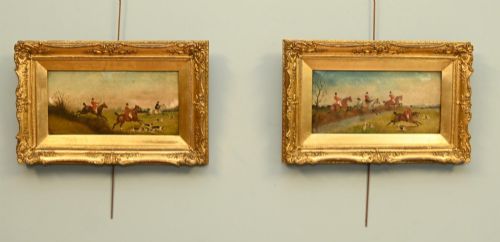
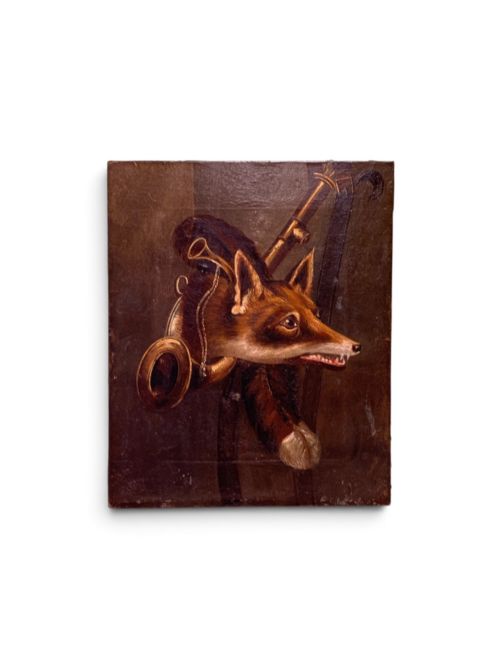
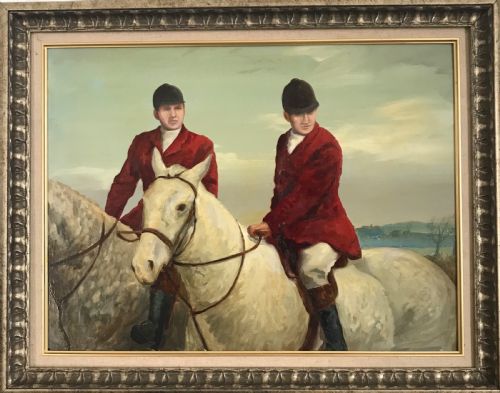
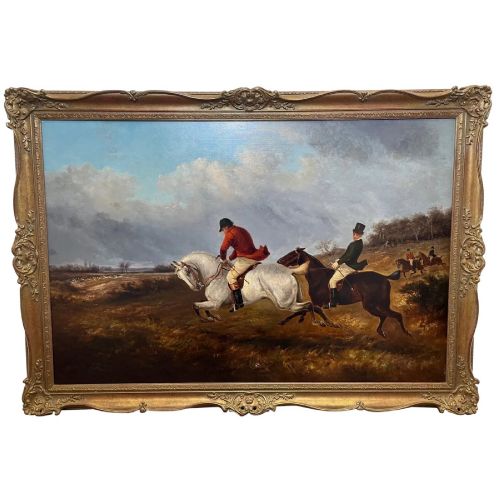
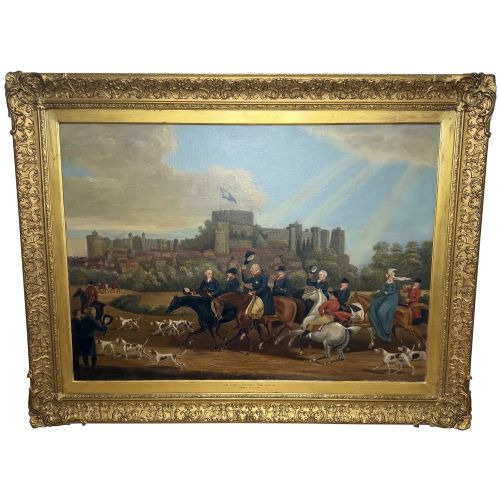
When you examine fox hunting oil artwork, you are looking at British and European sporting scenes rendered primarily during the nineteenth century and the Victorian period. These canvases depict mounted huntsmen, eager packs of hounds, and sweeping country landscapes that record historic rural pursuits. The most frequent pieces you will encounter on this page date from the Victorian era and the broader nineteenth century, often framed in period gilt wood or giltwood.
The subjects range from wide panoramic views of the meet and full gallop chases to intimate portraits of individual hunters and hounds. Alongside grand historical compositions, you find smaller oil paintings on board or wood panel capturing specific moments like the death or the hot pursuit. Traditional British sporting art dominates the selection, reflecting a distinct nineteenth-century enthusiasm for equestrian life.
Materials and technique
These works rely on oil paint applied to canvas, wood panels, or prepared board, utilising the rich viscosity of the medium to build depth in horse coats and winter landscapes. Painters built up their scenes through careful layering, allowing darker earth tones to anchor the composition while brighter highlights pick out the red coats of huntsmen and the white markings of hounds. Gilt wood and gold leaf frames complete many pieces, providing an ornate boundary that complements the traditional subjects within.
The technique balances meticulous animal anatomy with looser handling of distant trees and skies. Artists observed horses in motion and dogs on the scent, translating swift outdoor action into stable studio compositions. The combination of oil paint on canvas or panel ensures that the subtle gradations of light across a winter field or a damp forest floor remain preserved.
Listings feature oil paint on canvas and wood, housed in giltwood frames from the Georgian, Victorian, and Edwardian periods.
Distinctions in quality
The division between average and exceptional fox hunting oil artwork rests upon the artist's command of animal anatomy and movement. Superior canvases display precise articulation of a horse's musculature at full gallop and the individual posture of each hound, whereas lesser works tend to rely on stiff, repetitive templates for horses and riders. The handling of the surrounding landscape also marks the difference, with accomplished painters using confident brushwork to establish distance, weather, and light.
Provenance and signature further elevate a piece, as works attributed to established nineteenth-century sporting artists carry a distinct pictorial confidence. The integration of the frame matters too, as period giltwood frames that retain their original gilding enhance the historical integrity of the painting. Ultimately, quality reveals itself in how effectively the composition conveys the noise, speed, and chill of the field.
Thomas Smythe·Philip Henry Rideout·George Armfield·Charles Faulkner·Fannie Moody·John Frederick Herring Jnr·John Sanderson-Wells·Guillaume Urban Régamey·George Goodwin Kilburne·Geoffrey Mortimer·Edward B Herberte
The Fox Hunting Oil Artwork Glossary
- Oil on Canvas
- A traditional painting medium where coloured pigments are suspended in a drying oil and applied to a stretched fabric support. This combination allows for rich blending and textured brushwork.
- Gilt Wood
- Carved timber finished with a thin layer of gold leaf or metallic gilt powder. It was extensively utilised for nineteenth-century picture frames to catch and reflect candlelight or natural room illumination.
- Victorian Sporting Art
- A genre of painting popular during the reign of Queen Victoria that focuses on equestrian subjects, hunting scenes, and animal portraits. These works celebrate rural traditions and field sports.
- View Halloo
- The traditional shout raised by a huntsman upon sighting the fox breaking covert. In painting titles, it denotes a scene capturing the immediate start of the chase.
Fox Hunting Oil Artwork: Frequently Asked Questions
What periods do these paintings date from?
The pieces span the nineteenth century, including Georgian precursors and later Victorian examples stretching into the early twentieth century. You also encounter occasional mid-century works.
Most items cluster around the Victorian period and the late nineteenth century, reflecting the peak of traditional British sporting art production.
How should I frame an antique oil painting?
Antique canvases and panels are best housed in period frames such as nineteenth-century giltwood moulding. These frames match the age and aesthetic of the artwork.
Avoid modern synthetic mouldings that clash with the traditional oil medium and the historical character of the sporting scene.
What subjects appear besides the main chase?
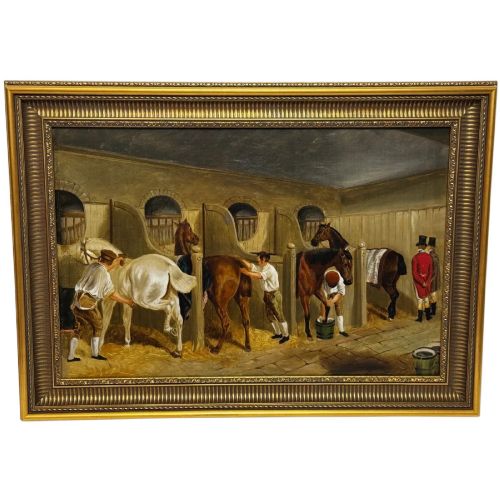
Paintings frequently record the meet before the hunt begins, quiet interior resting scenes, or the return of notable historical figures from excursions. Landscapes without active chases also feature prominently.
These varied compositions offer a broader view of equestrian life and rural pastimes beyond the immediate pursuit.