



Fox Hunting Canvas Painting
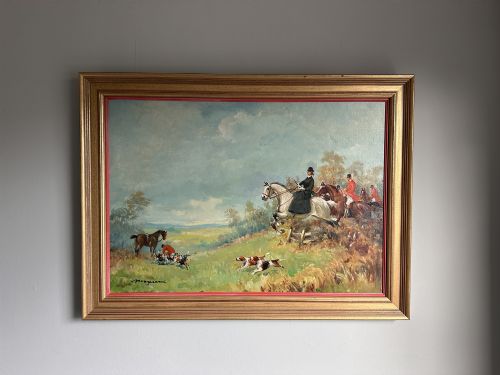
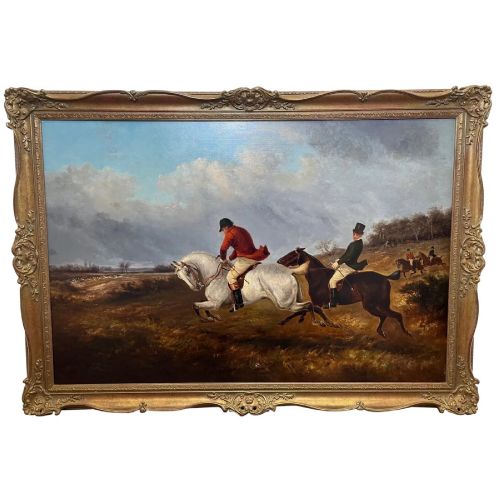
A fox hunting canvas painting captures the thunder of hooves, the surge of hounds, and the brisk air of the traditional chase.
Fox Hunting Canvas Painting
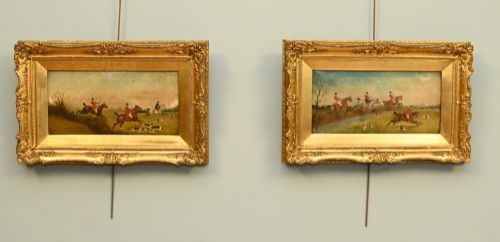
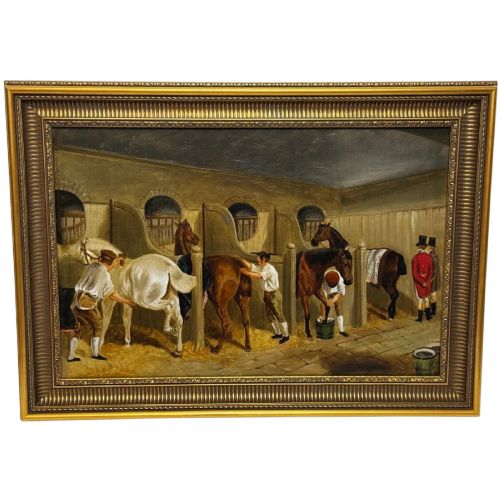
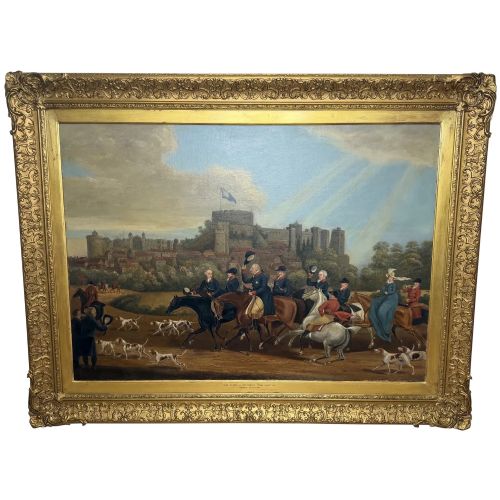
A fox hunting canvas painting records the energy and motion of equestrian sport, from the early morning meet to the full gallop across open countryside. These works focus heavily on the dramatic scenes of the chase, featuring huntsmen, hounds, and horses rendered in rich oil paint.
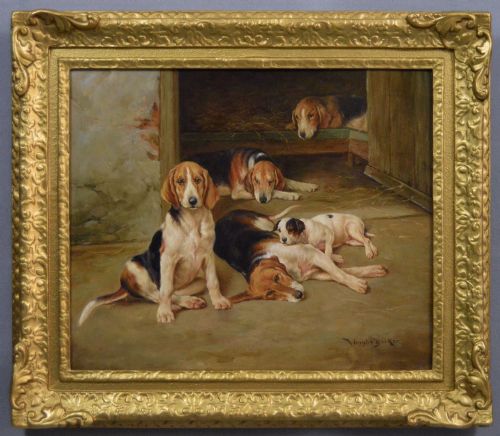
Most pieces encountered here hail from the nineteenth century and the Victorian era, reflecting a golden age of British sporting art. Canvases range from intimate studies of hounds and puppies to large-scale panoramas of mounted riders taking fences.
The compositions often capture specific moments in the field, such as the tense anticipation of the start or the swift pursuit across winter landscapes. Works from this tradition serve as a direct window into historical rural life and equestrian culture.
Materials and methods
Painters relied on oil paint applied to woven canvas stretched over wooden frames, building up rich layers of pigment to render the glossy coats of horses and the rugged textures of canine fur. The handling of light brings movement and depth to the landscape backgrounds and the figures of riders.
Fox Hunting Canvas Painting Retail Price Guide 2026
Typical asking prices for fox hunting canvas painting among the pieces listed under this phrase on Sellingantiques today, from the lower quarter to the upper quarter. They describe what is for sale here now, not the wider market.
The listings span from the early nineteenth century through to the mid-twentieth century, featuring traditional oil on canvas works housed in giltwood frames.
Distinctions in quality
The standard of a painting rests heavily on the artist's ability to render the anatomy and musculature of horses and hounds with anatomical precision during rapid movement. Superior canvases display confident brushwork that captures tension and atmosphere rather than stiffly posed figures.
The sophistication of the landscape and the integration of riders within the wider countryside distinguish finer works from simpler decorative compositions. Masterful control over light and shadow elevates a canvas from a mere record of an event to a compelling piece of fine art.
Wright Barker RBA·Thomas Smythe·John Arthur Lomax·George Armfield·Charles Faulkner·Fannie Moody·John Frederick Herring Jnr·John Sanderson-Wells·Heywood Hardy·Guillaume Urban Régamey·George Goodwin Kilburne·Geoffrey Mortimer·Edward B Herberte
The Fox Hunting Canvas Painting Glossary
- Oil on Canvas
- A painting medium utilising pigments bound in a drying oil, applied to a stretched woven fabric support. This combination allows for rich colour blending and lasting durability.
- Giltwood
- Wood carved and surfaced with a thin layer of gold leaf or metallic powder. It provides an ornate, reflective border typical of traditional picture framing.
- Sporting Art
- A genre of painting dedicated to depicting rural sports, including horse racing, shooting, and hunting. These works document the animals, participants, and landscapes involved.
- View Halloo
- The traditional cry uttered when the fox is sighted breaking cover. In painting titles, it marks the sudden eruption of action in the field.
Fox Hunting Canvas Painting: Frequently Asked Questions
What subjects appear most often in these paintings?
The compositions typically centre on horses, hounds, and mounted huntsmen moving across rural landscapes. Scenes range from quiet kennel portraits of puppies to large gatherings at the meet and fast-paced chases.
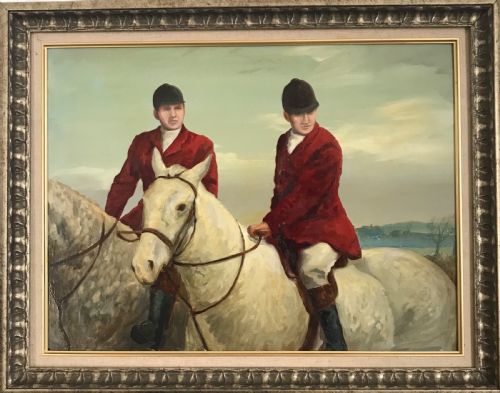
Artists also depicted the aftermath of the hunt, including formal equestrian portraits and sweeping views of estates during winter.
How do I date a nineteenth-century sporting canvas?
Dating relies on stylistic clues within the painting, such as the cut of the riders' clothing, the conformation of the horses, and the framing techniques used. Victorian works often display a heightened realism and dramatic lighting compared to earlier Georgian examples.
Signatures, exhibition labels on the reverse, and the construction of the wooden stretcher frame also offer reliable chronological markers.
Where should I hang a large hunting canvas?
These works demand substantial wall space, making them well-suited for principal reception rooms, libraries, or wide hallways where they can be viewed from a distance. Traditional rooms with dark wood panelling or rich wall colours provide a natural complement to the deep tones of oil paintings.
Placement should avoid direct sunlight to protect the pigments and the underlying canvas from fading over time.
How do I care for an antique oil painting?
Maintenance involves keeping the canvas away from extreme temperature fluctuations and high humidity, which can cause the fabric and paint to warp or crack. Gentle dusting with a soft, dry brush keeps the surface clear without disturbing the paint layers.
Professional cleaning should be left to conservators if the varnish darkens or grime accumulates over the decades.