



Four Nesting Tables
Four nesting tables deliver practical flexibility in sets of four graduated pieces that slide neatly together when floor space matters.
Four Nesting Tables
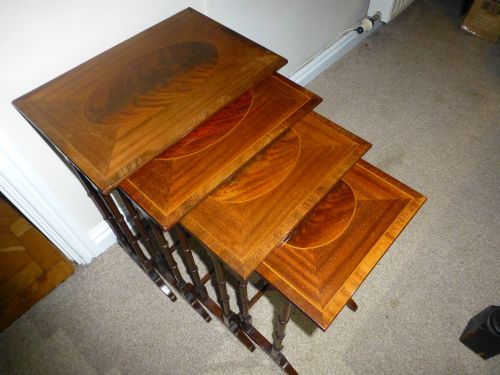
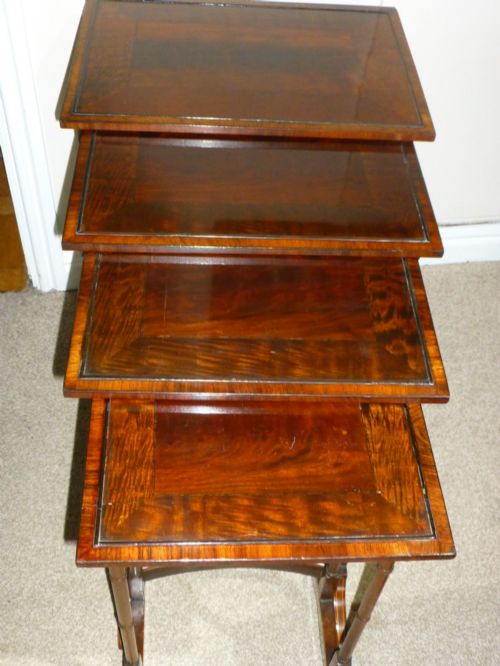
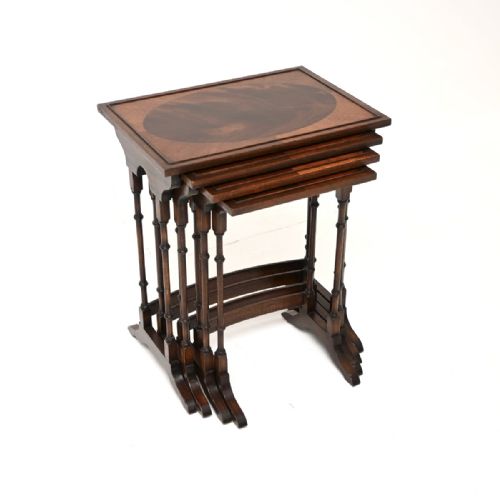
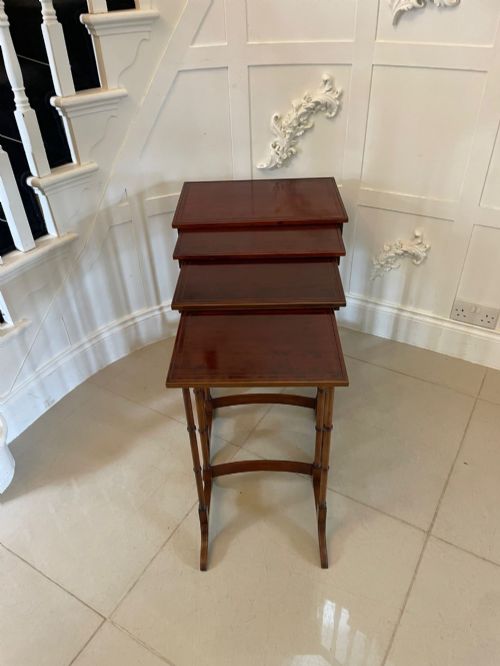
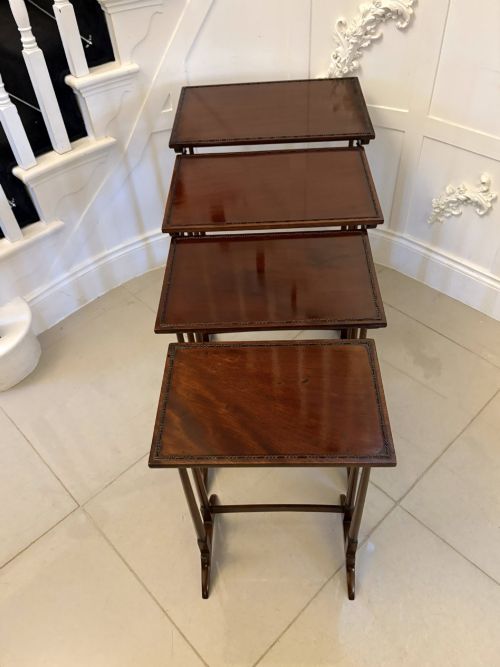
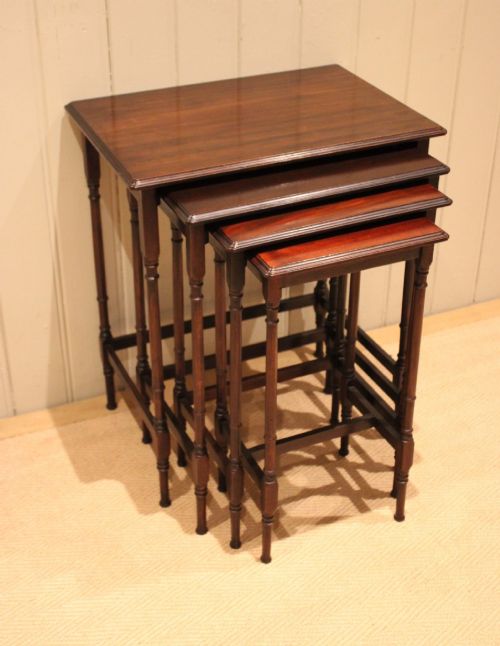
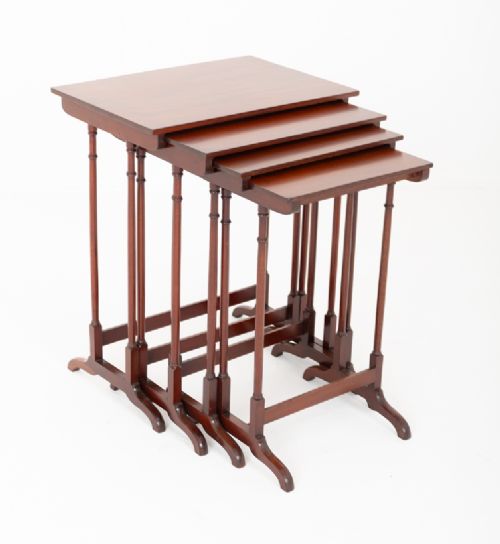
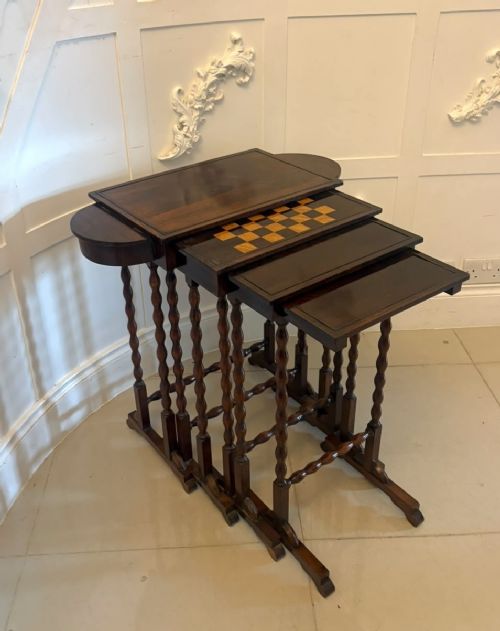
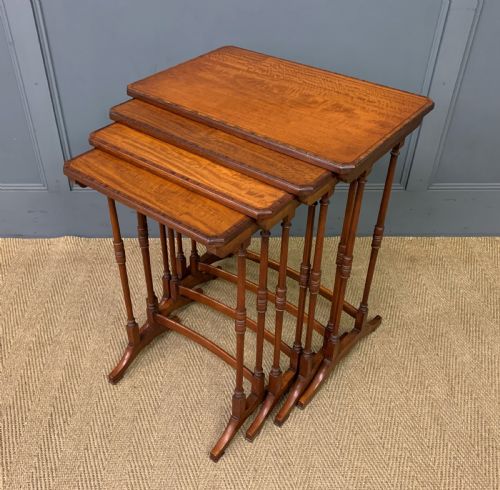
Four nesting tables comprise a graduated set of four individual tables designed to slide neatly one beneath another to save space when not in use. These versatile sets serve primarily as occasional, side, coffee, lamp or wine tables in domestic interiors.
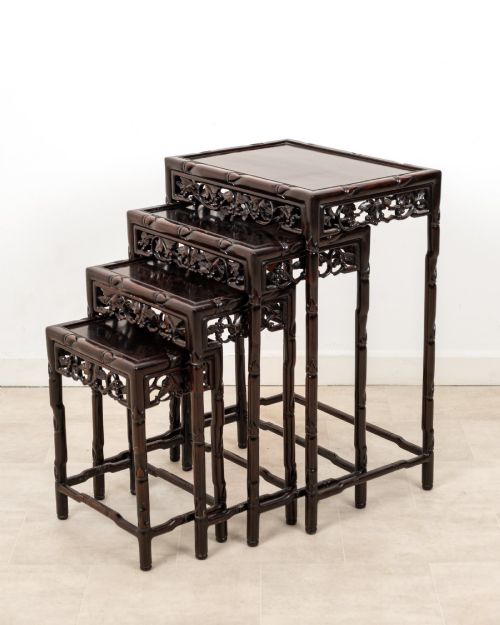
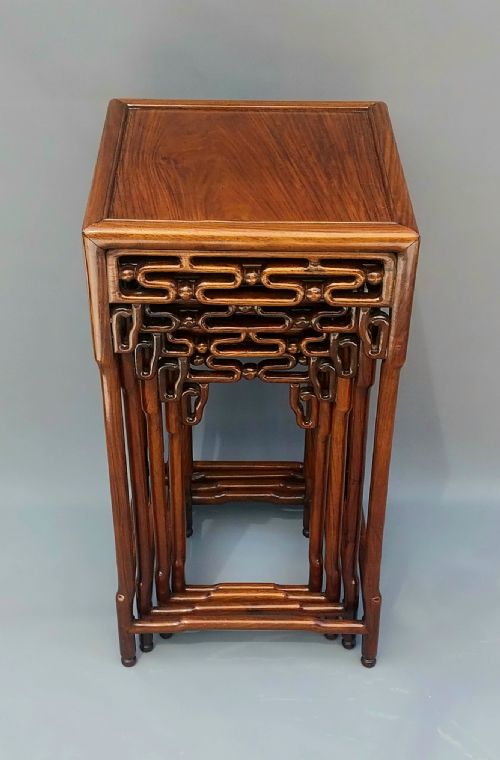
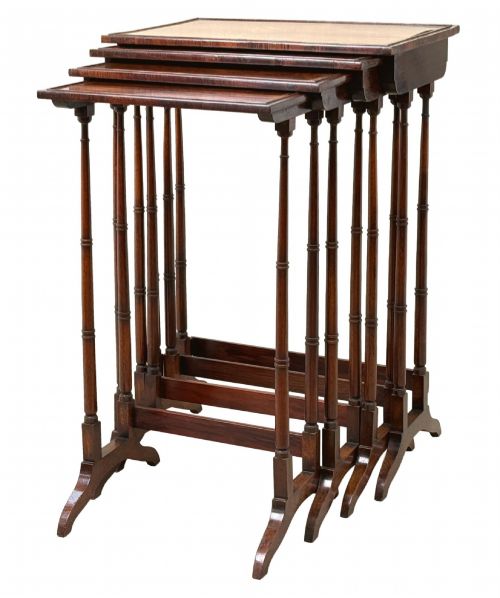
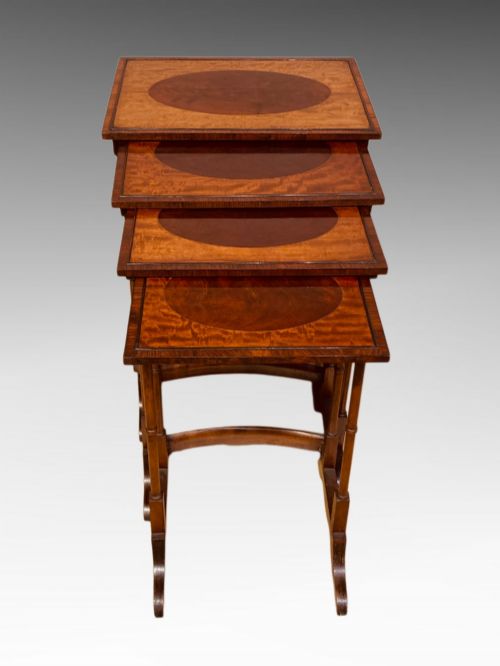
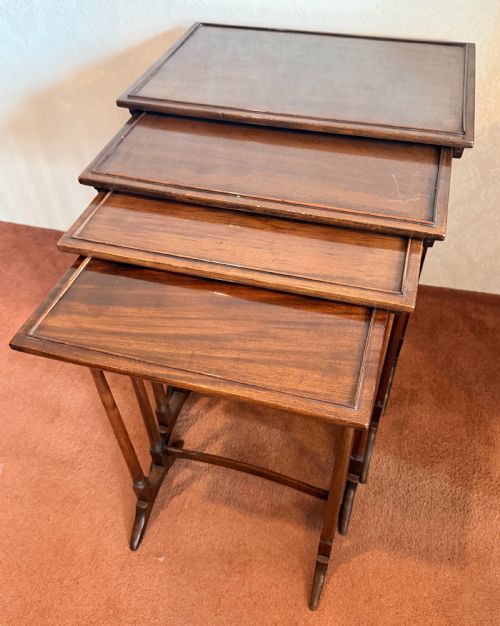
The version most commonly met on this page is the Edwardian or nineteenth century mahogany quartetto set, frequently featuring delicate stringing or inlay. Alongside English cabinetmaking traditions, pieces originating from Chinese workshops in rosewood or hardwood also appear frequently.
Historical examples span from Victorian and Edwardian decades through to Art Deco periods, encompassing various revival styles such as Regency and Georgian. Makers such as Edwards and Roberts contributed refined inlaid mahogany sets to this tradition.
How they were made
Cabinetmakers constructed these sets using timber such as mahogany, rosewood, walnut, satinwood and oriental hardwood, frequently applying decorative veneer and intricate inlay. Certain pieces incorporate lacquered finishes or Chinoiserie decoration applied to the wooden surfaces.
Graduated framing allows the four individual tables to descend in height and width so that the smaller tables disappear completely beneath the largest top table. Skilled joinery ensures the legs and rails maintain structural stability despite the slender proportions required for nesting.
Four Nesting Tables Retail Price Guide 2026
Typical asking prices for four nesting tables among the pieces listed under this phrase on Sellingantiques today, from the lower quarter to the upper quarter. They describe what is for sale here now, not the wider market.
What varies in quality
The grade of timber and the precision of the veneer work distinguish standard sets from exceptional examples. Finely figured mahogany, dense rosewood and crisp satinwood inlay elevate a set above plain utility pieces.
Structural integrity through the graduated sizes dictates the calibre of the set, particularly how smoothly the tables slide and how firmly they stand when separated. Finer examples display meticulous attention to detail in carved elements, integrated chess boards or hand-painted Chinoiserie motifs.
Edwards and Roberts
The Four Nesting Tables Glossary
- Quartetto
- A set of four nesting tables designed to stack inside one another. This term appears frequently in nineteenth and early twentieth century descriptions.
- Hongmu
- A traditional Chinese term translating to red wood, used for dense and durable hardwoods like rosewood. These tables often feature carved details.
- Inlay
- The technique of inserting contrasting pieces of wood or other materials into a solid surface to form decorative patterns. Satinwood and lighter timbers are often utilised on mahogany grounds.
- Chinoiserie
- European imitation and adaptation of Chinese artistic traditions and motifs. These decorated surfaces appear on lacquer and painted wooden tables.
- Graduated
- Descending in size systematically so that each smaller table fits neatly beneath the preceding one. This scaling is essential for the function of nesting sets.
Four Nesting Tables: Frequently Asked Questions
What are four nesting tables?
Four nesting tables form a set of four graduated occasional tables designed to slide neatly beneath one another. They offer flexible surface space while occupying the footprint of a single small table.
Historically called quartetto sets, they were produced in various woods including mahogany, rosewood and walnut. English cabinetmakers and Chinese workshops both contributed significantly to this form.
How were four nesting tables used?
These tables served as versatile occasional furniture in nineteenth and early twentieth century drawing rooms and parlours. Individual tables could be drawn out to hold drinks, books, lamps or writing materials when guests visited.
Once entertaining concluded, the smaller tables slid back into the frame of the largest table to clear the floor space. Certain specialised examples even incorporated integrated chess boards for parlour games.
How do I live with four nesting tables?
These pieces integrate easily into modern living spaces because they combine daily utility with a compact footprint. You can stack them in a corner or beside a sofa, separating them only when extra surfaces are required.
Maintenance involves regular dusting and protection from excessive moisture or direct heat sources that might affect polished wood surfaces and veneers.
How do I tell periods apart?
Victorian and nineteenth century examples often display heavier proportions and solid figured mahogany, whilst Edwardian pieces tend to be lighter with delicate satinwood inlay and stringing. Art Deco and later twentieth century versions introduce French walnut and streamlined geometric forms.
Chinese export pieces from the turn of the century are distinguished by carved hardwood frames and traditional joinery rather than European veneer techniques.