
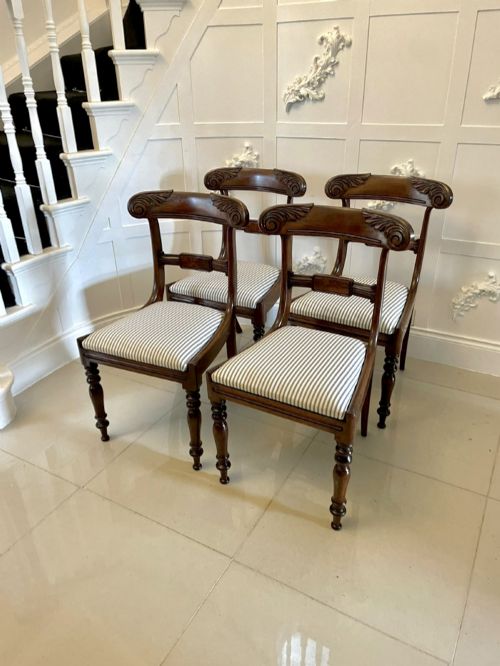

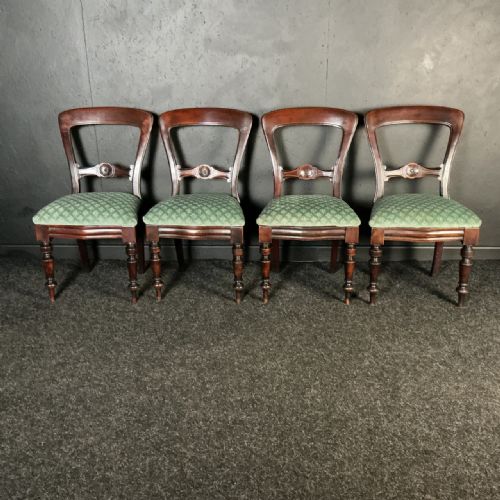
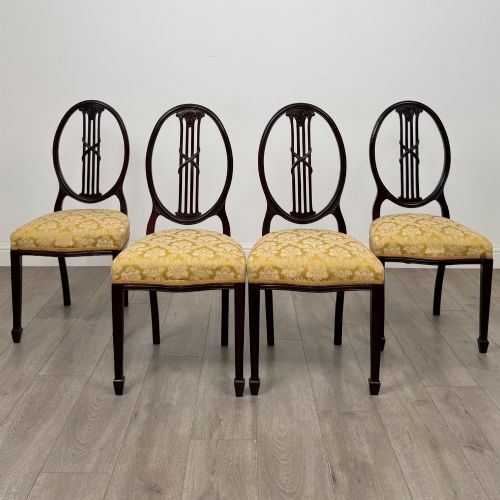
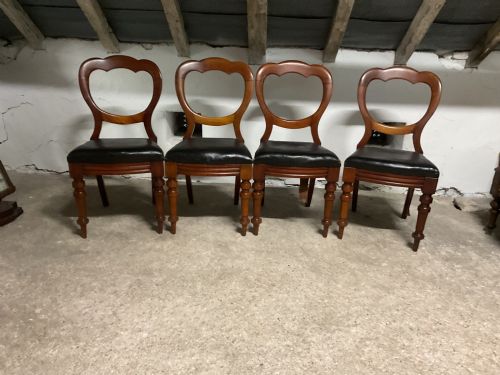
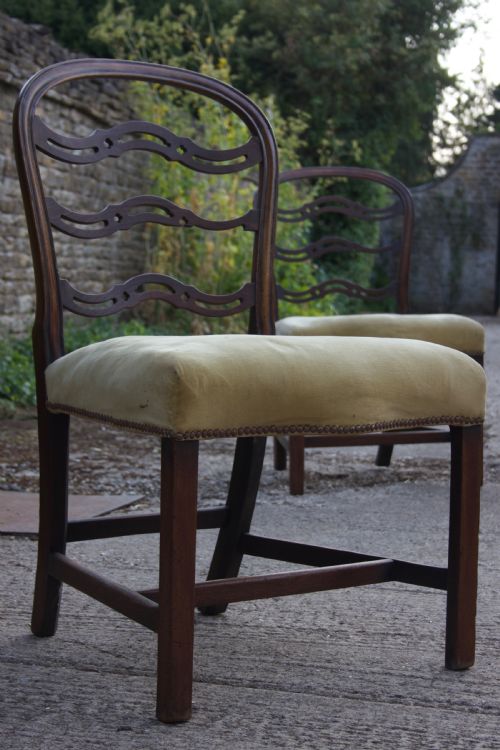
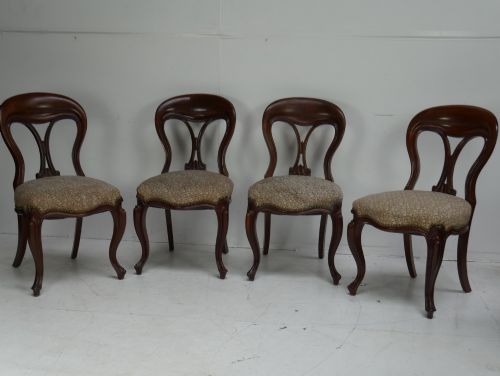
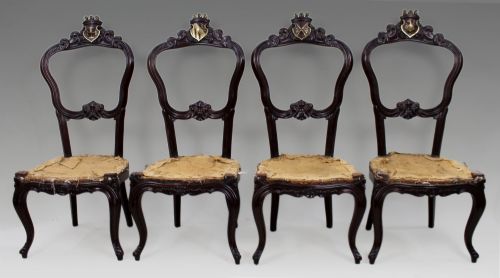
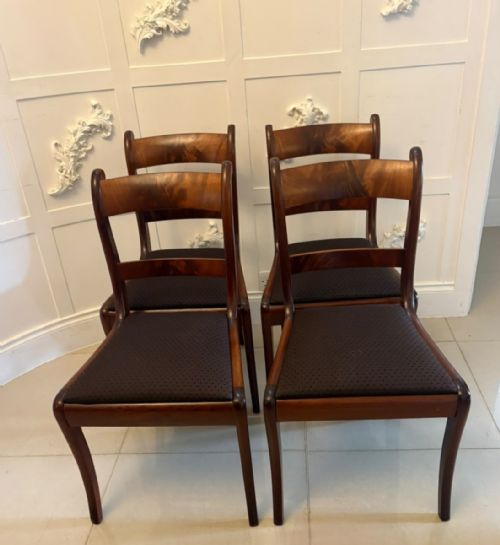
Four Mahogany Side Chairs
Four mahogany side chairs bring uniform seating to a dining table or hall, offering sturdy timber frames and period character.
Four Mahogany Side Chairs
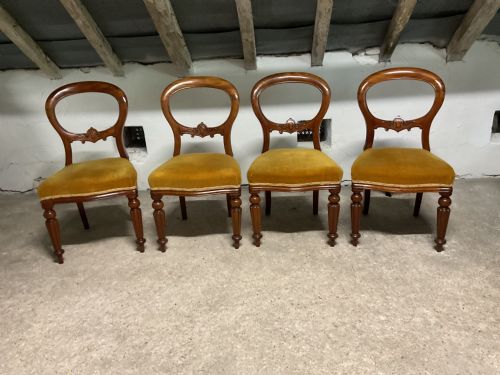
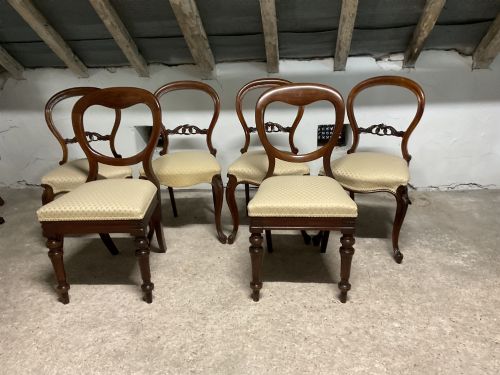
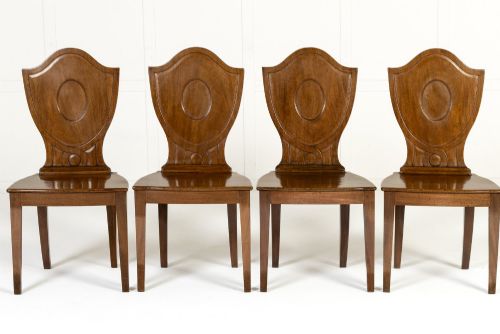
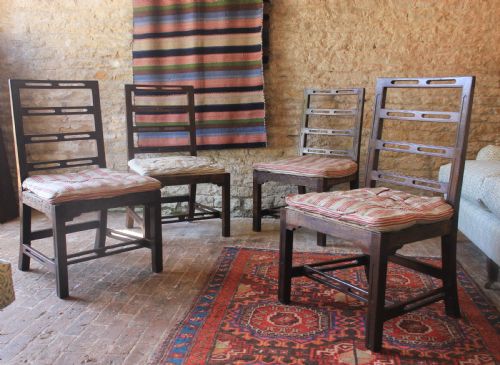
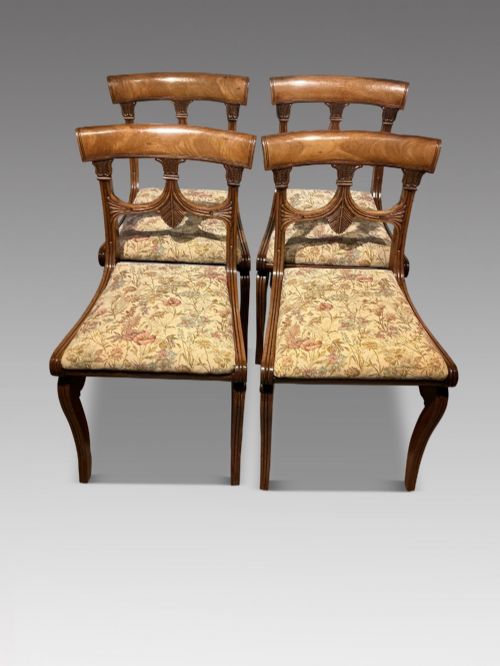
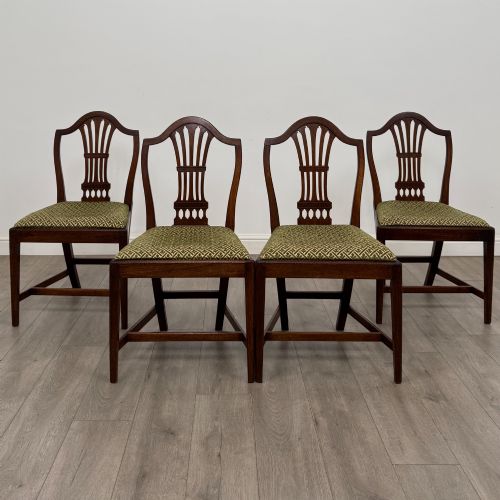
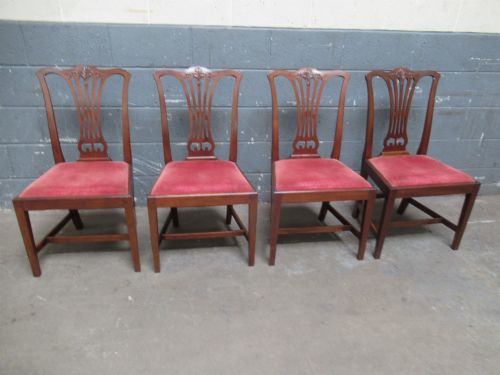
Four mahogany side chairs appear most frequently as matched sets from the Georgian, Regency, and Victorian periods, designed for dining rooms or halls. These items provide practical seating without the arms that restrict movement around a dining table. Buyers seeking four mahogany side chairs encounter styles ranging from plain balloon backs to brass-inlaid Regency forms and revival designs.
The selection on this page spans the eighteenth, nineteenth, and early twentieth centuries, reflecting changing domestic tastes in Britain and Ireland. Earlier examples often display carved splats in the manner of Chippendale or Hepplewhite, while later sets lean towards balloon backs and inlaid decoration. Each set maintains a consistent design across all four pieces, intended to match larger dining sets of the era.
What varies in quality
The standard of timber selection and the crispness of carving define the difference between standard production and top-tier work. Finer sets display carefully figured mahogany veneers or deeply carved details on the crest rails and front legs, whereas simpler versions rely on plain turned components.
Proportion and structural integrity also separate ordinary pieces from exceptional ones. Well-proportioned frames with tight joinery and balanced design demonstrate superior cabinetmaking skill during their period of origin.
Listings feature mahogany, walnut, fabric, leather, and brass across Georgian, Regency, and Victorian periods.
The Four Mahogany Side Chairs Glossary
- Side chair
- A chair without arms, traditionally used for dining or occasional placement around a room. These items fit neatly beneath a table edge.
- Balloon back
- A rounded, oval-shaped backrest popular during the Victorian period. This design resembles the silhouette of a floating balloon.
- Splat
- The vertical wooden strip down the centre of a chair back. It provides structural support and carries the decorative carving style of the period.
- Sabre leg
- A concave, outward-curving leg shape characteristic of Regency furniture. This form draws inspiration from classical antiquity.
- Stringing
- Thin lines of contrasting wood inlay used to outline panels on furniture. This technique gained particular favour in Edwardian and revival pieces.
- Marquetry
- Decorative patterns formed by fitting pieces of veneer into a wooden background. This method creates pictorial or geometric surface designs.
Four Mahogany Side Chairs: Frequently Asked Questions
How do I care for mahogany chairs?
Keep wooden surfaces clean with a dry cloth and apply occasional beeswax to nourish the timber. Avoid placing them near direct heat sources or strong sunlight.
Check joints periodically for movement and consult a professional restorer if any structural tightening becomes necessary over time.
Are these chairs comfortable for daily dining?
Most period side chairs offer upright support designed for formal dining rather than lounging. Their padded seats provide adequate comfort for meals.
Seat firmness varies depending on whether the upholstery uses modern webbing or traditional stuffing materials beneath the fabric cover.
How can I date a set of chairs?
Examine the timber species, joinery methods, and design motifs such as sabre legs or balloon backs to establish an approximate period. Stylistic clues often link a set to Georgian, Regency, or Victorian manufacturing eras.
Tool marks and the type of secondary wood used inside the seat frame offer further evidence of the decade of production.
Can I mix these with a modern table?
Mahogany's deep reddish-brown tone pairs well with many contemporary wood finishes and minimalist interior schemes. Four side chairs provide an intentional contrast around a modern dining setting.
Their compact proportions ensure they tuck away cleanly beneath tables of varying designs without dominating the room.