


Four Glass Regulator
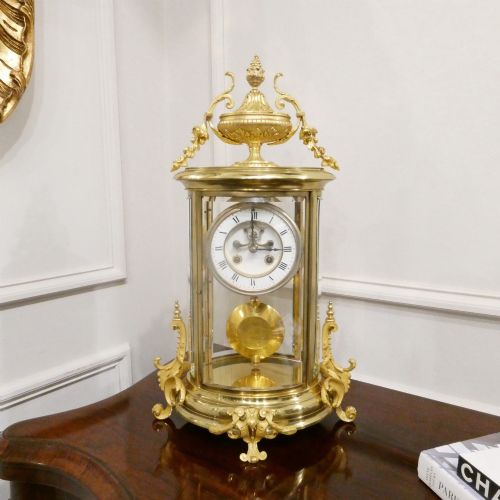
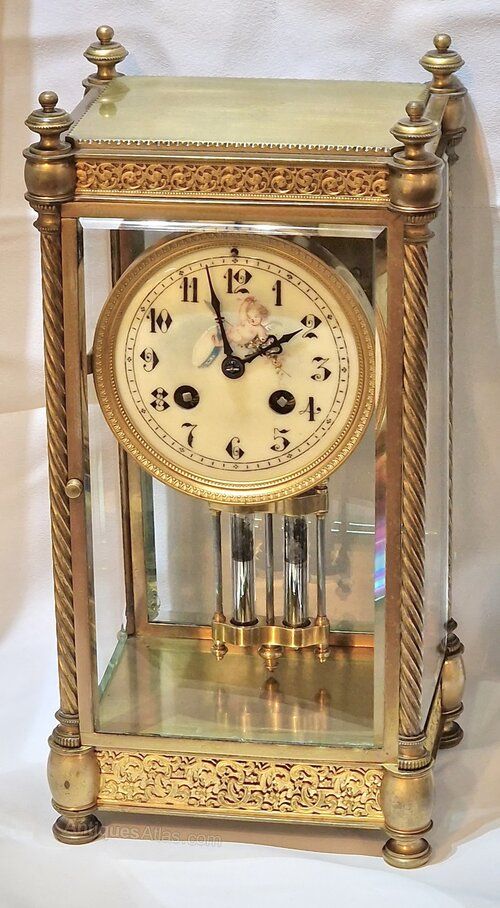
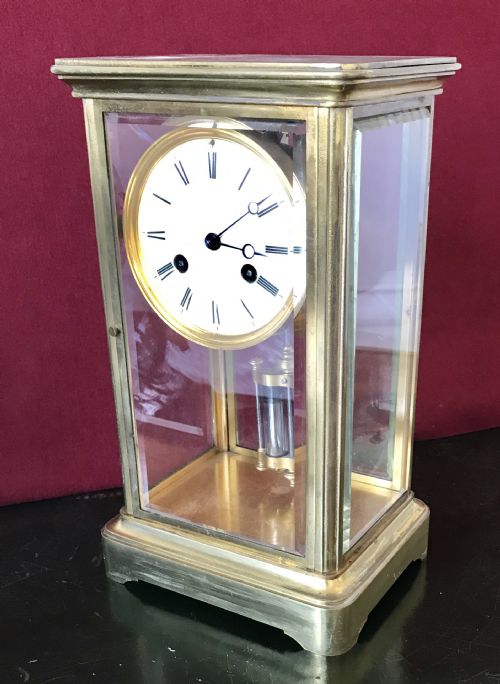
A four glass regulator stands as a masterclass in brass and bevelled glass, offering a clear view of intricate mechanical movements.
Four Glass Regulator
A four glass regulator is a striking mantel clock encased in transparent panels that reveal the inner workings from all sides. These pieces primarily date from the nineteenth century, spanning periods such as the Victorian era and the Belle Epoque. Buyers will frequently encounter French examples featuring polished brass or gilt bronze frames housing enamelled dials.
The silhouettes vary from simple rectangular brass cases to curved bow front designs and elaborate setups accompanied by garniture garnitures. Movement makers often collaborated with retailers, placing their work inside heavy bevelled glass chambers designed to sit prominently upon a mantelpiece or shelf.
Materials and Construction
Makers constructed these clocks using heavy cast brass, gilt bronze, and ormolu for the structural frames, often integrating onyx, marble, or champleve enamel details. Panels of thick bevelled glass fit tightly into the metal housing to enclose the movement completely while maintaining absolute transparency.
Makers housed these precision movements in onyx, marble, and bow fronted enamel cases.
Assessing Craftsmanship
Quality reveals itself in the weight and thickness of the cast metal frame, the precision of the gilt finish, and the clarity of the heavy bevelled glass panels. Superior examples feature complex dials with intricate enamel work, fine hand painted details, and signed movements from renowned makers.
The integration of decorative elements like onyx bases, marble plinths, or matching garniture sets elevates certain pieces significantly above standard production models. The crispness of the casting on bronze mounts and the refined execution of the escapement separate standard timepieces from exceptional ones.
Samuel Marti·Japy Freres·L Epee·Fritz Marti·Tiffany And Co
The Four Glass Regulator Glossary
- Regulator
- A precision clock designed to keep exceptionally accurate time. These movements often incorporate high grade pendulums and superior gear trains.
- Ormolu
- Gilded bronze produced by applying a finely ground high karat gold mercury amalgam to a bronze object. This technique creates a rich, durable metallic lustre.
- Bevelled Glass
- Plate glass with edges ground and polished at an angle. This treatment adds a decorative refractive border to each window of the case.
- Garniture
- A set of matching ornamental objects designed to flank a mantel clock. These frequently share the same marble, onyx, and ormolu materials.
- Champleve
- An enamelling technique where troughs or cells are carved into the metal surface and filled with vitreous enamel before firing.
Four Glass Regulator: Frequently Asked Questions
What is a four glass regulator?
A four glass regulator is a mechanical mantel clock housed within a brass and bevelled glass case that permits an unobstructed view of the movement. These clocks were principally produced in France during the nineteenth and early twentieth centuries.
They rely on pendulum control and feature glazed panels on the front, back, and sides. This design showcases the intricate gear train and escapement from every angle.
How do I wind the clock?
Winding requires a dedicated key inserted into the winding holes on the enamelled dial to tension the mainsprings. Care must be taken not to overwind the movement.
Most models require weekly or biweekly attention to maintain proper timekeeping and strike functions. The pendulum should be secured or removed if the clock needs to be relocated.
Where should I place it?
These clocks need a stable, level surface such as a mantelpiece, heavy sideboard, or dedicated bracket shelf. Stability ensures the pendulum swings evenly and the delicate escapement operates correctly.
Direct sunlight and areas prone to extreme temperature fluctuations should be avoided to protect the internal oils, enamel dials, and gilt finishes.
How do I identify the period?
Dating relies on stylistic clues, dial signatures, and structural materials such as ormolu, onyx, or champleve enamel. Pieces from the late nineteenth century often display Rococo Revival or Louis XVI revival characteristics.
Maker marks stamped onto the brass backplates provide precise attribution to workshops active during the Victorian era or Belle Epoque.