
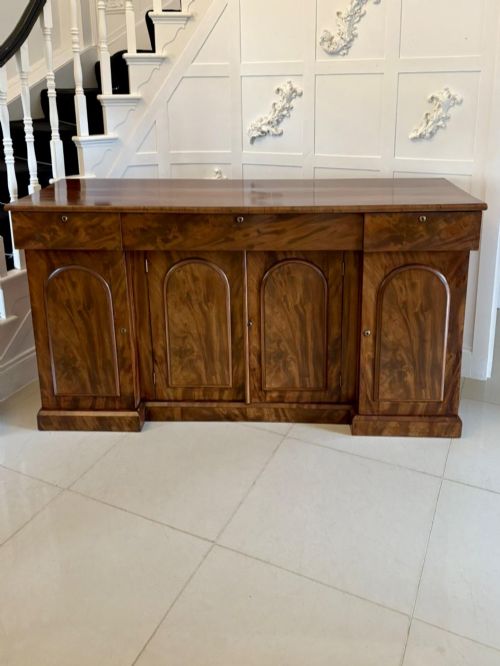
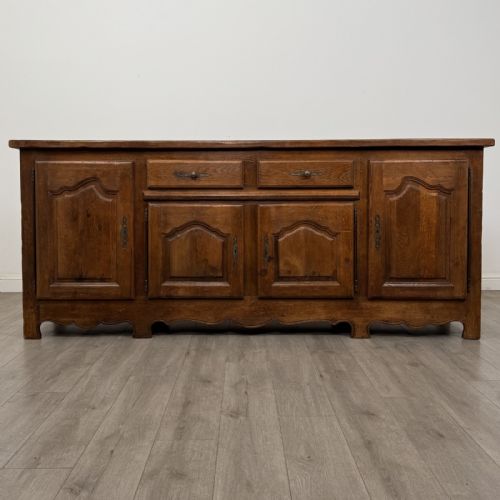
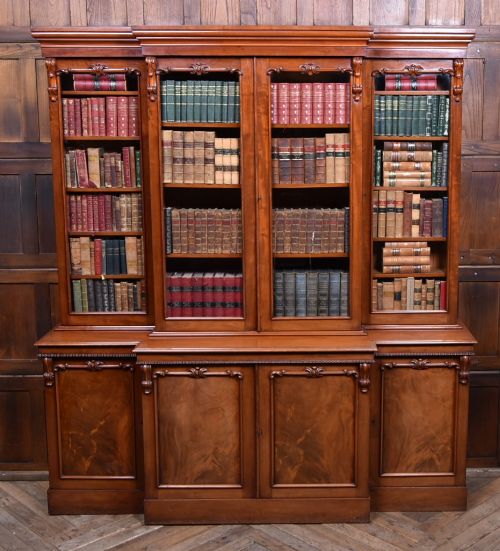
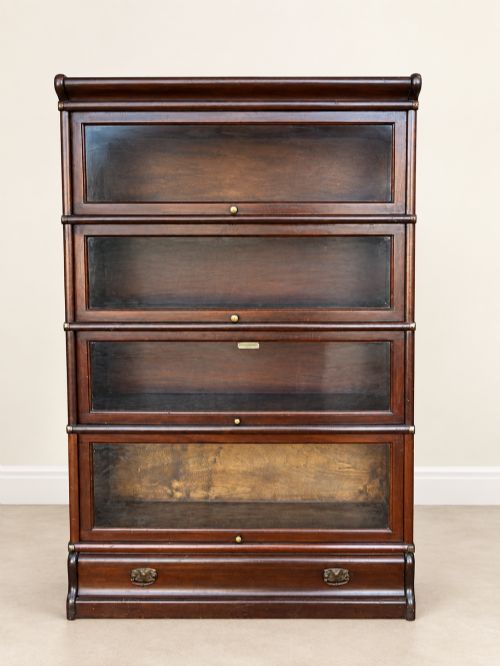
Four Door Cabinet
A four door cabinet provides generous enclosed storage through expansive cabinetry built across the nineteenth and early twentieth centuries.
Four Door Cabinet
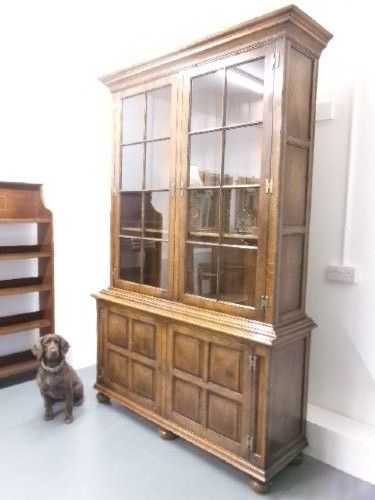
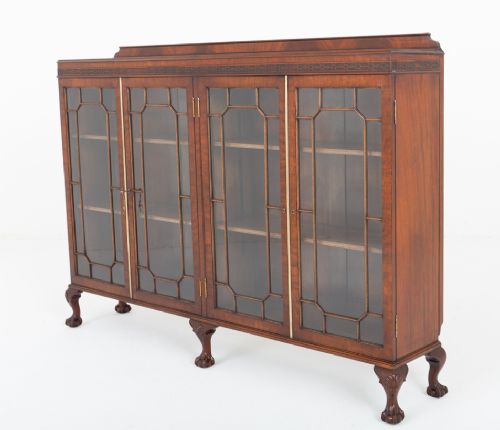
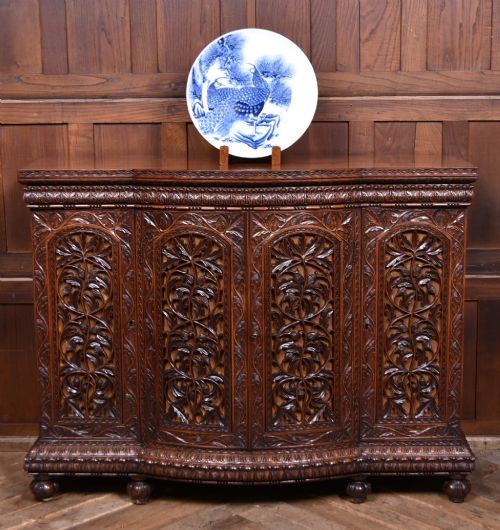
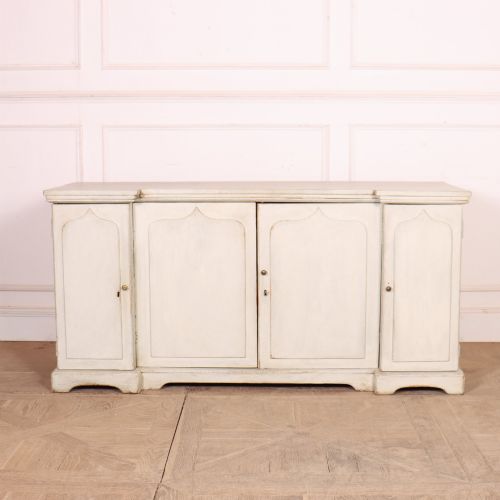
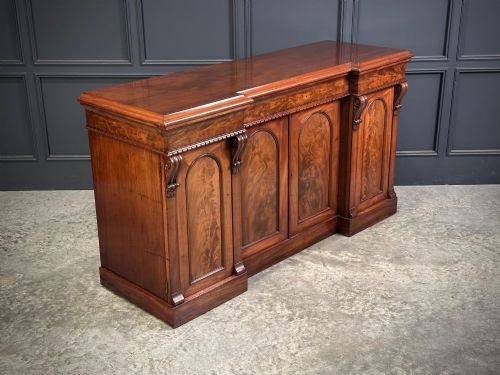
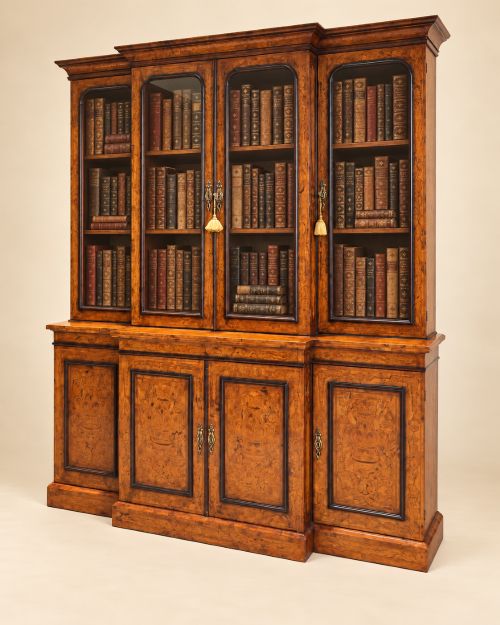
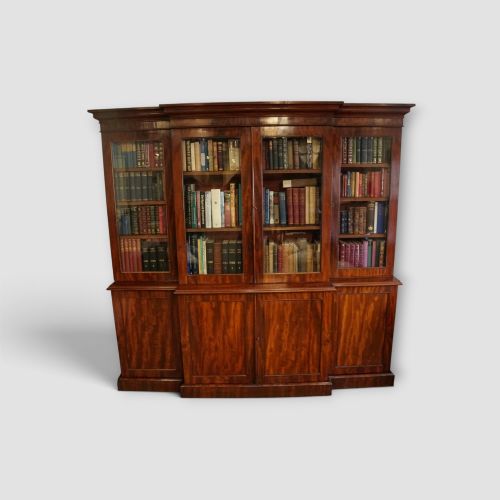
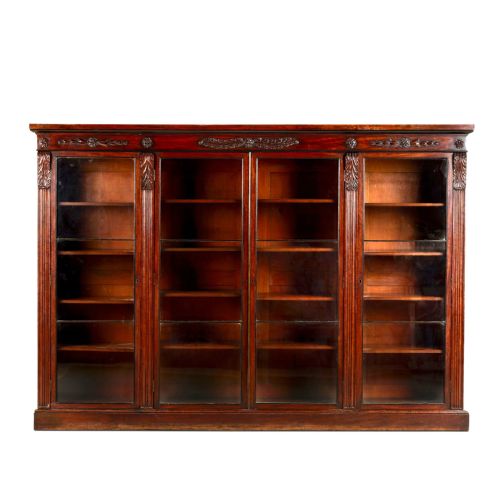
When you search for a four door cabinet, you encounter substantial storage furniture designed for libraries, dining rooms, and principal living spaces. These pieces emerge primarily from the nineteenth century and the early decades of the twentieth century, taking the form of breakfront bookcases, sideboards, credenzas, and large cupboards.
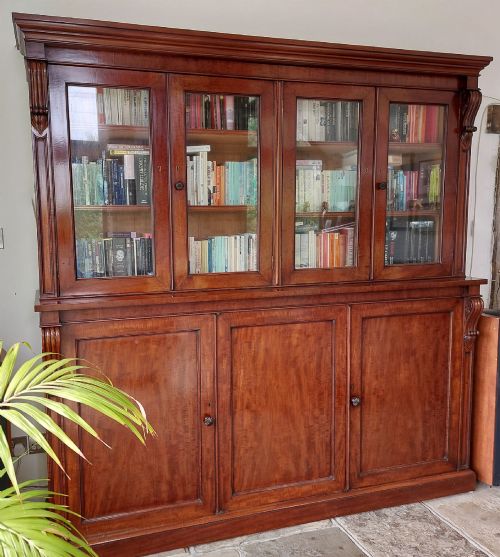
The versions most commonly met on this page span Victorian and Edwardian periods, alongside earlier Regency and William IV examples. Cabinet makers constructed these multi-door storage units in various configurations, including glazed library bookcases, inlaid walnut breakfronts, and sturdy pine or oak cupboards.
Materials and Construction
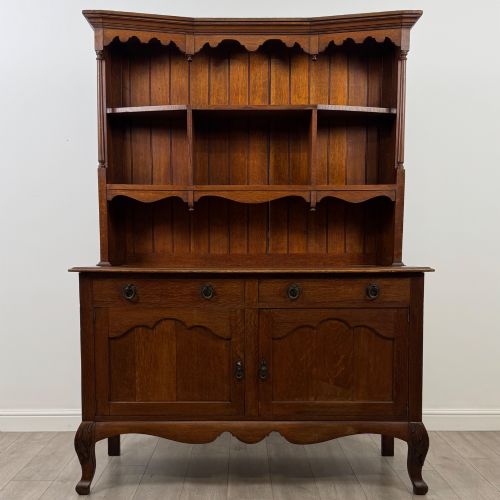
Cabinet makers utilised dense hardwoods such as mahogany, flame mahogany, walnut, and oak to build the foundational carcasses and doors of these large storage pieces. Pine appears frequently in utilitarian cupboards and dresser bases intended for wax or paint finishes, while exotic woods like padouk and rosewood furnish select library pieces.
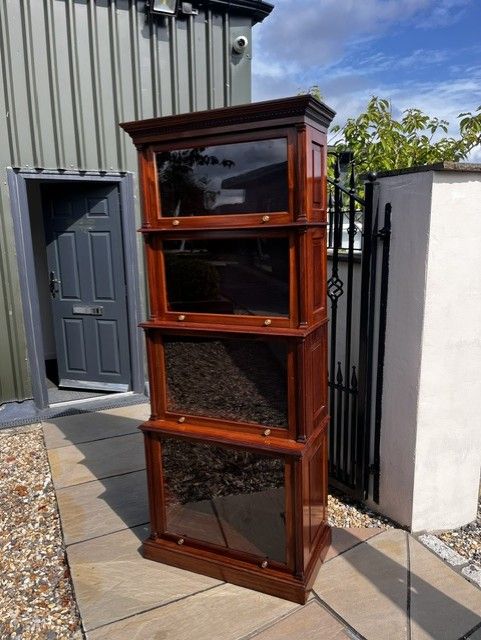
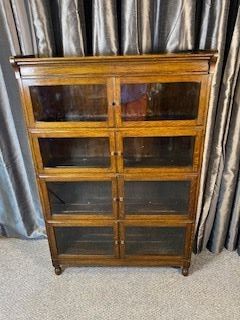
Joinery methods involved traditional panelled door construction, often incorporating glass panes for display cabinets or intricate marquetry and Tunbridgeware inlay on decorative surfaces. Brass hardware and iron fittings secured heavy doors on breakfront bookcases, sideboards, and wardrobes.
Several pine cupboards await a coat of paint or wax, ready for their next chapter in a country kitchen.
Design and Execution
The distinction between standard utility storage and exceptional cabinet work rests in the selection of timber figures, such as flame mahogany or figured walnut. Superior examples demonstrate refined proportions in breakfront configurations and precise execution of inlaid details.
Carved ornament and structural integration separate utilitarian pine cupboards from monumental library bookcases and exhibition-quality credenzas. The integrity of the original glass, brass handles, and fitted shelving further separates standard pieces from those of notable execution.
The Four Door Cabinet Glossary
- Breakfront
- A piece of furniture where the central section projects forward from the flanking outer wings. This architectural arrangement creates depth and visual rhythm across large bookcases and sideboards.
- Enfilade
- A suite of rooms or a long cabinet with a sequence of doors aligned in a continuous row. Italian painted enfilades provide prolonged horizontal storage.
- Marquetry
- The art of applying pieces of veneer to a structure to form decorative patterns and pictures. Serpentine credenzas utilise this technique for elaborate surface ornament.
- Credenza
- A low cabinet or sideboard lacking legs, frequently enclosed by doors. These pieces serve domestic storage and display functions.
- Glazed
- Fitted with glass panes within the doors. This treatment protects library books while permitting visibility of interior shelving.
Four Door Cabinet: Frequently Asked Questions
What rooms suit a four door cabinet?
These large storage pieces suit principal living spaces, dining rooms, and home libraries where expansive wall storage is required. They house collections of books, porcelain, or dining linen while anchoring the proportions of a large room.
The substantial footprint demands adequate floor space and ceiling clearance, particularly for breakfront bookcases and library cabinets that reach considerable heights.
How do I care for antique mahogany furniture?
Maintain timber surfaces by applying appropriate wax polish sparingly and buffing with a soft cloth to preserve the natural lustre of the wood. Avoid placing large cabinets near direct heat sources or strong sunlight to prevent the timber from warping or splitting.
Ensure glass doors are cleaned with gentle solutions that do not damage aged timber frames or historical brass hardware.
What is the difference between a sideboard and a bookcase?
Sideboards provide low-level storage with solid or panelled doors, traditionally utilised in dining spaces for serving food and storing tableware. Bookcases feature taller elevations, frequently incorporating glazed doors and internal shelving specifically designed for the display and storage of volumes.
Breakfront forms appear across both categories, dividing large storage units into distinct vertical sections.
How do I identify Victorian and Edwardian pieces?
Victorian storage furniture, produced during the nineteenth century, often employs heavy mahogany, walnut, and elaborate carved details or breakfront proportions. Edwardian pieces from the early twentieth century frequently exhibit lighter oak construction and simplified revival styles.
Examine the interior timber, backboards, and drawer construction to ascertain the manufacturing era and construction methods.