

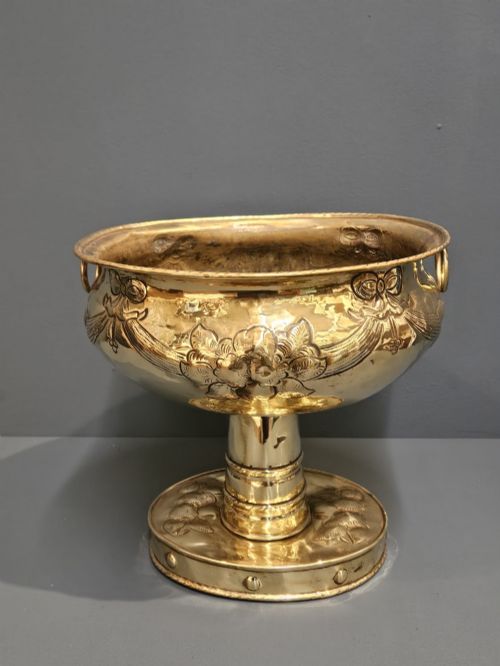
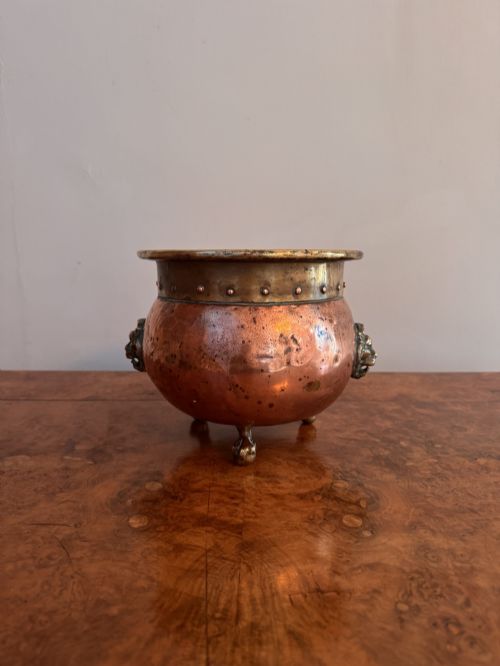
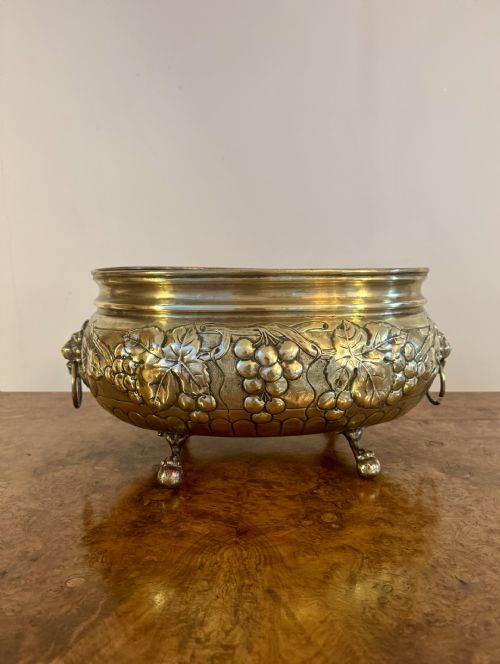
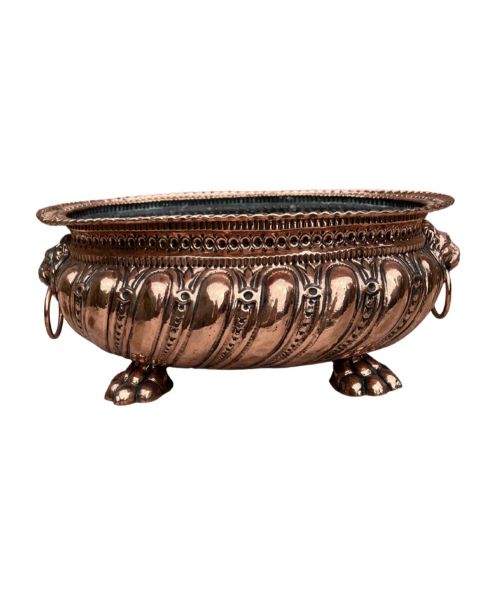


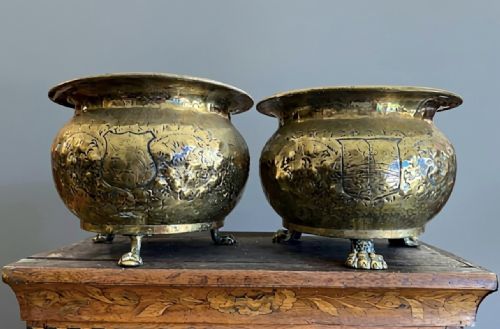


Footing Brass Planter
A footing brass planter brings gleaming metal and rich nineteenth-century craftsmanship directly into domestic plant display.
Footing Brass Planter
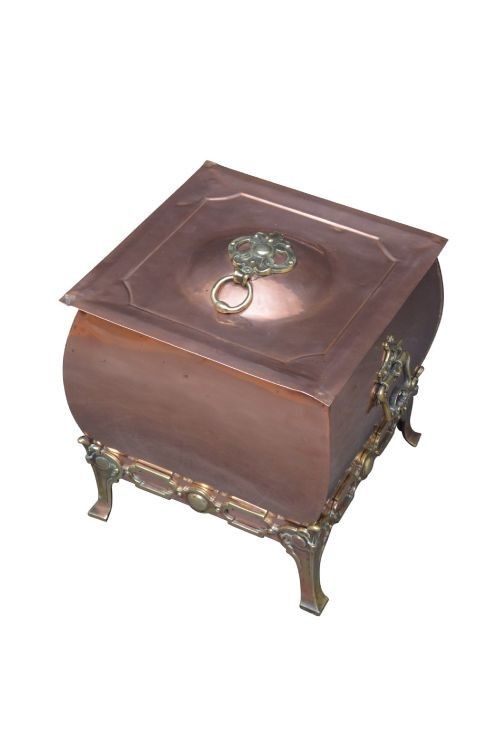
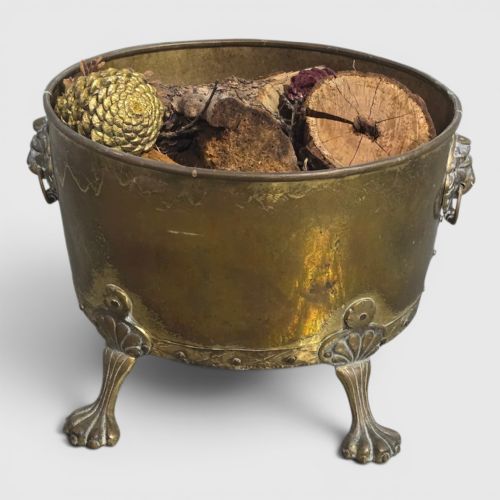
A footing brass planter is a vessel designed to hold greenery or fulfil auxiliary fireside storage roles like log bins and coal buckets. When you search for this phrase, you encounter forms ranging from heavy nineteenth-century jardiniere stands to decorative bowls on raised supports.
The versions most frequently met on this page include Victorian and Edwardian examples alongside Dutch and French pieces from the eighteenth and nineteenth centuries. Makers utilised these robust vessels both indoors for house plants and beside the hearth for fuel storage.
Distinctions in quality and finish
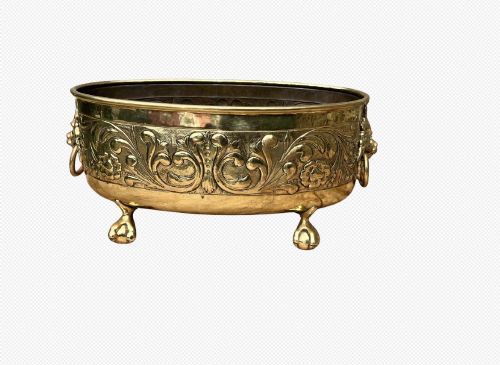
Quality separates simple utility vessels from exceptional decorative items through the crispness of the repoussé work and the weight of the metal. Finer examples display deeply embossed detailing, securely fitted handles such as cast brass lion masks, and intact internal linings.
The integrity of the construction, whether through tight copper riveting or precise wooden coopering, dictates the enduring stability of the piece. Superior specimens retain their structural soundness while exhibiting a rich, undisturbed patina on the brass or copper surface.
Footing Brass Planter Retail Price Guide 2026
Typical asking prices for footing brass planter among the pieces listed under this phrase on Sellingantiques today, from the lower quarter to the upper quarter. They describe what is for sale here now, not the wider market.
Listings span the eighteenth, nineteenth, and early twentieth centuries, featuring materials from brass and copper to mahogany and bronze.
The Footing Brass Planter Glossary
- Jardiniere
- An ornamental pot or stand for holding plants or flowers. These vessels often feature decorative metalwork or raised footing.
- Repoussé
- A metalworking technique where the metal is hammered from the reverse side to create a raised design in relief. This method defines much of the surface decoration on nineteenth-century planters.
- Dinanderie
- Medieval or later articles of brass, copper, or bronze, particularly those associated with Belgian production. The term describes decorative domestic metalware.
- Coopered
- Made with staves of wood bound together by metal hoops, similar to barrel construction. This technique appears in mahogany and walnut planters.
- Pierced
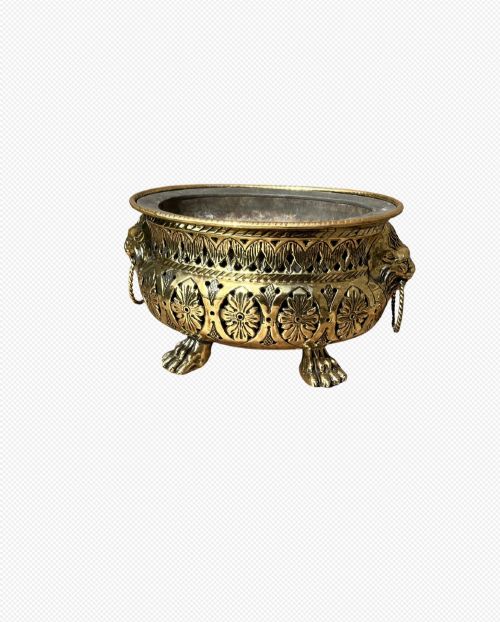
- Perforated or cut through in a decorative pattern. Pierced brass galleries and bodies allow air circulation around potted plants.
Footing Brass Planter: Frequently Asked Questions
What is a footing brass planter?
A footing brass planter is a metal vessel designed to display indoor plants or hold fireside fuel, elevated on feet or a distinct base. These objects combine practical utility with decorative metalwork.
Most examples date from the Victorian and Edwardian periods, though earlier Dutch and French pieces also appear. They serve as striking focal points in both traditional and contemporary interiors.
How were these planters used historically?
Historically, these vessels housed large potted plants within grand drawing rooms and conservatories. Their waterproof metal interiors protected delicate flooring from moisture.
Many versions also doubled as coal scuttles or log bins beside the fireplace. This dual purpose explains the heavy construction and robust handles found on numerous examples.
How do I identify a Victorian piece?
Victorian planters often display heavier gauge brass, machine-assisted or hand-beaten repoussé work, and specific stylistic revivals like Gothic or classical motifs. Construction methods often include secure riveting and cast brass feet or handles.
Comparing the manufacturing details, such as the fastening of the base and the style of any embossed ornamentation, helps distinguish nineteenth-century examples from later reproductions.