


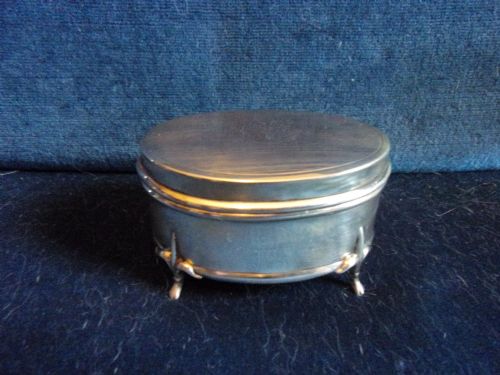
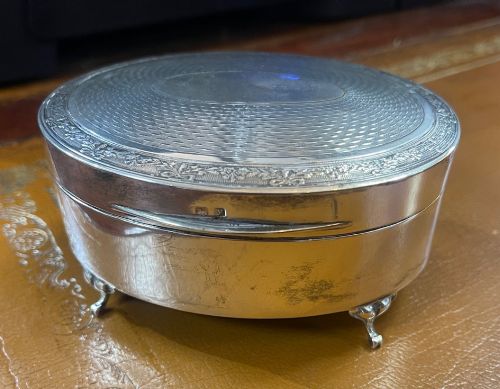
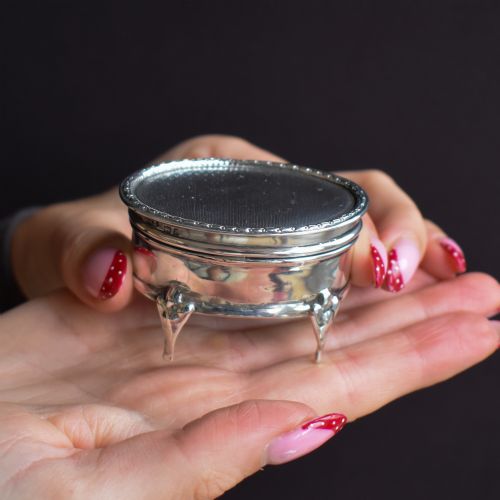
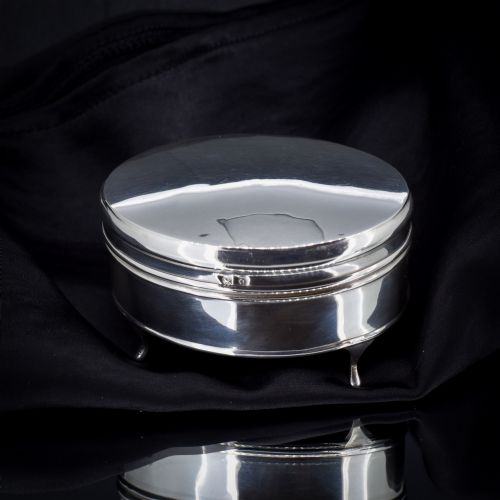




Footed Trinket Box
These footed trinket box pieces are small portable containers for keepsakes, offering tactile pleasure and period craftsmanship for your dressing table.
Footed Trinket Box
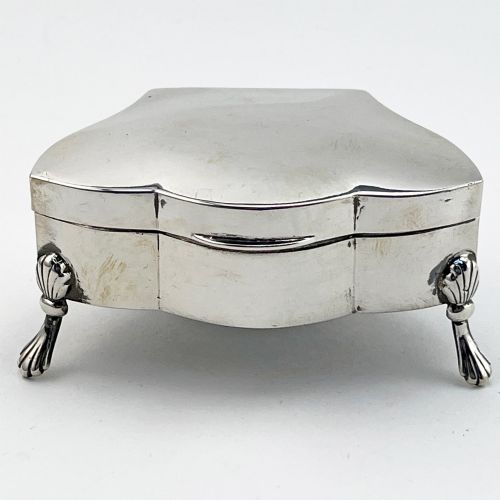
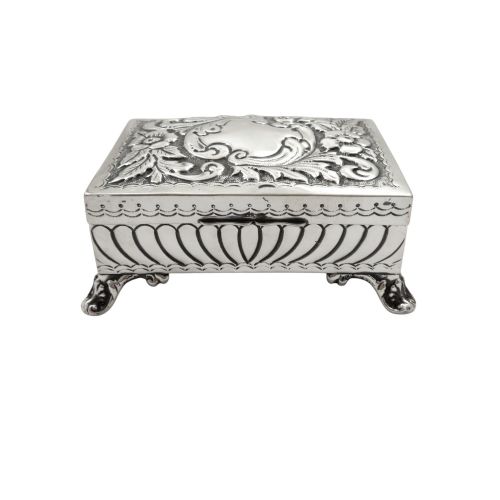
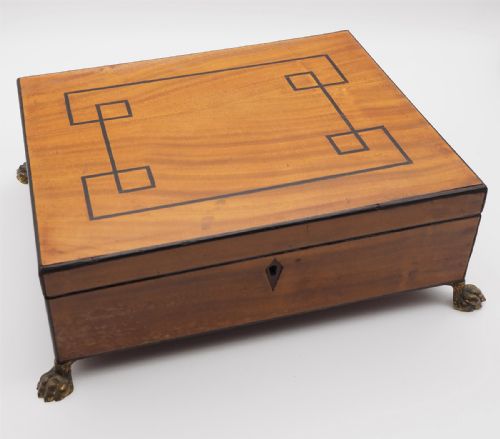
A footed trinket box serves to hold small personal effects, rings, and keepsakes upon a desk or dressing table. When you search for this phrase, you encounter vessels designed with elevated supports, whether ball feet, brackets, or claw mounts.
The selections span various forms from compact jewellery caskets to miniature chests and small desk boxes. You are most likely to meet 19th-century examples alongside Georgian, Regency, and Edwardian specimens.
Materials range widely across these offerings, encompassing sterling silver, woods such as rosewood and oak, and specialty finishes like penwork and leather. Each piece reflects the domestic habits and storage needs of its respective era.
How they were made
Silversmiths constructed silver boxes using sheet metal manipulation, incorporating hinged lids and fitted interior linings. Woodworkers utilised dense timbers like rosewood, satinwood, and oak, often applying intricate inlay or carved details.
Makers fixed decorative elements such as rosette-shaped brass mounts and claw feet to elevate the main body of the box. Leather and sandalwood found use in distinct regional styles, requiring specialised surface treatment and assembly.
Footed Trinket Box Retail Price Guide 2026
Typical asking prices for footed trinket box among the pieces listed under this phrase on Sellingantiques today, from the lower quarter to the upper quarter. They describe what is for sale here now, not the wider market.
Among the more unusual survivals are carved treen snuff boxes shaped precisely as ladies feet wearing open-toed shoes.
What varies in quality
The refinement of the surface decoration and the precision of the joinery set finer examples apart from simpler items. Superior pieces display crisp carving, balanced proportions, and well-fitted hinges that operate smoothly.
Material selection dictates much of the distinction, where solid sterling silver or figured exotic timbers outclass basic utility builds. The integrity of original mounts and feet further influences the overall character of the piece.
The Footed Trinket Box Glossary
- Regency
- A British design style dating from the early nineteenth century, characterised by classical restraint and exotic wood veneers. It often draws inspiration from Greco-Roman motifs.
- Sterling silver
- A silver alloy containing 92.5 percent pure silver by mass, standard in British domestic metalwork. It provides durability alongside a bright reflective surface.
- Rosewood
- A heavy, dense timber with distinct dark grain patterns, popular for nineteenth-century luxury boxes. It polishes to a deep lustre.
- Penwork
- A decorative technique using fine ink lines on a light wood ground to simulate inlaid banding or pictorial scenes. It demands steady hand execution.
- Coffor Bach
- A Welsh term for a small miniature chest or coffer, typically constructed in oak during the eighteenth century. These functioned as presentation pieces or dowry items.
Footed Trinket Box: Frequently Asked Questions
What is a footed trinket box used for?
These boxes were traditionally designed to hold rings, pins, and small personal valuables on a dressing table or desk.
Today they serve a similar purpose while adding period decorative character to modern interior spaces.
How do I identify a Regency box?
Regency boxes often feature distinctive timber veneers like rosewood or satinwood, sometimes paired with brass inlay.
They reflect classical architectural proportions and typically date from the early nineteenth century.
Are silver trinket boxes marked?
British silver boxes usually bear hallmarks indicating the assay office, standard of silver, and year of manufacture.
These stamps help specialists date the piece accurately and confirm its metallic composition.
How should I care for antique wood boxes?
Keep wooden boxes away from direct sunlight and extreme temperature fluctuations to prevent timber splitting.
Occasional dusting with a soft, dry cloth maintains the finish without harming the historic surface.