


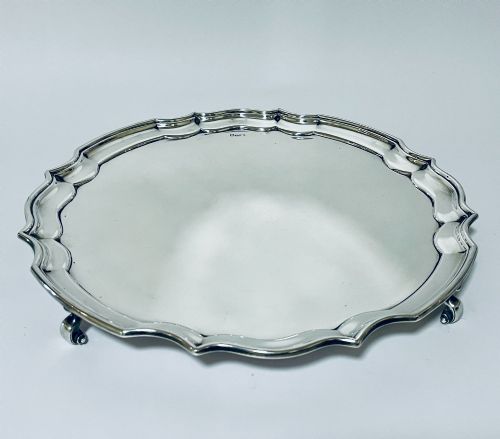
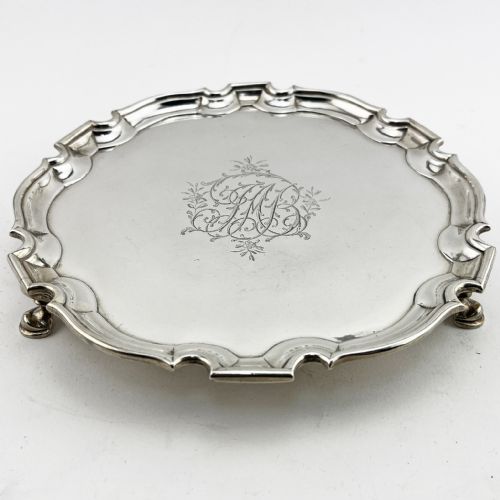


Footed Silver Serving Tray
Footed silver serving tray examples bring traditional elegance to a table, offering a raised platform for tea services and presentation.

Footed Silver Serving Tray
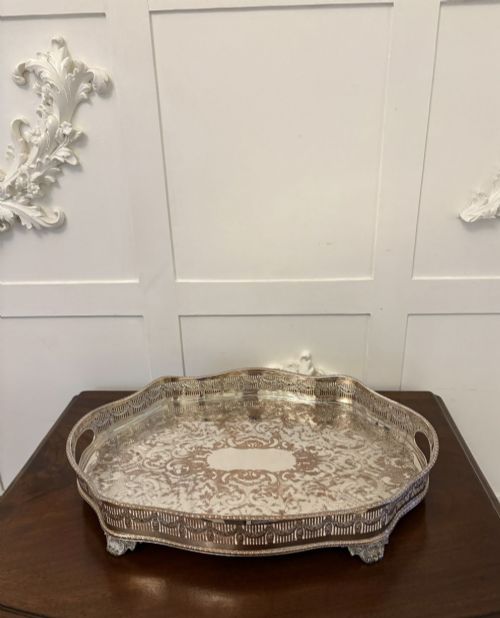
A footed silver serving tray provides a formal surface raised above the table on small feet, designed for carrying or presenting dishes and drinks. These pieces appear across several periods, most notably the Victorian, Edwardian, and Georgian eras.
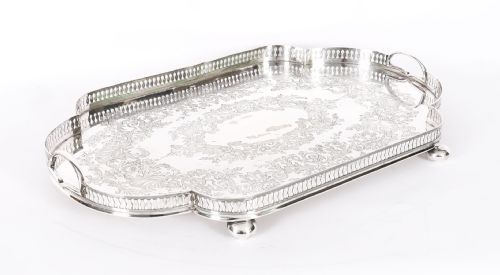
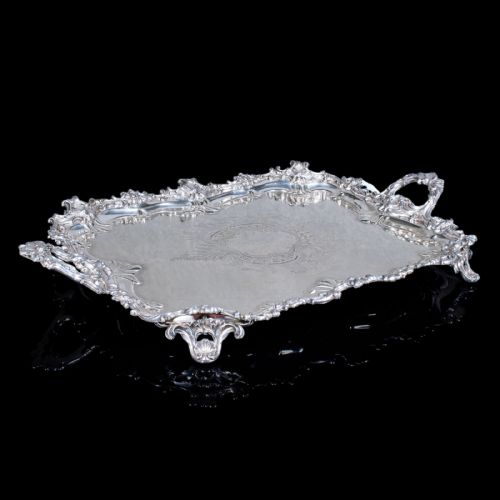
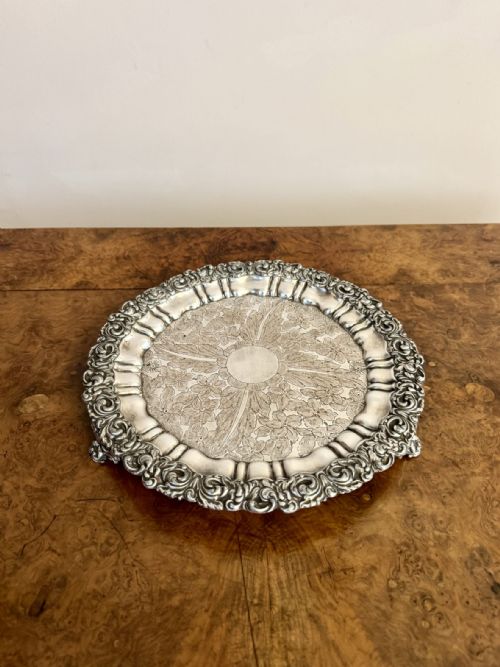
The inventory includes various forms such as salvers, gallery trays with pierced borders, meat warming dishes, and tea trays. Styles range from restrained Georgian symmetry to elaborate Rococo Revival and Grand Regency ornamentation.
Most items encountered on this page utilise silver plate or sterling silver, shaped into round, oval, or rectangular formats. Makers from English, German, and broader European workshops created these items for domestic hospitality and formal presentation.
Materials and construction methods
Construction relies heavily on metals such as sterling silver, silver plate, electroplated nickel silver, and old Sheffield plate over a base metal or copper core. Silversmiths and manufacturers applied chemical plating or fused thin sheets of silver onto copper to achieve a precious metal surface.
Surface decoration involves hand engraving, chased details, and pierced galleries soldered to the main body of the tray. Cast feet and raised rims are attached securely to support the weight of the tray and its contents during use.
Materials represented across the inventory include sterling silver, silver plate, old Sheffield plate, copper, and base metal.
Distinguishing quality in construction and detail
Quality rests in the crispness of the engraved or chased surface details and the structural integrity of the applied feet and rims. Heavier gauges of silver or thick silver plating over copper indicate superior manufacturing standards.
The refinement of pierced galleries and the balance of handles or raised borders separate standard domestic items from pieces produced by prominent silversmiths.
James Deakin·Robert Abercromby·John Harrison·Padley Parkin·Peters Hamburg·Paul Storr
The Footed Silver Serving Tray Glossary
- Gallery tray
- A tray featuring a pierced or solid vertical metal wall around its perimeter. This raised border keeps items secure during movement.
- Sheffield plate
- An early method of fusing a thin sheet of sterling silver to a copper core. This technique produced durable tableware before electroplating became common.
- EPNS
- Electroplated nickel silver. This designation indicates a base metal alloy coated with a thin layer of silver through an electrolytic process.
Footed Silver Serving Tray: Frequently Asked Questions
What is a footed silver serving tray used for?
These trays were traditionally utilised for serving tea, coffee, or after-dinner drinks in formal households. They provided a stable, elevated surface for carrying glassware and teapots.
Today, they serve equally well as decorative centerpieces on sideboards or functional display items for glassware and bottles.
How do I distinguish between sterling silver and silver plate?
Sterling silver items generally carry hallmark stamps indicating the purity of the metal and the maker's mark. Silver plated items often show traces of base metal or copper where the plating has worn away.
Weight can also offer a clue, though construction thickness varies widely across different periods and manufacturing methods.
How should I clean a silver plated tray?
Cleaning requires a specialised silver polish and a soft cloth to remove tarnish without scratching the metal surface. Harsh abrasives must be avoided, particularly on plated items where excessive scrubbing can expose the underlying copper or base metal.
Rinsing and drying the tray thoroughly after polishing prevents residue buildup in engraved grooves and pierced gallery details.
Can these trays be used for everyday dining?
Solid sterling silver and sturdy silver plated trays are robust enough for regular use if handled with reasonable care. Protective mats help prevent surface scratches from cutlery and heavy serving dishes.
Older pieces with delicate piercing or thin plating require more careful handling and are better suited to occasional display or light service.