



Footed Plant Holder
These footed plant holder examples bring timeless greenery indoors through hammered metals and sturdy timber stands.
Footed Plant Holder
A footed plant holder combines a deep vessel for flora with a raised base, keeping foliage elevated off delicate flooring or tables. When hunting for a footed plant holder on this page, the buyer will frequently encounter metal jardinières and wooden stands spanning the Victorian and Edwardian eras.
The selection ranges from pierced brass cylinders and copper vessels with animal mask handles to coopered mahogany jardinières and marble-topped hardwood side tables. These decorative vessels served both practical drainage containment and aesthetic enhancement in period interiors.
Materials and construction
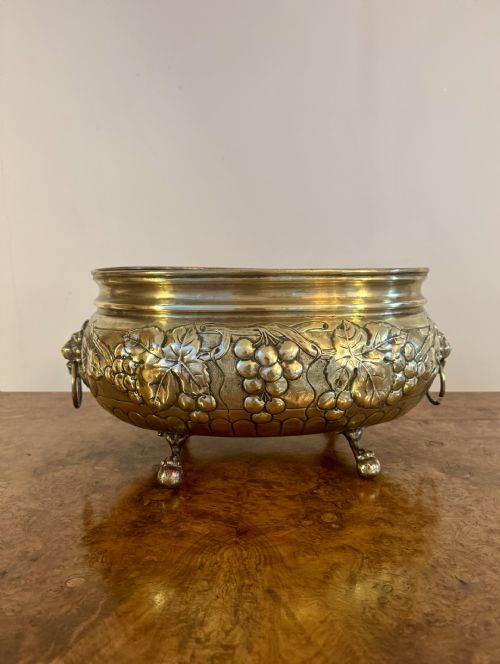
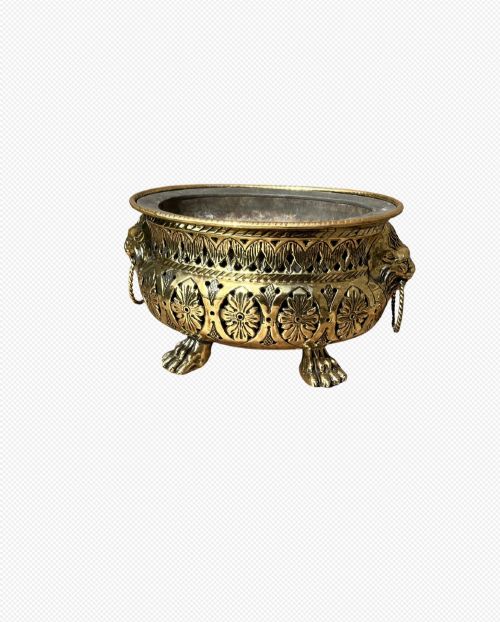
Makers utilised heavy gauge brass and copper, often shaping the metal body using repoussé techniques to create raised decorative motifs, animal heads, or geometric piercings. Copper and brass pieces frequently feature applied handles, riveted seams, and sturdy feet to support moist soil.
Timber versions rely on traditional coopering with mahogany and walnut staves held by metal bands, or utilise hardwood alongside polished marble tops. These methods ensured the wood could withstand moisture whilst providing a stable, decorative platform for large indoor plantings.
Footed Plant Holder Retail Price Guide 2026
Typical asking prices for footed plant holder among the pieces listed under this phrase on Sellingantiques today, from the lower quarter to the upper quarter. They describe what is for sale here now, not the wider market.
Several brass planters feature fierce lion mask handles, keeping a watchful eye over the parlour ferns.
Judging quality in metal and timber
Quality rests upon the crispness of the repoussé work, the weight of the metal, and the integrity of the joins. Hand-hammered detailing with deep, sharp relief and securely fastened cast handles demonstrate superior craftsmanship compared to mass-produced, thinner stampings.
In wooden and marble examples, the precision of the coopered staves and the figuring of the mahogany or walnut distinguish finer pieces. The seamless integration of marble inserts into hardwood frames indicates higher workshop standards.
The Footed Plant Holder Glossary
- Jardiniere
- An ornamental pot or stand for holding flowers or plants, typically ceramic or metal. These vessels sit upon feet or pedestals to display indoor flora.
- Repoussé
- A metalworking technique where the metal is hammered from the reverse side to form a raised design in relief. This creates tactile surface patterns on brass and copper planters.
- Coopered
- Constructed from wooden staves bound together with hoops, much like a barrel. This method forms the curved body of many wooden planters.
- Pierced
- Perforated or cut through to create decorative openwork patterns in metal. This technique allows light through the upper sections of brass vessels.
Footed Plant Holder: Frequently Asked Questions
What is a footed plant holder?
A footed plant holder is a decorative vessel designed to hold potted plants while raising them above the surface of furniture or flooring. They protect interior surfaces from moisture and provide an ornate display for foliage.
These pieces typically take the form of metal jardinières with cast feet or wooden stands incorporating marble tops. They reflect the interior design tastes of the nineteenth and early twentieth centuries.
How were brass and copper planters decorated?
Metal planters often feature repoussé work, where designs are hammered into relief from the reverse side. Artisans also employed piercing to create geometric patterns and attached cast brass lion masks for handles.
These decorative choices turned utilitarian plant containers into focal points of Victorian and Edwardian rooms. The metal surfaces developed rich patinas over decades of polishing and exposure.
Are wooden planters coopered?
Many wooden planters are indeed coopered, utilising curved timber staves joined together in the manner of a barrel. This traditional woodworking technique accommodates the circular form required for plant pots.
Coopers used dense timbers like mahogany and walnut, often securing the staves with metal bands. This construction method handled moisture well while showing off the grain of the wood.
How do I date a metal jardiniere?
Dating relies on stylistic clues, manufacturing techniques, and the type of metal finishing. Pieces from the mid-nineteenth century often display Gothic Revival or heavy classical influences, while later examples embrace Arts and Crafts simplicity.
Examining the fixings, such as hand-cut screws or machine-made rivets, helps narrow down the period of manufacture. The presence of specific maker marks or registration numbers can also pinpoint the exact era.