








Folk Art Tapestry
These folk art tapestry pieces bring raw texture and regional history directly to your walls, spanning nineteenth-century samplers to Central Asian dowry embroideries.
Folk Art Tapestry
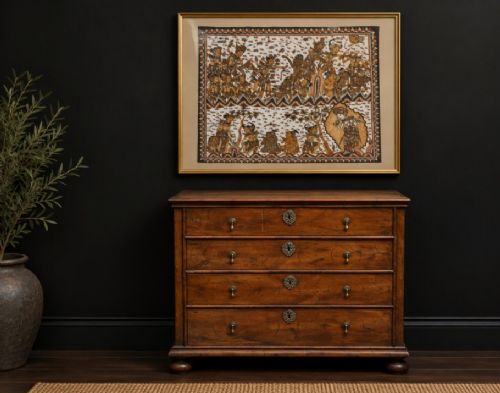
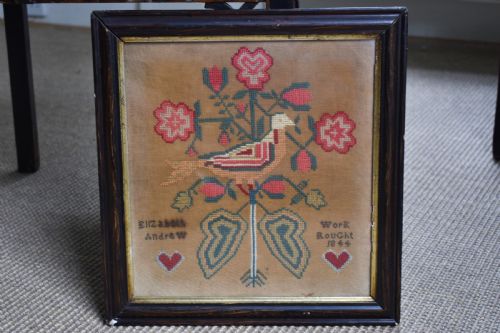
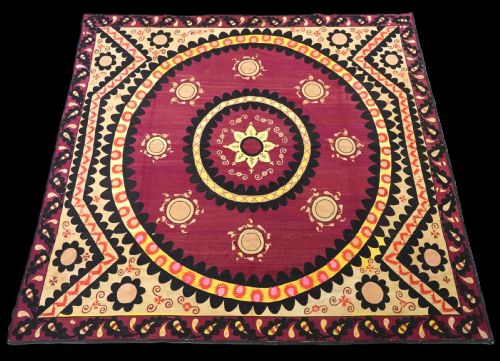
When you search for folk art tapestry, you encounter a diverse range of textiles and wall art originating from Victorian parlours, Scandinavian homesteads, and Central Asian nomadic tribes. The selection on this page leans heavily toward nineteenth-century wool works, Romanian floral weaves, and intricate Uzbek Suzanis designed for domestic display. These objects served utilitarian, decorative, or ceremonial purposes within their home cultures before entering the antique market.
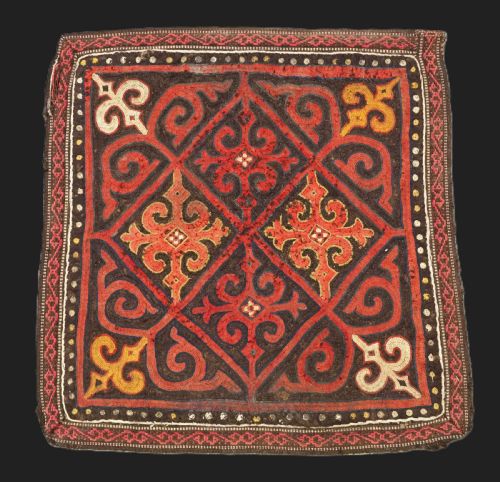
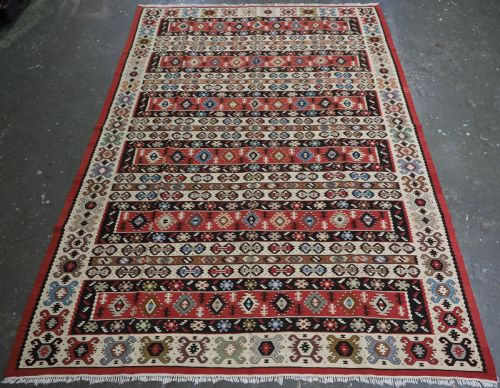
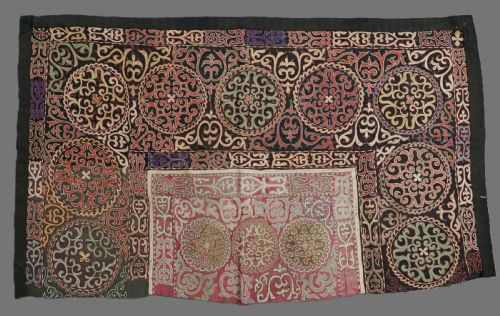
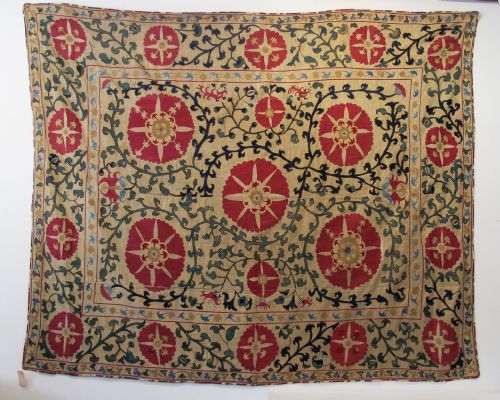
Forms vary considerably, taking the shape of framed wall art, embroidered felt panels, kilims, and heavy textile wall hangings. Pieces from Eastern Europe and Scandinavia often present bold geometric patterns or floral motifs, while Asian examples display dense silk embroidery on cotton grounds. Each hanging captures a distinct regional tradition preserved through domestic handiwork.
How they were made
The construction relies fundamentally on natural textile materials, principally wool, cotton, silk, and linen, often worked upon canvas or felt backings. Makers utilised needlework, embroidery, and traditional weaving techniques to build up dense surfaces and pictorial designs. Glass elements or painted details occasionally supplement the textiles, particularly in specific regional temple cloths and narrative paintings.
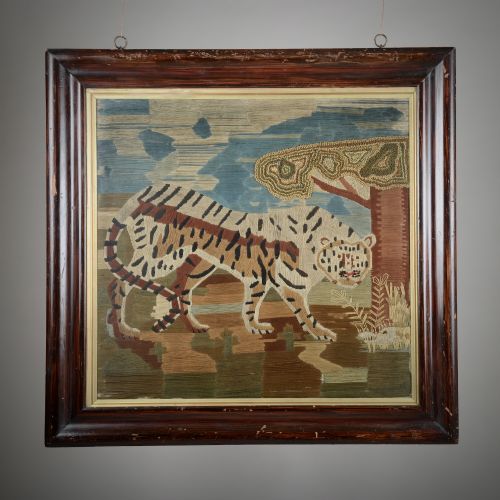
Backings and frames frequently incorporate wood to provide structural support for heavier wall hangings and paintings on textile. The interplay between dyed threads and plain grounds creates the characteristic depth found in pieces like the nineteenth-century sailors woolies and Central Asian Suzanis.
Folk Art Tapestry Retail Price Guide 2026
Typical asking prices for folk art tapestry among the pieces listed under this phrase on Sellingantiques today, from the lower quarter to the upper quarter. They describe what is for sale here now, not the wider market.
Materials documented across the inventory include wool, cotton, silk, linen, glass, wood, canvas, and felt.
What varies in quality
Quality rests primarily in the density of the needlework and the complexity of the design layout, distinguishing fully embroidered surfaces from sparse or routine patterns. The saturation and preservation of natural colours determine visual impact, especially in older kilims and Suzanis where dye stability matters significantly. Finer examples display meticulous stitch control and harmonious compositional balance.
The integrity of the fabric base and the retention of original borders or backing materials also separate superior survivals from heavily restored pieces. Condition plays a role, though minor wear in antique textiles often reflects genuine domestic use rather than inferior initial manufacture.
The Folk Art Tapestry Glossary
- Suzani
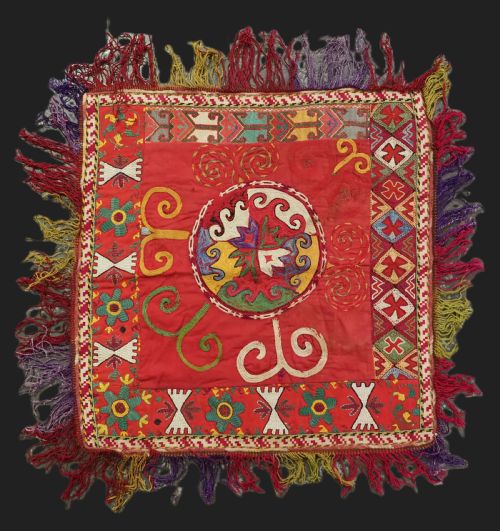
- An embroidered tribal textile originating from Central Asia, typically worked in silk on a cotton ground. These large decorative panels were traditionally made as part of a bride's dowry.
- Kilim
- A flat-woven carpet or tapestries produced in regions including the Balkans and Eastern Europe. They lack pile, relying instead on interlocking warp and weft threads to form geometric patterns.
- Sampler
- A piece of embroidery produced as a demonstration or test of skill in needlework. Victorian examples frequently display alphabets, numbers, and domestic scenes.
- Woolie
- A specific type of nineteenth-century maritime embroidery created by sailors using coloured wool yarns. These pieces typically depict naval vessels against stitched backdrops.
- Rya
- A traditional Scandinavian piled rug or wall hanging utilised for warmth and decoration. Early versions feature deep woolen knots arranged in bold patterns.
Folk Art Tapestry: Frequently Asked Questions
How do I hang a heavy textile safely?
Support heavy wool works and Suzanis across their entire top edge using a padded wooden batten or a concealed sleeve. Avoid hanging antique textiles by isolated loops or direct nailing, which stresses the fabric fibres.
Keep textiles away from direct sunlight and damp walls to preserve the natural silk and wool threads over time.
What is the difference between a Suzani and a kilim?
A Suzani is an embroidered textile panel usually worked in silk thread upon a cotton or linen foundation, originating largely from Central Asian traditions. A kilim is a flat-woven textile produced without a pile, common in Balkan and Eastern European folk art.
Suzanis focus on needle-painted floral and symbolic motifs, while kilims rely on geometric weave patterns.
How do I identify the period of a textile?
Dating relies on material analysis, dye types, and regional stylistic markers recorded in the specific weaving or embroidery methods. Nineteenth-century pieces often exhibit hand-spun yarns and natural dye variations that differ from later twentieth-century production.
Comparing structural backings and motifs against known regional examples helps narrow down the decade of creation.