
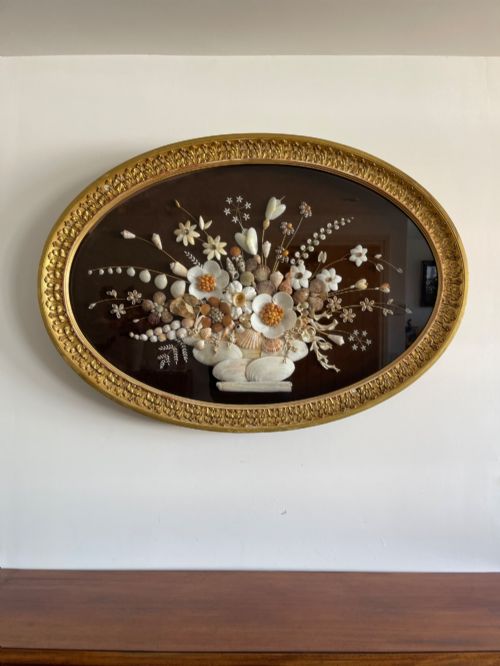


Folk Art Pictures
Folk art pictures are direct, unpretentious expressions of domestic life and local tradition, prized for their genuine character and hand-worked charm.
Folk Art Pictures
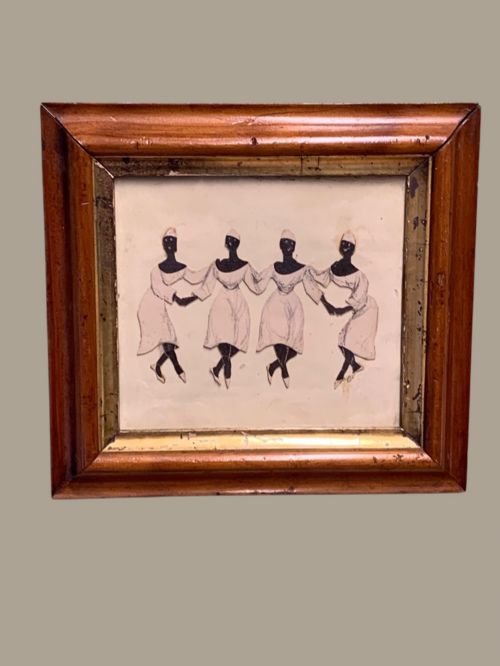
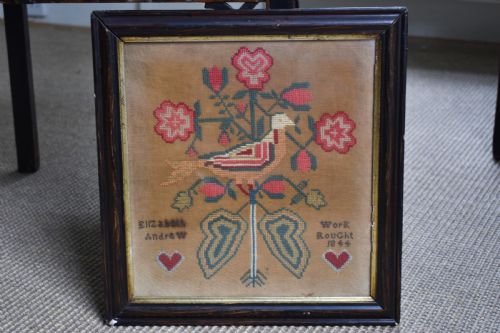
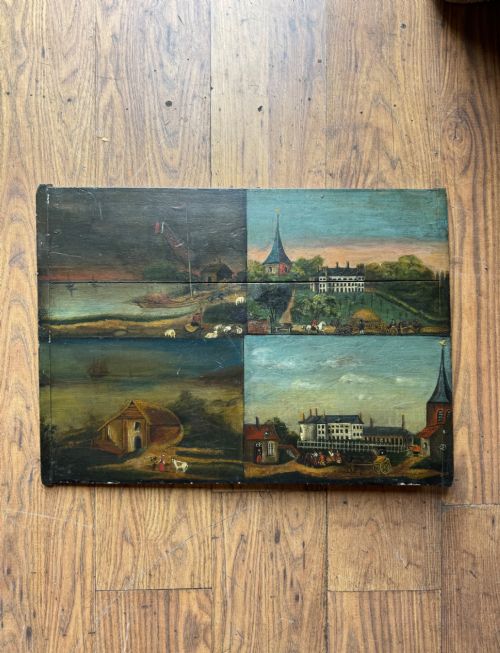
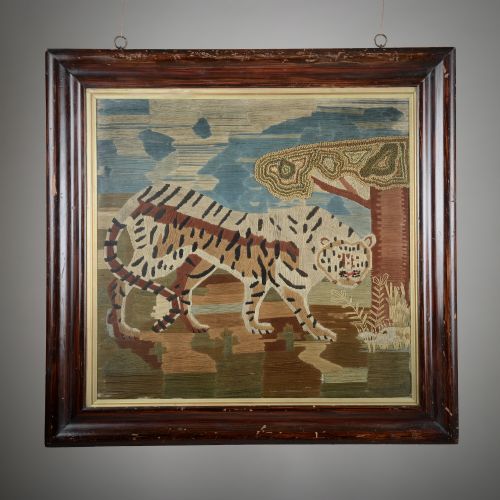
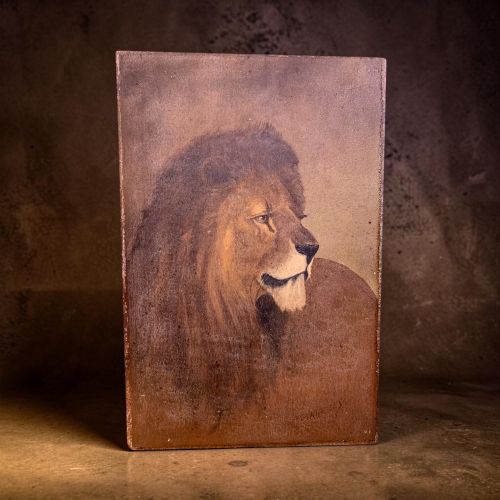
You are most likely to meet nineteenth-century works on this page, including oil portraits of animals and gentlemen, sailors' woolwork embroideries, and stitched samplers. These pieces reflect regional British and international naive traditions, created outside official academic institutions.
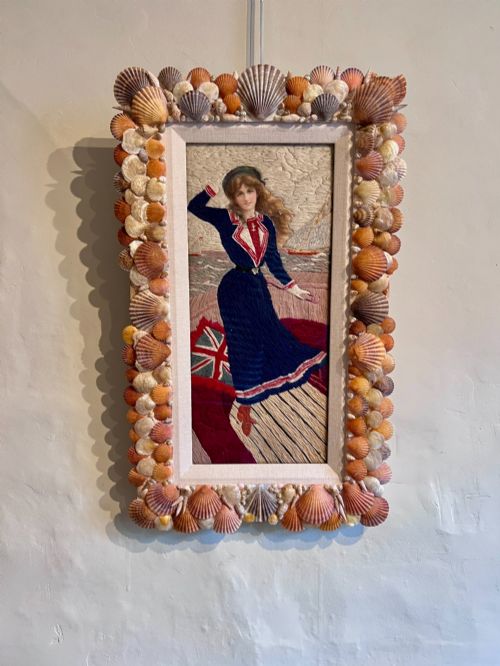
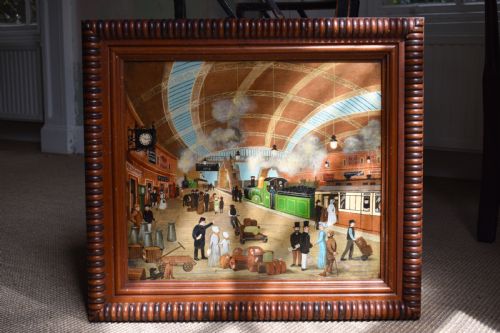
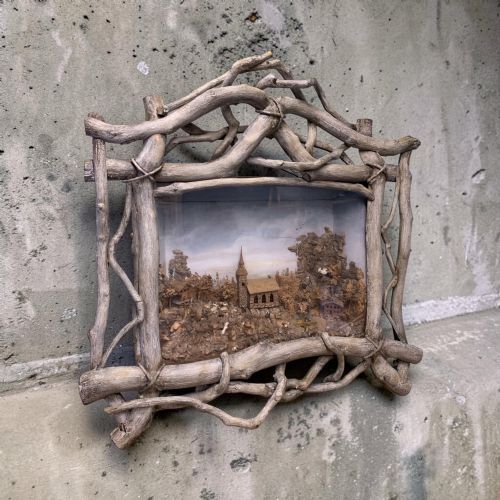
The assortment also encompasses specialised forms such as shellwork pictures, jigsaw woodwork relief paintings, and tramp art picture frames. Each object presents a direct view into historical domestic pastimes and popular culture.
Materials and Techniques
Maker materials span canvas, wood, paper, glass, linen, and wool, often combined within a single composition. Artists applied oil paint and watercolour onto boards and canvas, while others stitched wool and thread to form detailed pictorial woolies and samplers.
Three-dimensional pieces utilise cork, twigs, shells, and carved wood to construct layered dioramas and relief panels. Frames frequently incorporate tramp art notch-carving or giltwood to house these diverse media securely.
Materials represented across the collection include oil paint, canvas, glass, linen, wool, paper, and carved wood.
Assessing Quality
Quality rests upon the strength of the visual composition, the clarity of the maker's hand, and the preservation of the original materials. Stronger examples display confident, expressive brushwork or precise needlework rather than hesitant execution.
Materials also influence the piece, with stable canvases, intact wool fibres, and undamaged dioramas commanding attention. Original frames, particularly carved tramp art or period giltwood surrounds, elevate the integrity of the artwork.
Gertrude Halsband·W Skinner·William Shayer·Louis Marie Dominique Robbe
The Folk Art Pictures Glossary
- Naive art
- Visual art created by a person without formal training, often characterised by a childlike perspective and simplified proportions.
- Diorama
- A three-dimensional scene built up from layered materials such as cork, wood, and paper inside a protective glazed frame.
- Sampler
- A piece of embroidery showcasing various stitches and alphabets or pictorial motifs, traditionally produced as a demonstration of skill.
- Tramp art
- A woodworking style involving the chip-carving of small pieces of wood, often rescued from cigar boxes, into geometric picture frames.
Folk Art Pictures: Frequently Asked Questions
What defines folk art pictures?
These works are created by self-taught or provincial makers working outside academic art traditions. They capture everyday subjects with direct observation and personal style.
The materials used reflect local availability, ranging from wool and textiles to oil paint on board and carved wood elements.
How were sailors woolies made?
Sailors constructed woolwork pictures, often called woolies, while at sea using spare yarn. They combined stitching with padded elements to give texture to ships and figures.
These textile pieces were typically housed in simple wooden frames to protect the delicate wool threads from dust and moisture.
Where should I hang these?
Folk art pictures suit cottage interiors, studies, and eclectic living spaces where their rustic charm can be appreciated up close. Natural light enhances the varied textures of wool, canvas, and carved wood.
Keep them away from direct sunlight and damp environments to protect the organic materials and original pigments.
How do I date a piece?
Dating relies on the materials, framing techniques, and the style of dress or subject matter depicted. Nineteenth-century works often feature hand-spun wools, primitive oil stretchers, or early glass.
Comparing the construction methods of the backing boards and frames to known historical periods helps confirm the age of the artwork.