


Folk Art Carved Chair
A folk art carved chair brings individual regional handiwork straight into a room, offering practical seating shaped by local hands and unpretentious traditions.
Folk Art Carved Chair
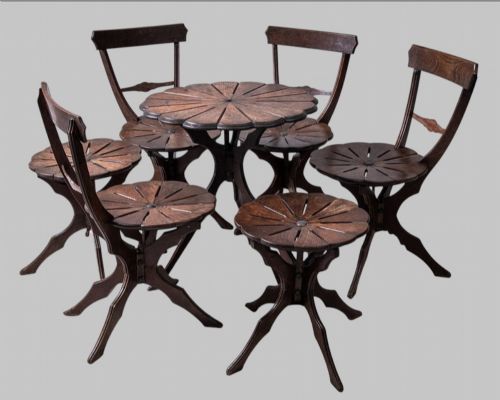
A folk art carved chair encompasses vernacular seating shaped by regional traditions, often originating from mountain communities and rural workshops across Europe, Britain, and further afield. Buyers encounter forms ranging from low spinning chairs and dugout seats to towering throne armchairs and sturdy alpine escabelle chairs.
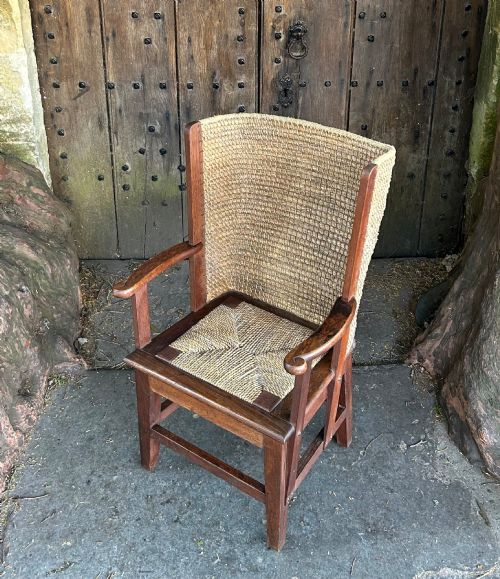
The pieces on this page span the nineteenth century into the Edwardian era, reflecting both domestic utility and decorative rural craftsmanship. Examples include Welsh spinning chairs, Swedish bobbin armchairs, Tyrolean mountain chairs, and Orkney seating.
Makers working within these vernacular traditions drew on local timber and regional motifs to create practical seating that doubled as personal expression. Each piece carries the distinct imprint of its maker, whether through chip carving, painted decoration, or natural branch forms.
Materials and Construction
Makers utilised available local timbers such as oak, pine, walnut, and general hardwood, selecting materials based on regional availability and the specific demands of the seat. Solid wood construction forms the foundation of these chairs, often paired with rush seating or dugout cavities.
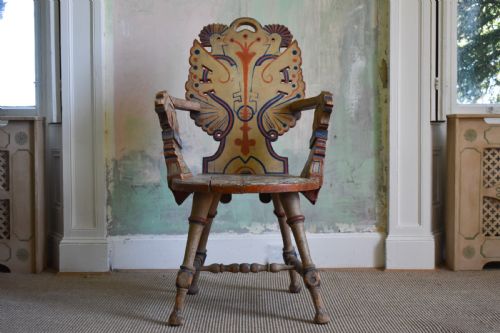
Carving techniques vary from simple chip-carved geometric patterns to sculptural natural forms and figurative motifs like snake heads or American eagles. Paint finishes, hand-painted details, and turned elements such as bobbin turnings give individual pieces their striking visual character.
Object types range from side chairs and armchairs to children's furniture, wood carvings, and complete parlour suites.
Understanding Quality and Character
Quality in a folk art carved chair rests in the vigour and confidence of the carving, alongside the integrity of the vernacular construction. Pieces where the maker has pushed the boundaries of traditional form tend to stand apart from simpler utility seating.
The preservation of original surface finishes, whether unpainted timber patination or early hand-painted decoration, dictates the visual strength of the piece. Proportion, comfort, and the distinctiveness of regional motifs complete the distinction between standard vernacular work and exceptional folk carving.
The Folk Art Carved Chair Glossary
- Spinning chair
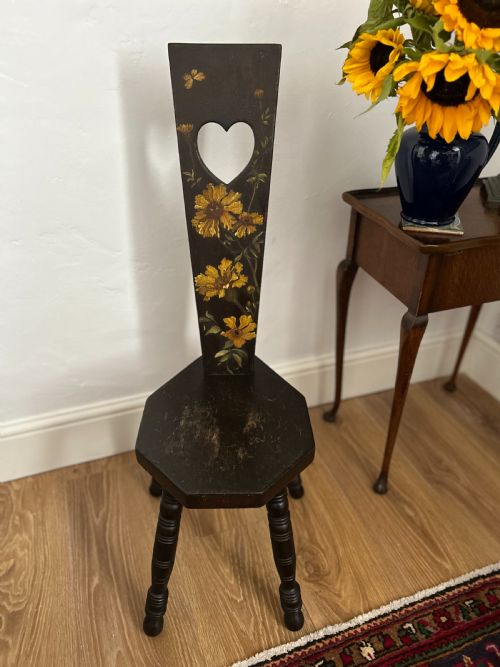
- A low-backed chair traditionally designed for women engaged in spinning yarn, often featuring an elaborately carved backrest and compact seat. These chairs remain popular for fireside placement.
- Escabelle chair
- A traditional box-base or solid-sided chair common in alpine regions, noted for its sturdy construction and upright posture. They often appear in pairs or sets.
- Bobbin armchair
- A chair constructed using turned cylindrical wood pieces resembling bobbins or spools, popular in Scandinavian country furniture during the nineteenth century.
- Dug out chair
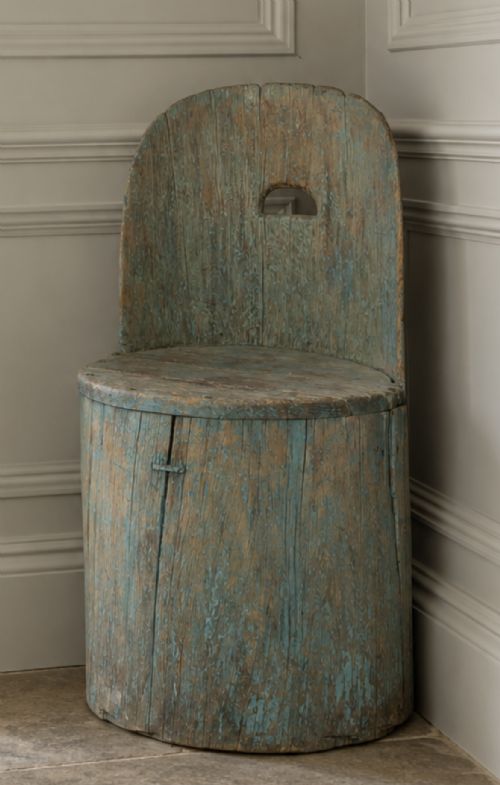
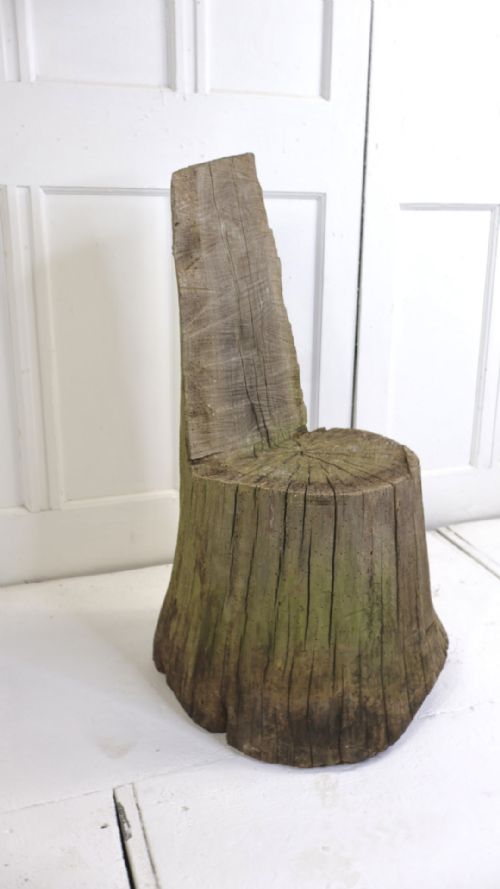
- A primitive form of seating carved directly from a single solid log or trunk, creating a continuous shell for the seat and back. This method represents an ancient woodworking tradition.
- Vernacular
- Architecture and furniture made by local craftspeople using traditional methods and native materials without formal academic training. These pieces reflect local culture rather than metropolitan fashion.
Folk Art Carved Chair: Frequently Asked Questions
How do I identify a folk art chair?
Look for hand-carved regional motifs, vernacular construction methods, and local timber choices that depart from standard factory-made furniture.
Regional styles like Tyrolean mountain chairs or Welsh spinning chairs carry specific structural traits tied to their geographic origins.
Are these chairs comfortable for daily sitting?
Many vernacular chairs were built for specific tasks like spinning or fireside gathering, meaning their proportions differ from modern lounge seating.
Purchasing one for daily use depends on the seat height and back angle, though many make excellent accent or hallway chairs.
How should I care for a painted folk art chair?
Keep antique painted and wooden surfaces away from direct sunlight and sudden temperature changes to protect the finish.
Dust gently with a dry cloth and avoid harsh chemical polishes that can lift historic paint layers.
What periods do these chairs date from?
The pieces listed primarily date from the nineteenth century through to the Edwardian period and the early twentieth century.
Earlier examples from the eighteenth century occasionally appear, distinguished by primitive construction and older pine or hardwood timber.