





Folk Art Bottle
A folk art bottle holds miniature maritime scenes or detailed enamel work inside clear glass, offering a charming glimpse into historical craftsmanship.
Folk Art Bottle
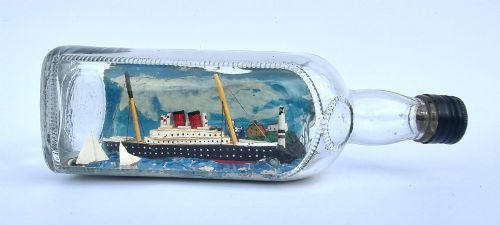
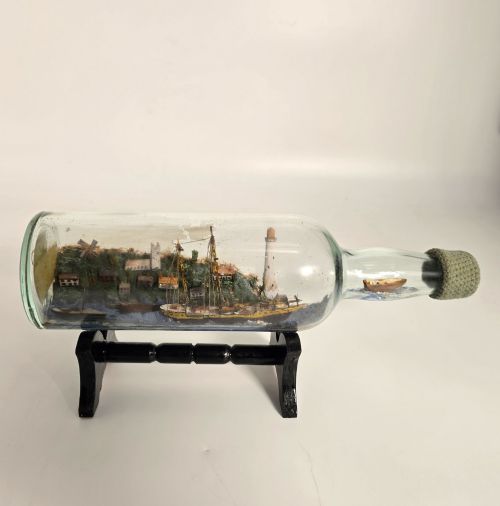
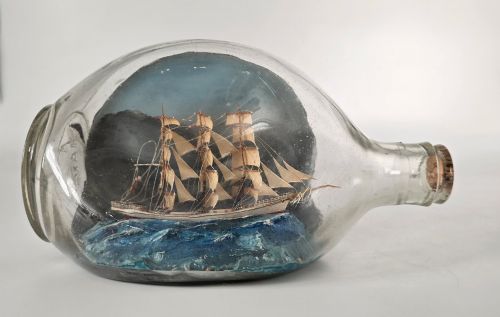
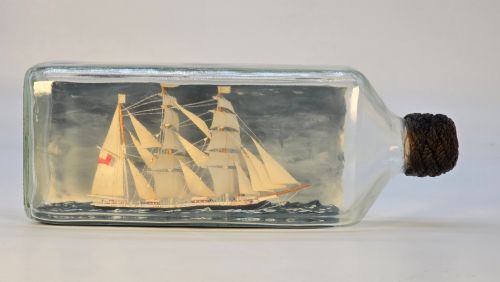
A folk art bottle usually takes the form of a ship in a bottle diorama, featuring intricate model sailing vessels or steam ships constructed entirely to fit through a narrow neck. These maritime pieces appear alongside decorated glass flasks and personal decanters from various European regions.
The objects span multiple periods, including 18th century examples, Victorian pieces, and items from the 1920s and 1930s. English, Welsh, German, Dutch, Austrian, and Bohemian origins feature prominently across the available selection.
Buyers also encounter specialised whimseys such as prisoner of war creations and religious calvary scenes housed within the glass. Each variation demonstrates distinct regional traditions in domestic and maritime handicraft.
How they were made
Makers utilised clear glass bottles as protective vessels, sealing the interior scenes with cork and thread. Wooden components formed the hulls and masts of model ships, which were often manipulated into position using internal strings once inside the glass.
Surface decoration involved paint and enamel applied directly to the exterior or interior of the glass, sometimes secured with putty. Pewter elements and carved wooden plinths frequently completed the presentation of these decorative objects.
Folk Art Bottle Retail Price Guide 2026
Typical asking prices for folk art bottle among the pieces listed under this phrase on Sellingantiques today, from the lower quarter to the upper quarter. They describe what is for sale here now, not the wider market.
Some bottles hide entire religious calvary scenes or prisoner of war whimseys inside, patiently built through the narrow neck.
What varies in quality
Quality rests upon the intricacy and scale of the internal diorama relative to the size of the glass opening. Multi-masted sailing ships and detailed harbour scenes demand greater technical skill than simpler single-hull models.
The preservation of polychrome enamel paintwork and the clarity of the original glass significantly influence the character of each piece. Intact corks, original wooden plinths, and documented regional origins add historical weight to individual items.
The Folk Art Bottle Glossary
- Diorama
- A three-dimensional miniature scene displayed within a confined space. In this context, it refers to model ships arranged inside glass bottles.
- Whimsey
- An imaginative or quirky handcrafted item made by sailors, prisoners, or folk artisans. These objects often display intricate internal assembly.
- Polychrome
- Decorated in multiple colours. This technique appears on enamel painted flasks and decanters from various European regions.
- Plinth
- A heavy wooden base or support structure. Many model ship dioramas rest upon these custom wooden platforms.
- Schnapps flask
- A traditional spirit container made of glass. Period examples often feature painted or enamelled decorations.
Folk Art Bottle: Frequently Asked Questions
How did makers get ships into bottles?
Makers constructed model ships with hinged masts and rigging that folded flat against the hull. Once inserted through the neck of the bottle, strings pulled the masts upright into their final locked position.
Additional details like miniature figures and painted backdrops were introduced using specialised long tools. The entire interior was then secured and sealed.
Where were these pieces made?
Origin points vary widely across Europe, with English and Welsh maritime pieces appearing alongside Dutch, German, Austrian, and Bohemian examples. Each region contributed distinct decorative styles to the glass and internal scenes.
Maritime communities naturally produced many of the ship dioramas. Continental workshops tended to focus more on enamelled personal flasks and decanters.
How should I display a folk art bottle?
These pieces require stable flat surfaces away from direct sunlight and sudden temperature shifts. Many ship models rest securely on their original wooden plinths or bases.
Handling should remain minimal to protect fragile external corks and delicate painted surfaces. Regular light dusting keeps the clear glass transparent.
How do I date an antique bottle?
Dating relies on the style of the glass manufacturing, the type of vessel depicted, and any accompanying inscriptions. Early 18th century examples show different glass characteristics compared to Victorian or 1930s pieces.
Stylistic cues in the model steam ships or sailing vessels help narrow down the period of creation. Archival records and signed details occasionally provide precise dates.