


Folding Wine Table
A folding wine table is a clever collapsible surface for drinks and serving, prized by collectors for its portability and period charm.

Folding Wine Table
A folding wine table represents a practical piece of historical furniture designed to be packed away or moved easily when not in use. When searching for a folding wine table, buyers encounter diverse forms ranging from French wine tasting tables to English campaign pieces.
The selections span multiple eras, with the nineteenth century providing numerous oak and cherry examples alongside Victorian and Georgian specimens. Forms include round vineyard tables, tilt top tables, and serving pieces designed for occasional use.
Origin and regional style shape each piece significantly, shifting from French provincial vineyards to British colonial campaign quarters. These tables function just as effectively today as auxiliary surfaces in modern rooms.
Materials and construction
Timbers dominate the construction of these pieces, with oak, mahogany, cherry, and fruitwood appearing frequently across the inventory. Brass fittings and iron hinges provide the necessary mechanical support for folding actions and drop leaves.
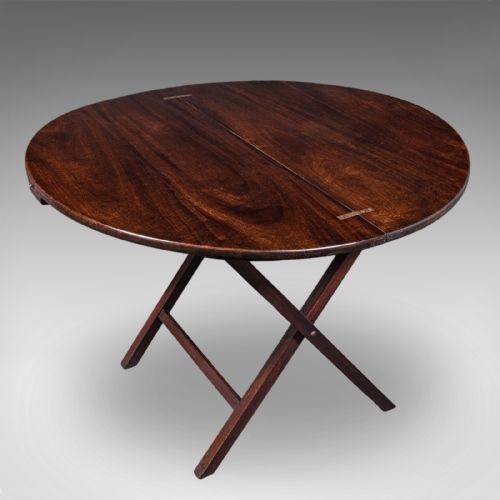
Joinery methods vary according to the origin, utilising sturdy hinges, X frames, and tilt top mechanisms to achieve collapse without sacrificing stability. Secondary woods like pine appear in simpler contexts while decorative leather tops add texture to specific Arts and Crafts variants.
The inventory records oak and mahogany as the dominant timbers, appearing alongside cherry, fruitwood, teak, and pine across multiple centuries.
Judgement of quality
Quality rests upon the integrity of the folding mechanism and the tightness of the original joints. Pieces that fold smoothly without looseness demonstrate superior cabinetmaking.
The choice of timber grain and the depth of the patination elevate certain examples above utility grade items. Better workshops selected rich figures in mahogany or dense fruitwoods and finished the surfaces with care.
The Folding Wine Table Glossary
- Vendange table
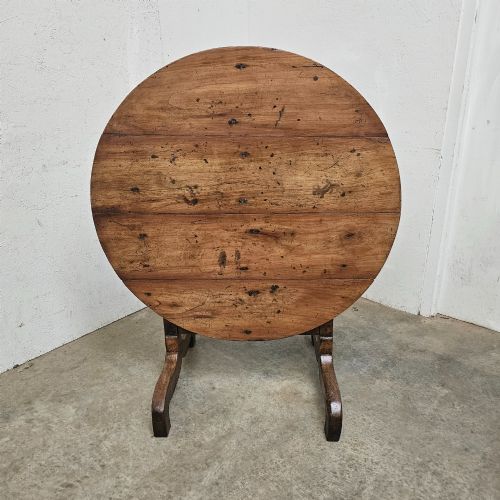
- A French vineyard table traditionally used during the grape harvest and wine making season. These round folding tables typically feature fruitwood or oak tops.
- Campaign table
- Portable furniture designed for military officers or travel. Such pieces incorporate folding X frames or removable trays for transit.
- Tilt top table
- A table featuring a mechanism that allows the surface to pivot to a vertical position. This design enables the table to be stored flat against a wall.
- Cellarette table
- A specialised cabinet or table designed to hold bottles of wine. Georgian examples often incorporate metamorphic folding elements.
- Dumbwaiter
- A tiered serving table intended to hold dishes or beverages without requiring servants present. These can include folding tiers or pivoting sections.
Folding Wine Table: Frequently Asked Questions
What is a folding wine table used for?
These pieces function as portable surface areas for holding glasses, bottles, and lamps during social gatherings.
Historically, they served practical roles in vineyards, campaign tents, and drawing rooms where flexible space management mattered.
How do I date a folding wine table?
Dating relies upon examining the timber species, construction hardware, and distinct stylistic markers associated with periods like the Georgian era or Victorian times.
Hand-cut joints and original brass hinges often point towards earlier craftsmanship compared to mid-twentieth-century reproductions.
Are French and English folding tables different?
French examples tend to focus on wine tasting and vineyard use, often presenting as round oak or cherry vendange tables.
English variants frequently lean towards campaign styles, mahogany dumbwaiters, or coaching tables built for military or domestic service.
How do tilt top mechanisms work?
A catch or latch underneath the surface releases the table top, allowing it to pivot ninety degrees on a pivot block.
This clever engineering lets the user store the table flat against a wall when floor space is needed.