


Folding Leaf Card Table
When you unfold a folding leaf card table, you reveal a practical piece of social history built for domestic entertainment.
Folding Leaf Card Table
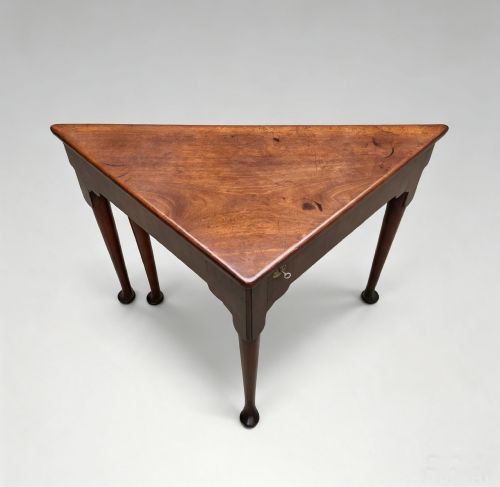
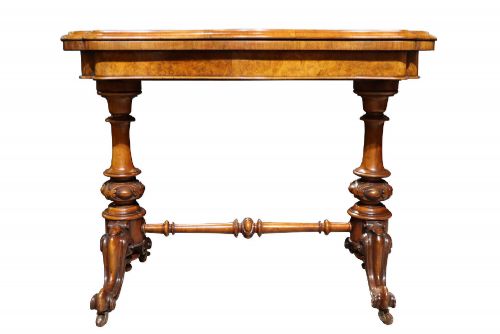
A folding leaf card table is a multi-functional item designed to adapt from a compact side or tea table into a generous surface for gaming or dining. The examples seen on this page span several distinct eras, stretching from the robust forms of the 18th century through the refined lines of the Georgian and Regency periods, up to the later Victorian, Edwardian, and 1900s iterations.
You are most likely to encounter mahogany and walnut versions featuring turn-over leaves, envelope mechanisms, or fold-over tops. These pieces frequently double as tea, supper, or occasional tables, reflecting how domestic spaces required furniture to serve multiple purposes throughout the day.
Materials and construction methods
Cabinet makers utilised dense, durable timbers such as mahogany, oak, and walnut for the primary structure and framing of these tables. Finer surfaces often showcased decorative veneers including burr walnut, rosewood, satinwood, and ebony, sometimes enhanced with marquetry or hand-painted details.
Construction relied upon stable pivoting, folding, and rotating mechanisms to support the opening leaf safely during play. Brass hardware and carved wooden supports provided both structural strength and visual definition to the hinges, legs, and internal wells.
Some tables hide secret compartments for counters, proving that polite Georgian parlour guests took their gaming very seriously indeed.
Distinctions in craftsmanship and finish
Quality separates pieces through the precision of the timber matching in the veneers and the crispness of any carved or inlaid decoration. Superior examples maintain a seamless alignment when the leaf is folded shut, with joints that remain tight and true across centuries of use.
The sophistication of the internal mechanism also dictates value, where smooth, balanced folding actions and well-fitted gaming wells outclass stiffer, simpler hinges. Additionally, the depth of colour and the condition of the polished wood finish reflect the original maker's investment of time and material selection.
Whytock and Reid of Edinburgh
The Folding Leaf Card Table Glossary
- Turn Over Leaf
- A table top hinged along the back edge that opens out to double the surface area for games or dining. This design is standard across Georgian and Victorian card tables.
- Envelope Top
- A clever square top composed of four triangular flaps that swivel and unfold outward like an envelope to reveal a baize-lined playing surface. They often incorporate small corner wells for counters.
- Marquetry
- Decorative patterns created by fitting different pieces of coloured wood veneer into a master design on the table top. It was particularly favoured during the Victorian and Edwardian eras.
- Gaming Well
- A recessed compartment built into the table surface beneath the folding top to hold cards, dice, or betting counters during play. These wells keep items secure when the table is cleared.
- Demi-Lune
- A half-moon shape used for table tops and frames, allowing the closed piece to sit flat against a wall as a console before opening into a full circle.
Folding Leaf Card Table: Frequently Asked Questions
What were folding leaf card tables used for?
These tables served as the centrepiece for evening parlour games, card playing, and social gatherings in polite society. During the daytime, their folded tops allowed them to function as side, tea, or occasional tables against a wall.
The inclusion of gaming wells and baize surfaces specifically catered to card games such as whist, quadrille, and cribbage.
How do I distinguish a Georgian card table from a Victorian one?
Georgian card tables generally exhibit restrained classical proportions, straight or cabriole legs, and dense mahogany timbers with subtle carving. Victorian examples frequently feature darker burr walnut veneers, elaborate floral marquetry, and heavier turned or carved supports.
Examining the secondary timbers inside the frame and the style of the hinge mechanism also helps clarify the manufacturing era.
Where should I place a card table in a modern home?
A folding leaf card table works exceptionally well in a living room, hallway, or study as a compact side table with the leaf closed. When extra surface space is required for entertaining, it can be moved away from the wall and opened fully.
Keep these tables away from direct heat sources and strong sunlight to protect the aged wood veneers and traditional polished finishes.