
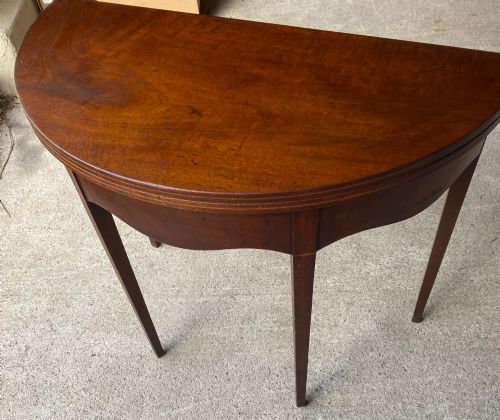
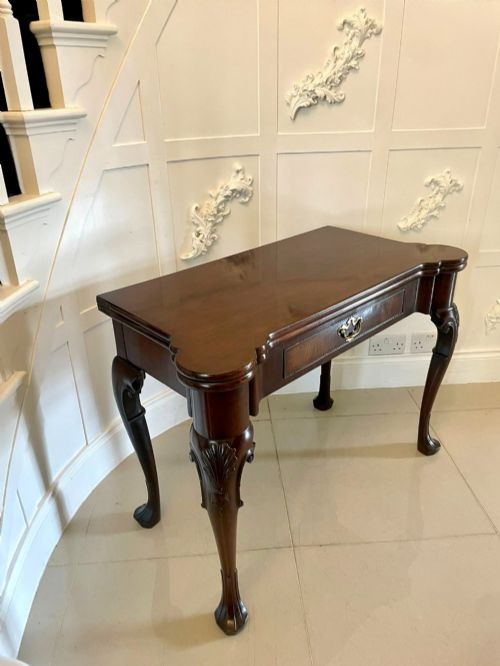
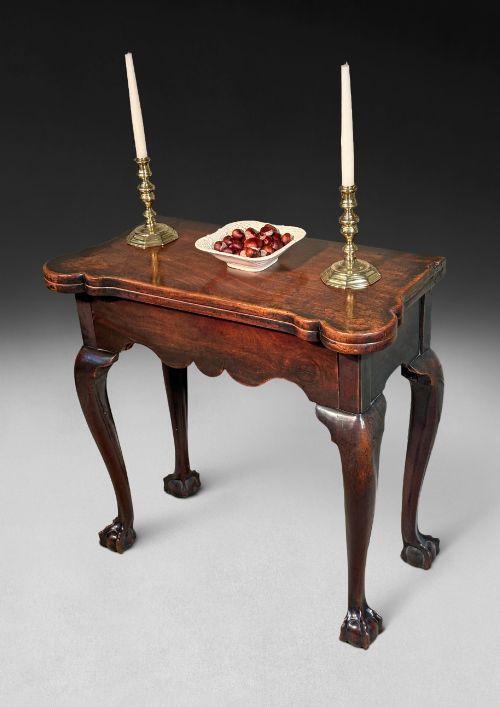
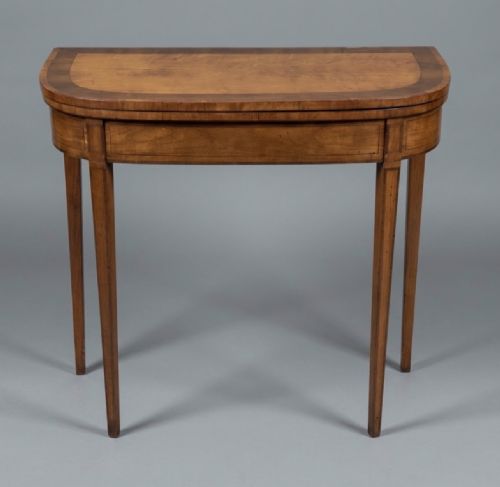
Folding Gaming Table
A folding gaming table provides a surface for play and social hours, moving gracefully from wall console to centre stage.
Folding Gaming Table
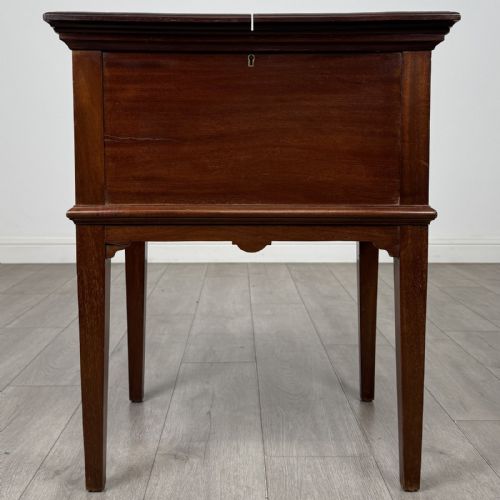
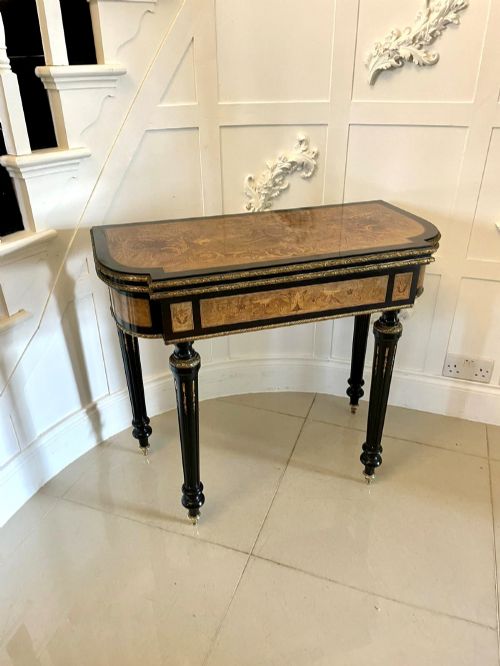
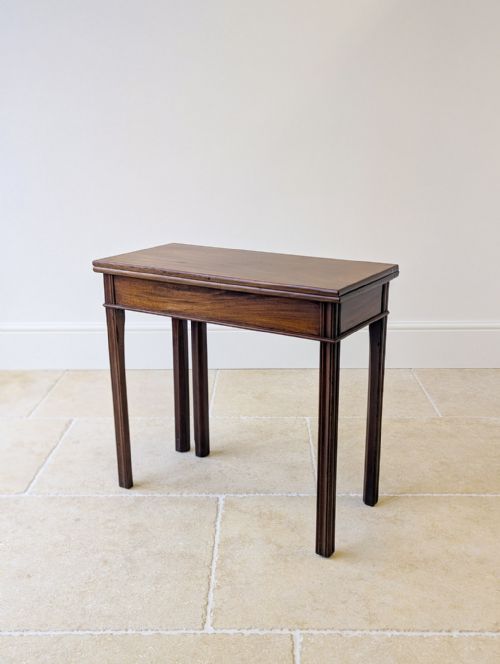
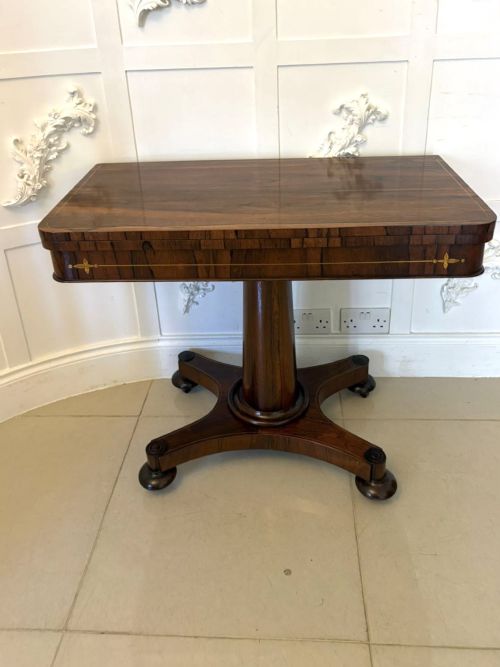
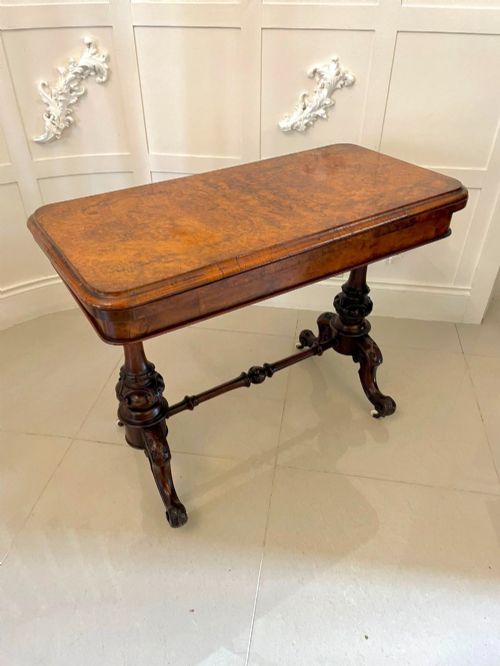
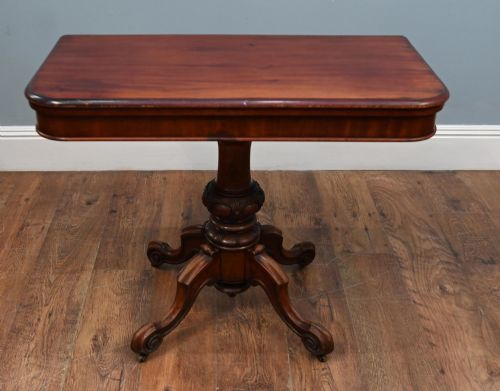
A folding gaming table represents a versatile piece of antique furniture designed primarily for card playing and social gatherings. The folding mechanism allows the top to double in surface area or swivel open to reveal a baize-lined interior, shifting function from a side table or console to a dedicated game surface. These tables trace their lineage through the Georgian, Regency, and Victorian periods, adapting to the changing domestic interiors of each era.
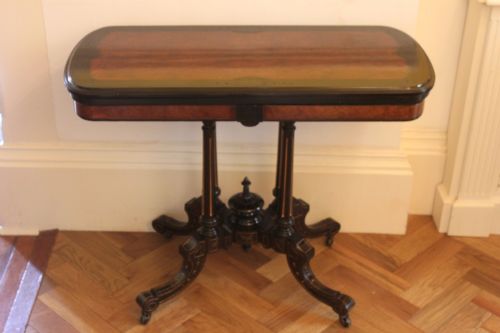
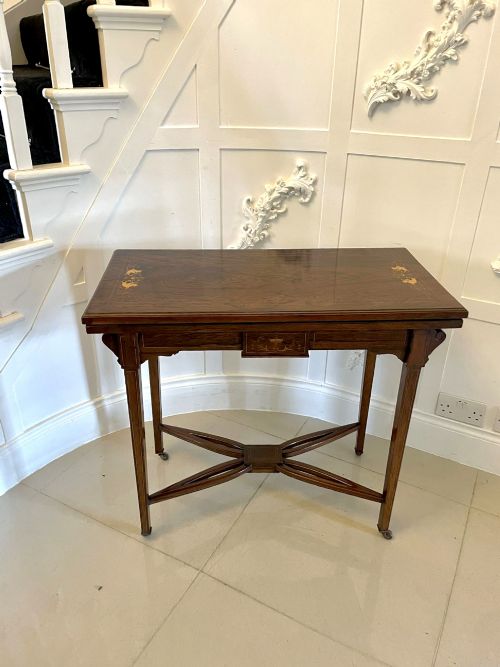
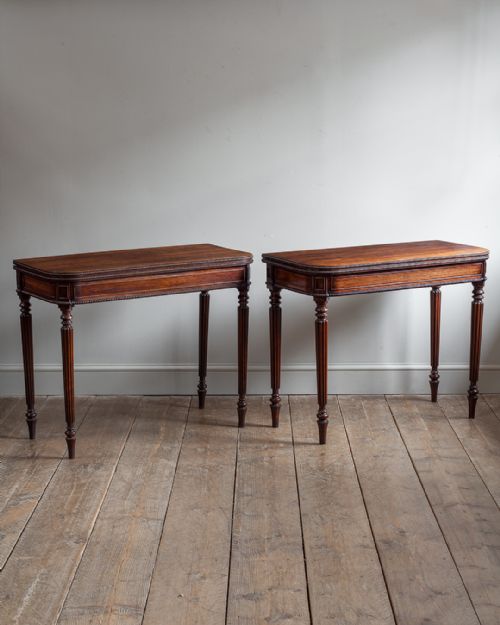
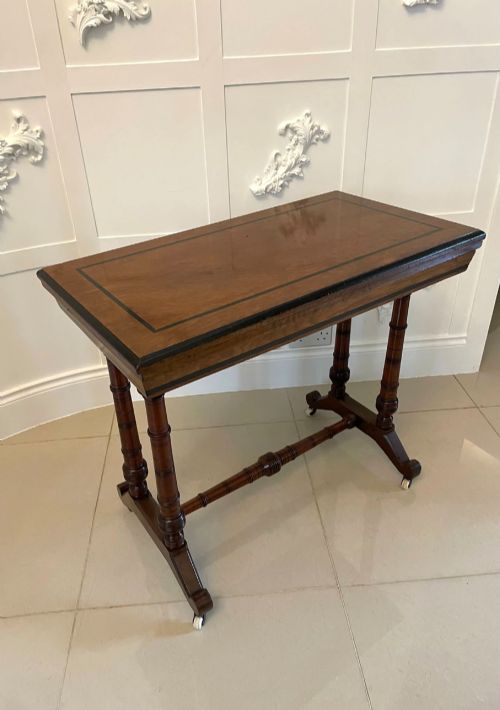
The versions most frequently met on this page include Regency rosewood and mahogany examples alongside Victorian burr walnut and Edwardian satinwood pieces. Many double as tea tables, side tables, or occasional tables, showing how past households prioritised multi-functional furniture. Styles span from George III and William IV designs to Louis XV revival pieces.
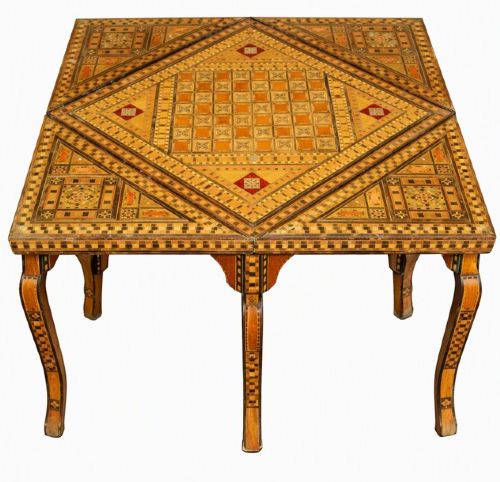
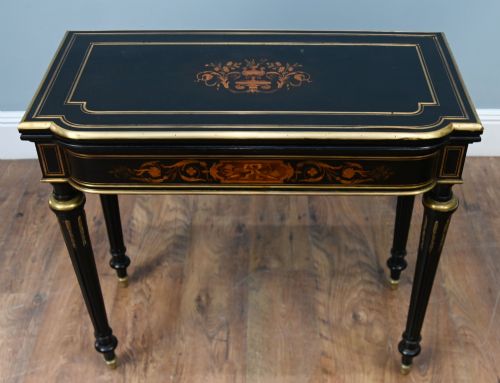
Originating largely from English workshops, these tables also appear with continental influences such as French marquetry and ormolu mounts. The forms vary from demi-lune shapes to rectangular concertina action tables and square envelope tops that unfold like flower petals. Selecting one means weighing whether the primary use is display against a wall or active play in a drawing room.
How they were made
Cabinet makers utilised dense timber foundations like mahogany, rosewood, and walnut, often applying finely figured veneers such as burr walnut, flame mahogany, and satinwood over the primary wood. Crossbanding in contrasting timbers such as kingwood and boxwood framed the edges, adding geometric precision to the top surfaces. Brass inlay and ormolu mounts provided metallic contrast against the dark grains of rosewood and mahogany.
The mechanical action required expert joinery, employing concertina frames, swivel hinges, and pivoting leaf supports to bear the weight of the folding top safely. Carved wooden bases, pillar supports, and basket motifs demanded skilled hand chiselling by artisans. Interior surfaces frequently retained traces of original woven textiles or baize, completing a construction method focused on structural stability beneath decorative veneers.
Listings span the 18th century, Regency, and Victorian periods, utilising mahogany, rosewood, burr walnut, and satinwood.
What varies in quality
The quality of a folding gaming table rests heavily on the selection and matching of timber veneers across the fold-over top. Superior examples display continuous grain patterns that align when closed and mirror each other perfectly when opened. Inferior pieces rely on plain, unselected timbers with little regard for grain movement or visual depth.
Construction integrity within the folding mechanism and the leg joints dictates the longevity of the piece. High-grade tables maintain tight, silent action in their concertina frames and swivel tops without sagging under pressure. Finer workshops invested heavily in crisp hand-carving on the base and precise brass inlay, whereas lower tiers substituted painted decoration or simpler turned legs.
George Bullock·Giles Grendey
The Folding Gaming Table Glossary
- Concertina action
- A table frame that expands outward on an accordion-like timber linkage when the top unfolds, allowing four identical legs to support the corners.
- Demi-lune
- A half-moon shape with a flat edge designed to sit flush against a wall when folded.
- Envelope table
- A square card table design featuring four triangular flaps that rotate and fold outward to reveal the playing surface.
- Crossbanding
- A narrow strip of veneer laid around the border of a tabletop with the grain running perpendicular to the main surface.
- Ormolu
- Gilt-bronze decorative mounts applied to furniture, popular in Regency and French revival pieces.
Folding Gaming Table: Frequently Asked Questions
What were these tables used for historically?
These pieces served as multi-purpose furniture in the Georgian and Victorian drawing room. During the day they functioned as side tables, console tables, or tea tables against the wall.
When evening arrived, households cleared the surface for card games, chess, or social entertainment. The concealed wells beneath the folding tops often stored counters, cards, and gaming accessories.
How do I tell a Regency table from a Victorian one?
Regency tables, produced in the early nineteenth century, favour clean architectural lines, brass inlay, and rosewood or mahogany veneers with classical restraint. Their pedestals often feature brass paw feet or reeded pillar supports.
Victorian pieces, emerging later in the century, embrace heavier proportions, burr walnut veneers, and ornate carved basket or pedestal bases. They also showcase revival influences like Louis XV styling and applied ormolu mounts.
Can I use an antique gaming table daily?
Daily use is entirely possible provided the piece receives careful treatment regarding moisture, direct sunlight, and weight distribution. The antique joints and veneers handle normal placement of drinks coasters and card games well.
Avoid overloading the open leaf with heavy items, as the cantilevered design supports play rather than heavy storage. Treating the polished timber surfaces with gentle maintenance preserves the original finish.