
Folding Brass Top Table
A folding brass top table combines a portable metal tray or surface with a collapsible wooden stand, offering practical surface space with historical character.
Folding Brass Top Table
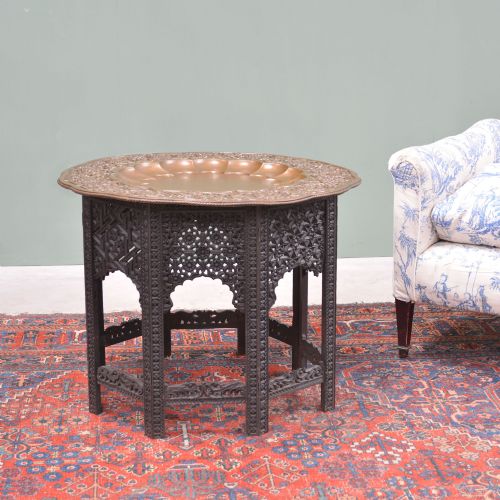
When you search for a folding brass top table, you find pieces spanning the eighteenth century through to the early twentieth century, incorporating diverse regional traditions and English cabinet-making styles. The selection ranges from Anglo-Indian tray top tables to English card and tea tables featuring brass inlay, mounts, or removable metal tops.
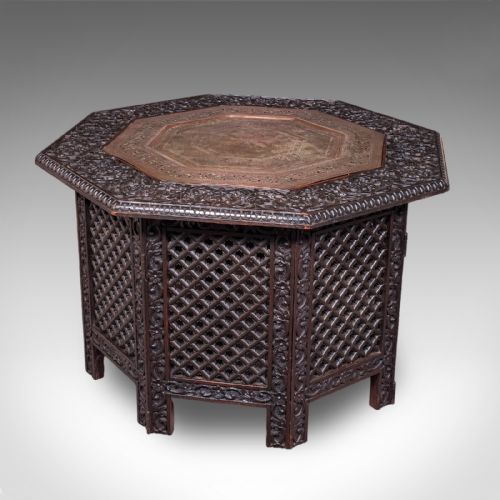
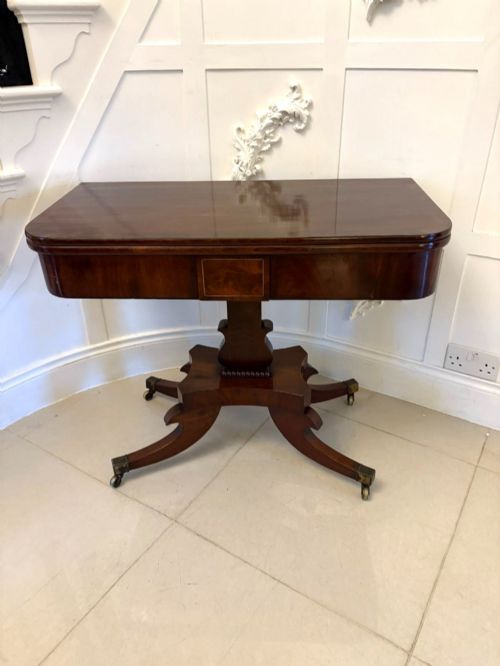
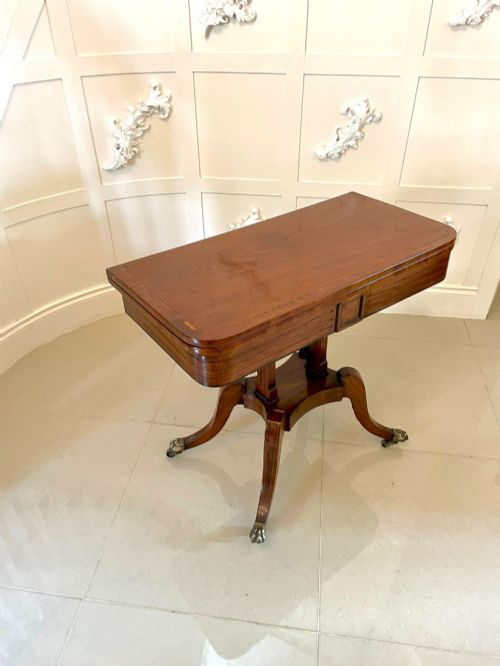
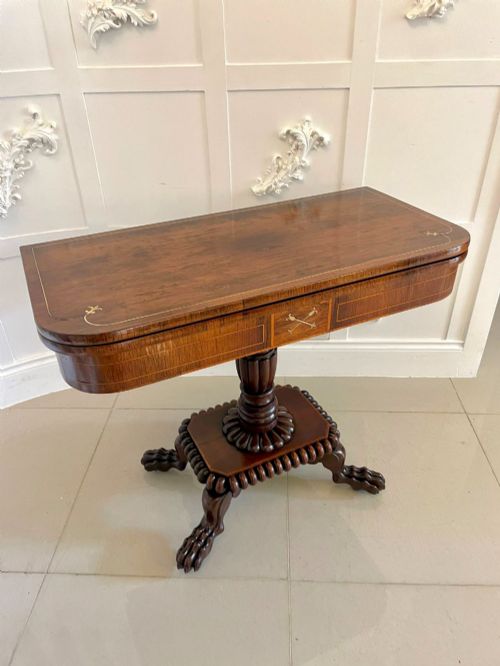
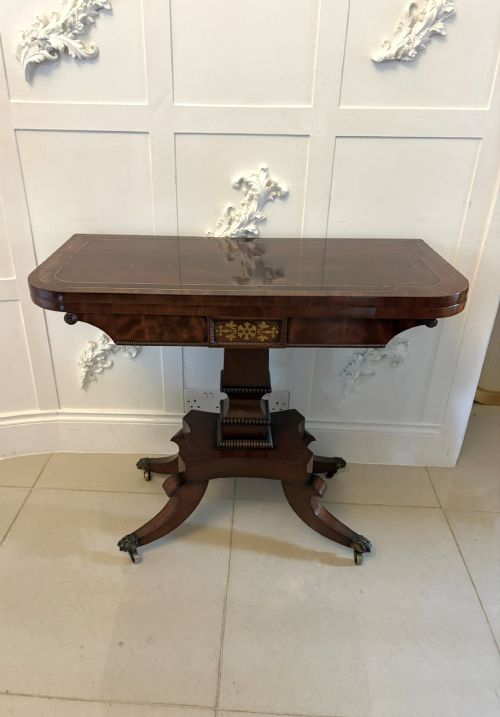
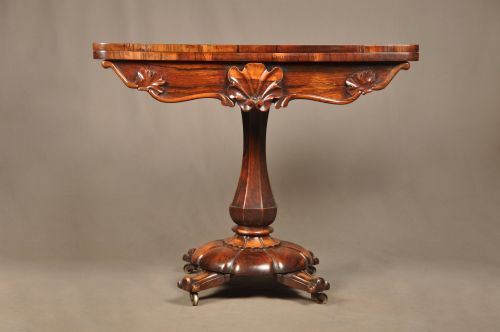
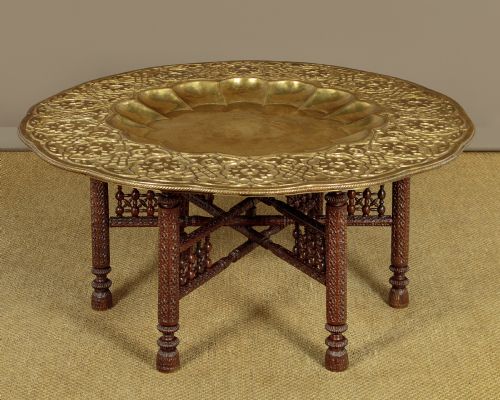
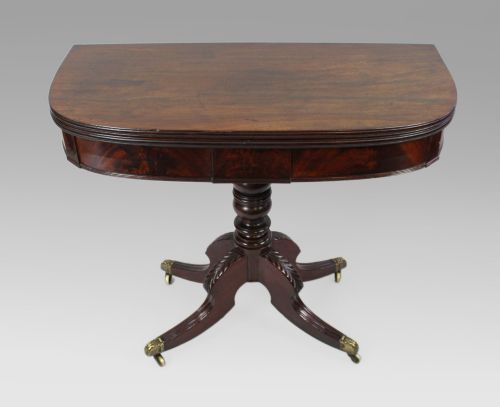
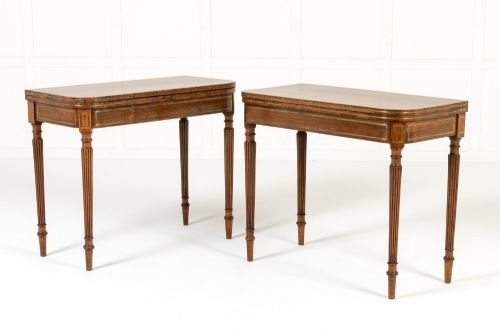
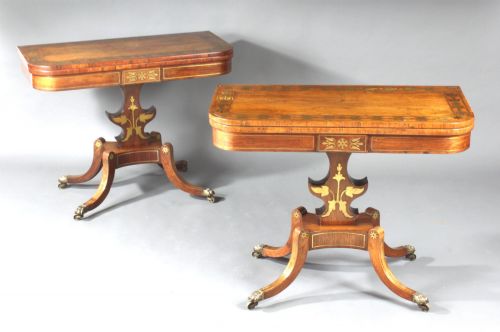
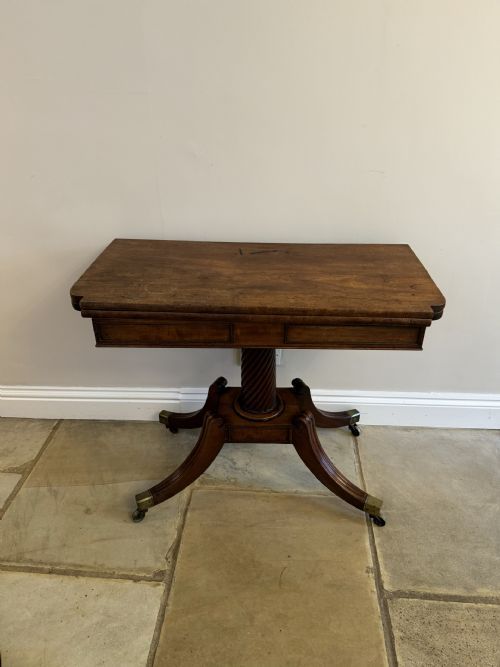
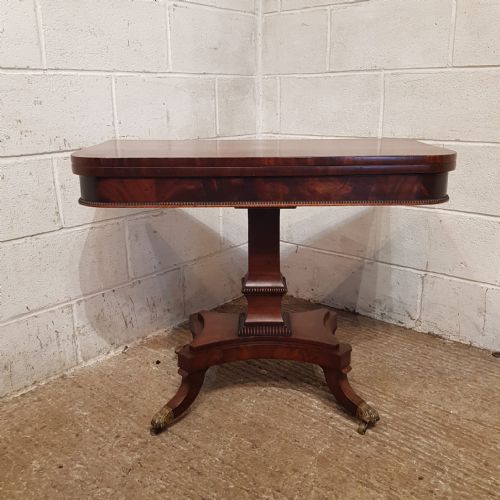
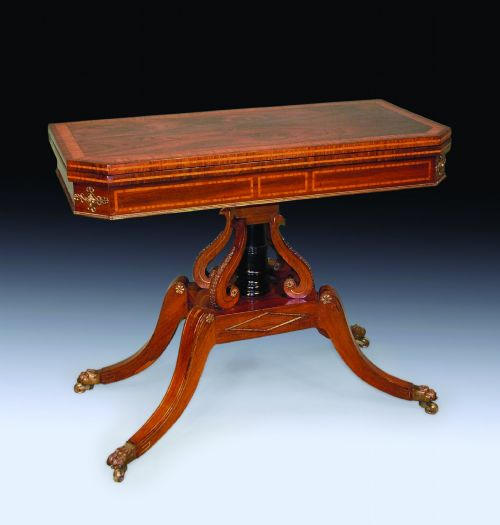
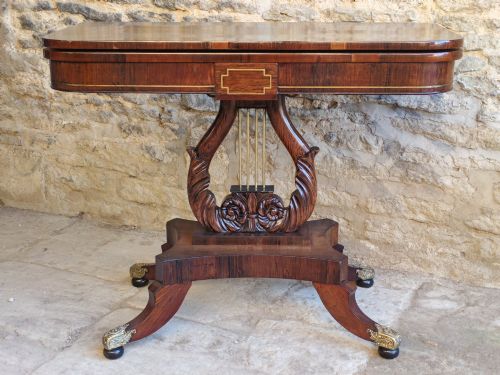
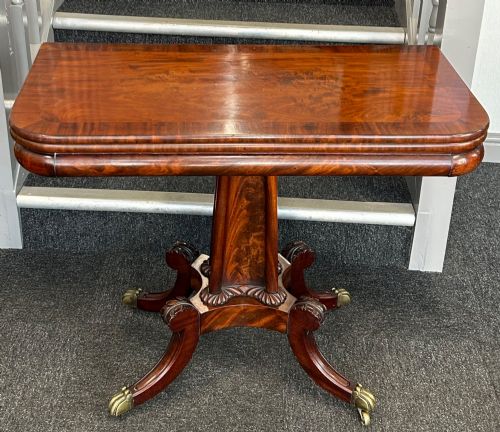
The most common formats on this page include nineteenth-century Regency and William IV rosewood and mahogany folding card or tea tables with brass stringing, alongside Indian and Middle Eastern engraved brass trays resting on collapsible stands.
These items served various social functions in historic interiors, from card games and tea service in formal drawing rooms to flexible serving surfaces in domestic settings.
Materials and construction methods
Cabinetmakers utilised dense hardwoods such as mahogany, rosewood, satinwood, and ebony for the structural frames, incorporating fold-over mechanisms, swivel tops, and pedestal or pillar bases. Brass appeared both as structural mounts, gilt accents, and fine inlay work set into the wood, as well as in the form of hammered, engraved sheet metal trays.
Makers shaped the metal surfaces through hand-beating, piercing, and incising floral or geometric motifs, particularly on tray tops originating from workshops in India and the Middle East. Wooden stands relied on traditional joinery and folding X-frames or scissor actions designed for compact storage and easy transport.
The listings span multiple centuries, uniting English cabinet furniture in mahogany and rosewood with portable brass tray tables from Eastern traditions.
Distinctions in execution and material grade
Quality rests in the precision of the brass inlay, the choice of figured timber veneers, and the crispness of the hand-engraving on the metal surface. Superior pieces demonstrate meticulous craftsmanship in the joinery of the folding mechanisms and the integration of gilded mounts or contrasting stringing.
Simpler versions rely on plain hardwood stands and machine-rolled or lightly chased brass trays, whereas finer examples display complex scrolling pedestals, rich rosewood grain, and deeply carved wooden stands supporting intricate metalwork.
The Folding Brass Top Table Glossary
- Card table
- A folding table designed specifically for playing card games, typically featuring a hinged top that doubles in surface area when opened. These often contain a lined interior well for counters.
- Tea table
- A small domestic table used for holding tea service equipment, frequently constructed with a fold-over top or drop leaves to save space when not in use.
- Brass inlay
- The technique of embedding thin strips or shaped pieces of brass into recesses cut into wood surfaces to create geometric or floral patterns. This method defines much of the Regency work seen here.
- Pedestal base
- A central pillar support rising from a platform or feet, commonly utilised on nineteenth-century card and tea tables to allow maximum legroom around the folding top.
Folding Brass Top Table: Frequently Asked Questions
How do I use a folding brass top table today?
These tables function well as flexible coffee tables, bedside stands, or side tables in living spaces where surface area needs to adapt. The folding stands allow for easy storage or relocation between rooms.
Heavier metal trays require simple care with appropriate metal cleaners, while wooden bases benefit from standard furniture wax to maintain the polished finish of the mahogany or rosewood.
What is the difference between an English card table and an Anglo-Indian tray table?
English card tables from the Georgian and Regency periods feature hinged wooden tops lined with baize or felt, supported by elaborate pedestal bases or legs with brass inlay. They were stationary furniture pieces used for parlour games and tea.
Anglo-Indian and Middle Eastern tray tables consist of a detachable engraved brass tray paired with a folding wooden stand. They emphasise portability and hand-worked metal artistry rather than complex wooden folding mechanisms.
How can I tell a Regency table from a Victorian one?
Regency pieces generally display restrained classical proportions, sharp brass stringing, rosewood or figured mahogany veneers, and brass paw feet or mounts. The design vocabulary draws heavily on ancient Greek and Roman motifs.
Victorian examples often introduce heavier carvings, darker finishes, and marquetry work, reflecting a shift toward revivalist styles such as Louis XV and more ornate decorative treatments.
Are the brass tops removable on these tables?
On tray-style tables, the metal top is typically a separate, removable piece that rests freely on the folded wooden base. This design allowed servants to carry the tray independently from the support.
Card and console tables integrate the wooden top and folding mechanism permanently into the structural frame, using brass purely as an inlaid decorative element or structural mount.