



Fob Medal Chain
A fob medal chain secures a timepiece while displaying hard-won sporting or civic honours on the waistcoat.
Fob Medal Chain
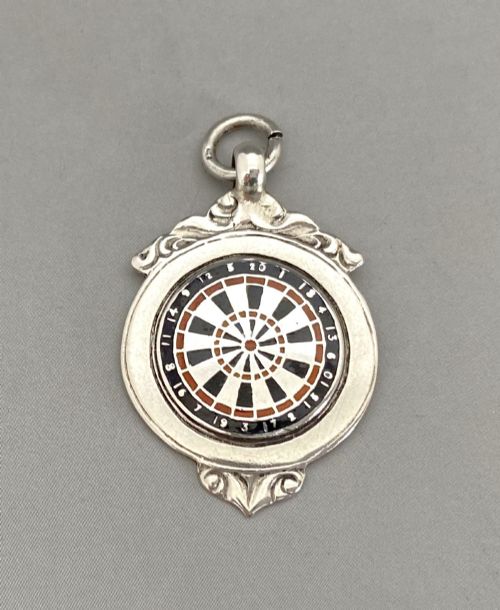
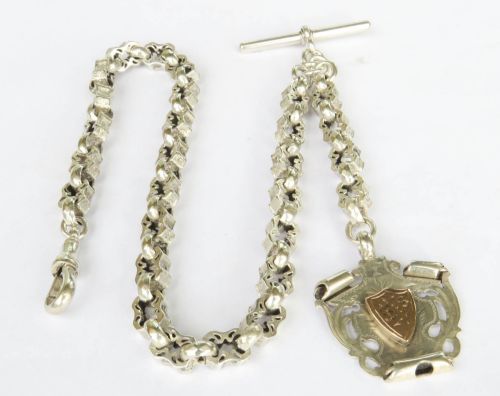
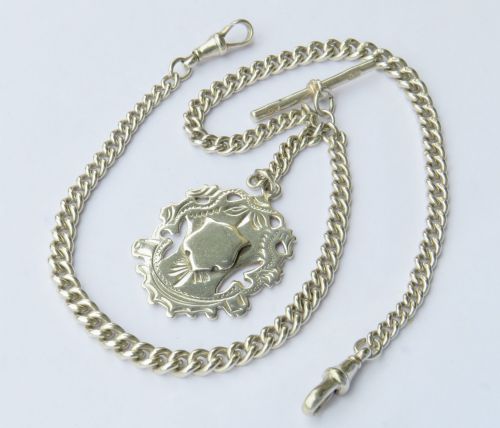
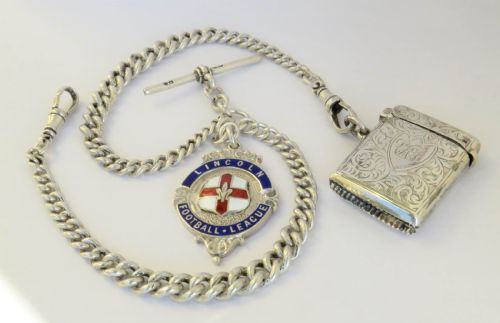
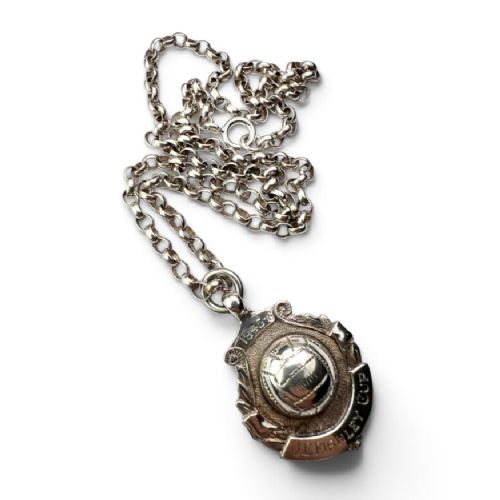
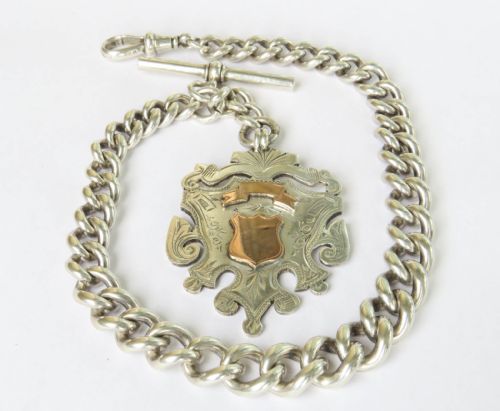
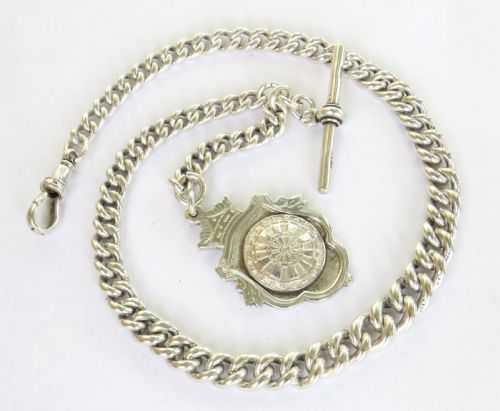
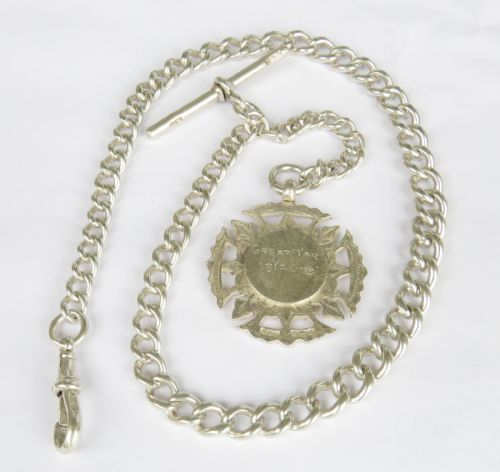
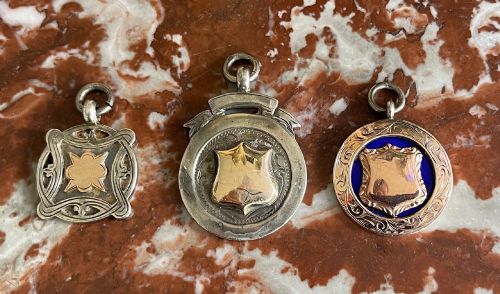
A fob medal chain combines a substantial pocket watch chain with one or more hanging medallions, bringing together timekeeping and personal achievement. When you search for a fob medal chain, you encounter pieces designed to suspend a pocket watch from a buttonhole while presenting an engraved shield, football medal, or darts prize.
The versions most commonly met span from the late Victorian era through the Edwardian period and into the Art Deco years. These assemblies pair heavy silver links with shields and circular pendants, often inscribed with club names, dates, and competitive triumphs.
How they were made
Silversmiths constructed these chains from interlocking sterling silver or rose gold links, often fitted with swivel clasps and T-bars designed to anchor securely through a waistcoat buttonhole. Medal fobs were die-struck or cast from silver, then finished with hand-engraved scrollwork and inscriptions.
Enamel work frequently provides vivid colour to the medallions, fired onto the silver surface to highlight club crests, footballs, or dartboards. Nickel and silver plate appear alongside solid sterling and rose gold detail, marking the range of metals utilised by period workshops.
Fob Medal Chain Retail Price Guide 2026
Typical asking prices for fob medal chain among the pieces listed under this phrase on Sellingantiques today, from the lower quarter to the upper quarter. They describe what is for sale here now, not the wider market.
Listings span periods from the Victorian eighteen-eighties through Edwardian times and the Art Deco nineteen-thirties to mid-century nineteen-fifties.
What varies in quality
Substance and weight separate heavier chains from lighter examples, with robust links providing the physical heft expected of traditional watch albert chains. The calibre of the metalwork shows in the crispness of the hallmarking and the durability of the swivel clasps.
Artistic execution distinguishes standard medallions from superior pieces featuring intricate floral engraving or polychrome enamel. The depth of hand-engraving on the shield reverse shifts a piece from a mass-produced award to a piece of bespoke silversmithing.
The Fob Medal Chain Glossary
- Albert chain
- A pocket watch chain named after Prince Albert, designed to stretch across a waistcoat and attach to a buttonhole. It typically carries a T-bar at one end and a swivel clasp at the other.
- T-bar
- The short transverse bar of metal attached to the centre of the watch chain. This bar slips through a waistcoat buttonhole to secure the entire chain.
- Watch fob
- A small ornament or medallion attached to a pocket watch chain. These often commemorate sporting victories, club memberships, or military service.
- Hallmark
- An official stamp applied by an assay office to indicate the purity of the metal and the year of manufacture. British silver pieces carry standard marks including lion passant and date letters.
- Swivel clasp
- A spring-loaded pivoting hook attached to the end of the chain. It allows the watch or medal to rotate freely without twisting the links.
Fob Medal Chain: Frequently Asked Questions
How do I wear a fob medal chain?
The T-bar fastens through a central buttonhole of a waistcoat, allowing the draped chain to sit across the front. The watch tucks into one pocket while the medal fob hangs from a lower drop.
Alternatively, many modern collectors remove the T-bar and wear the chain and medal as a pendant necklace. The length adapts well to various necklines when suspended from a suitable silver chain.
What periods do these chains come from?
The examples here date from the late nineteenth century through to the mid-twentieth century. Victorian and Edwardian pieces predominate, alongside Art Deco designs from the nineteen-twenties and thirties.
Later items extend into the nineteen-forties and fifties, reflecting enduring traditions of sporting presentation medals. Each decade brings distinct shifts in lettering styles and decorative motifs.
How do I care for silver watch chains?
Regular gentle dusting with a soft cloth keeps silver links bright without harming delicate enamel work. Avoid harsh liquid dips if the medal retains original dark oxidation or coloured enamel.
Store the chain flat or hung by the T-bar to prevent kinks in the heavy links. Enamel medallions require particular care to avoid impact against harder surfaces.
What do the engraved dates and names mean?
Inscriptions record specific sporting triumphs, inter-club tournaments, or league championships won by the original owner. Football, darts, and general athletic clubs commissioned these medals as presentation pieces.
Researching the named recipient or club often reveals local history connected to Birmingham assay offices and regional leagues. The engraved dates provide a reliable anchor for dating the piece.