


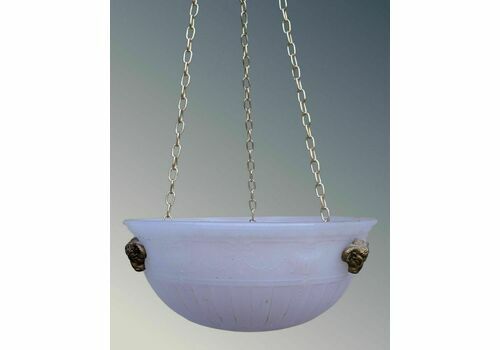


Flycatcher Light Shade
These flycatcher light shades are suspended bowl fixtures that transform overhead illumination with period character and distinct architectural glass or stone.
Flycatcher Light Shade
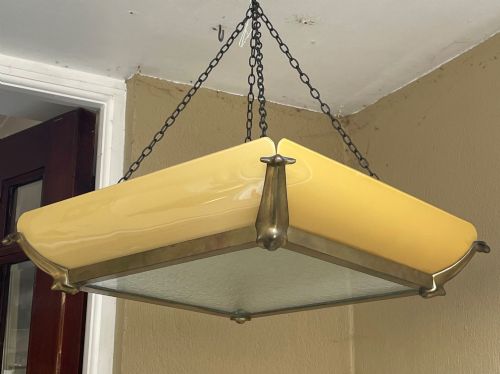
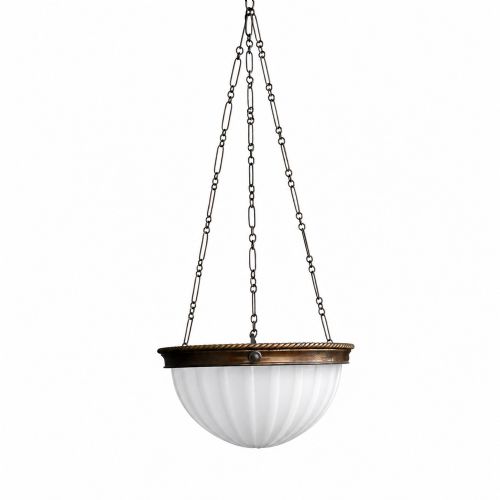
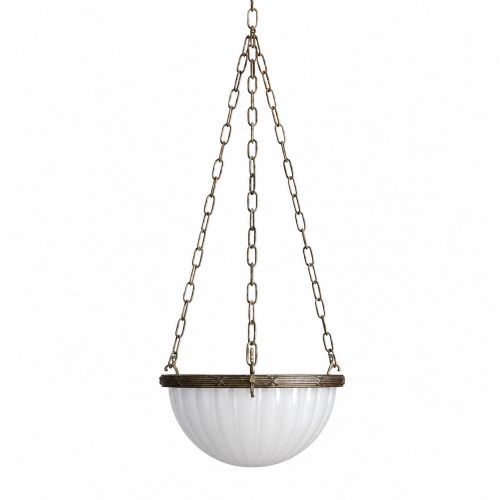
A flycatcher light shade is a suspended bowl fixture designed to diffuse interior illumination downward while concealing the internal bulb source. These items appear across several distinct iterations, taking the form of hanging dish lights, plafonniers, and pendant ceiling lighting.
The material forms on this page span alabaster, frosted glass, opal glass, and painted glass, frequently supported by brass or bronze hardware. Such pieces emerge from the Edwardian era, the nineteenth century, and the nineteen-twenties and nineteen-thirties, embracing Art Deco and Neoclassical styles.
Buyers encountering this selection will find variations in suspension hardware, including fabric cords and metal ceiling suspensions. The fundamental configuration remains a bowl-shaped diffuser held by chains or rods, fulfilling both practical lighting and decorative functions.
Materials and construction
The manufacture of these shades relies heavily on glass-making and stone-carving traditions, utilising opal glass, frosted glass, and natural white alabaster. Glass components are cast or moulded into dish forms, sometimes featuring painted or enamelled surface decoration.
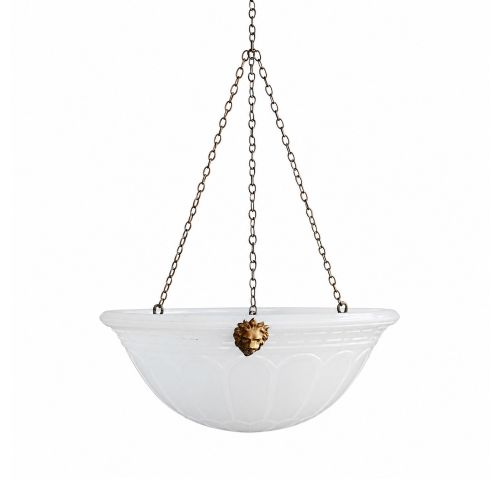
Metal elements incorporate brass and bronze, often cast into classical motifs such as ram heads for suspension fittings. Fabric cords and metal chains complete the hanging mechanism, securing the heavy glass or stone bowls safely from the ceiling.
Flycatcher Light Shade Retail Price Guide 2026
Typical asking prices for flycatcher light shade among the pieces listed under this phrase on Sellingantiques today, from the lower quarter to the upper quarter. They describe what is for sale here now, not the wider market.
Some nineteenth-century brass fittings feature cast ram heads, ensuring your ceiling light stares down with mild mythological judgment.
Assessing quality and craftsmanship
Quality in these hanging lights is determined by the purity and thickness of the glass or stone bowl, alongside the intricacy of the metal mounts. Heavy carved alabaster and finely cast bronze hardware represent the higher end of production compared to simpler moulded glass alternatives.
The artistic integration of the style also dictates worth, where deliberate Art Deco geometry or Neoclassical casting detail elevates the object beyond standard functional lighting. The preservation of original surface finishes on the metal and glass remains crucial to the integrity of each piece.
The Flycatcher Light Shade Glossary
- Plafonnier
- A ceiling-mounted or tightly suspended bowl light that sits close to the ceiling surface, common in early twentieth-century interiors.
- Alabaster
- A fine-grained, translucent stone used for carving bowls that diffuse a soft, warm glow when illuminated from within.
- Opalescent
- Glass possessing a milky, iridescent quality that catches and scatters light across its surface.
- Opal glass
- A white, translucent glass variant manufactured to reduce glare and distribute even illumination throughout a room.
Flycatcher Light Shade: Frequently Asked Questions
How do I hang a flycatcher light shade?
These shades typically suspend from ceilings using dedicated chains, cords, or metal suspension rods attached to a central bowl. You must ensure the ceiling fixture and wiring can support the weight of stone or thick glass bowls.
Professional installation is recommended to secure the hanging mechanism safely and comply with current electrical standards for vintage lighting.
What rooms suit these ceiling lights?
Pendant dish lights and plafonniers work well in hallways, dining rooms, and living spaces where ambient overhead lighting is preferred. Their downward-facing bowls provide soft, diffused illumination without direct glare from the bulb.
Matching the period style, such as Art Deco or Edwardian, helps integrate the shade into rooms with traditional architectural details.
How do I clean an alabaster shade?
Alabaster is a softer, porous stone that requires careful maintenance without excessive water or harsh chemical cleaners. A soft, dry cloth removes dust effectively while preserving the natural surface texture.
Glass shades tolerate gentle washing with mild soapy water, provided they are completely dry before reinstallation.
How do I date a glass shade?
Dating relies on stylistic markers such as geometric Art Deco moulding, Edwardian enamelling, or nineteenth-century neoclassical bronze mounts. Examining the manufacturing techniques and the type of glass helps place the piece within its historical period.
Hardware components like fabric cords and metal suspension fixings also offer clues regarding the age of the assembly.