



Fluted Silver Desk Lamps
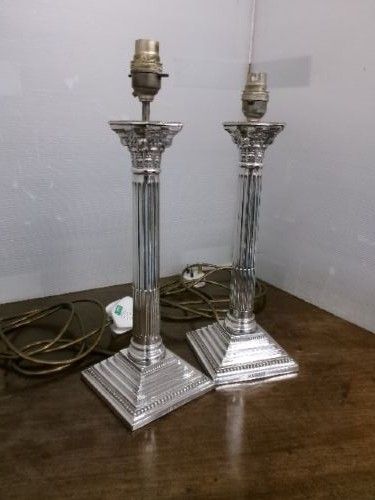
These fluted silver desk lamps bring solid metal columns and polished surfaces straight to your workspace.
Fluted Silver Desk Lamps
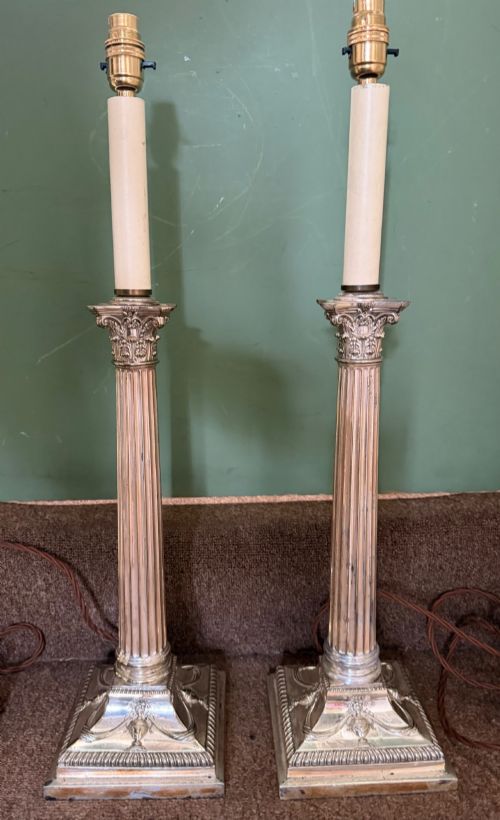
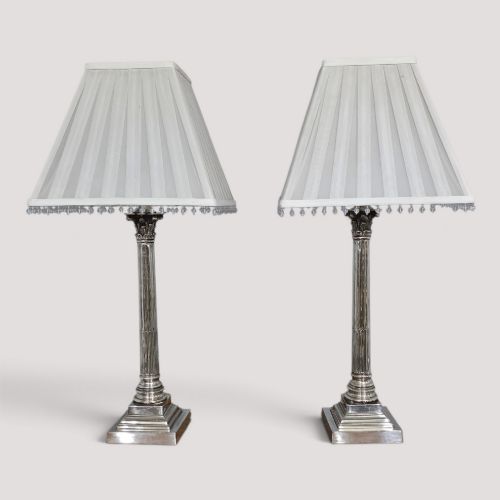
When you search for fluted silver desk lamps, you encounter table lamps built during the Victorian, Edwardian, and Art Deco periods, alongside pieces from the nineteenth and twentieth centuries. These objects typically take the form of metal columns with fluted shafts, standing on steady bases to illuminate a desk or table.
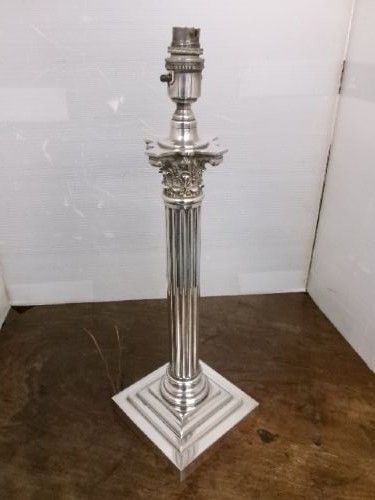
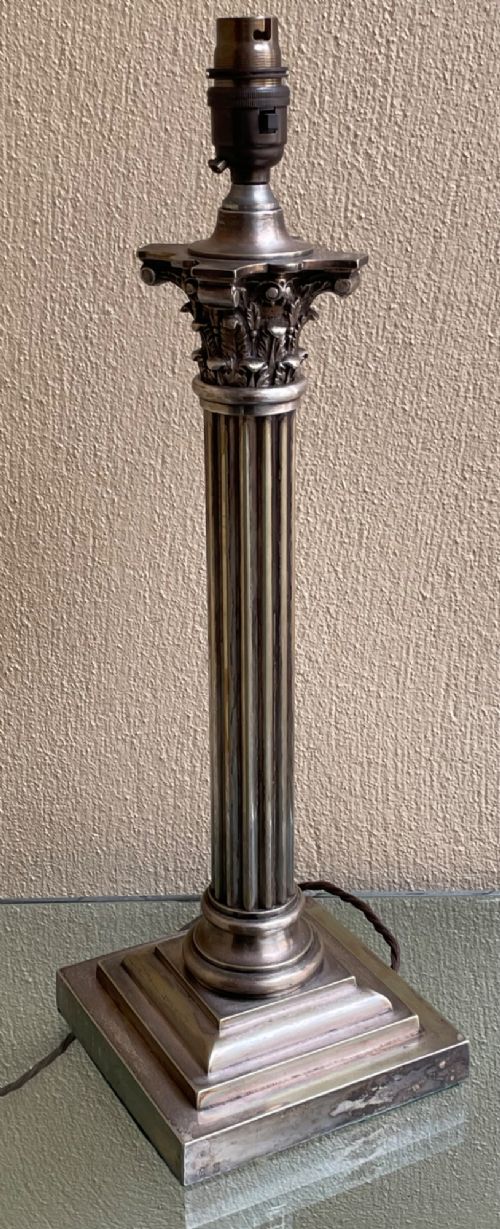
The most common version you meet on this page is the Corinthian column table lamp rendered in silver plate or sterling silver. Such pieces often draw upon Neoclassical design, combining classical proportions with functional lighting for domestic and office spaces.
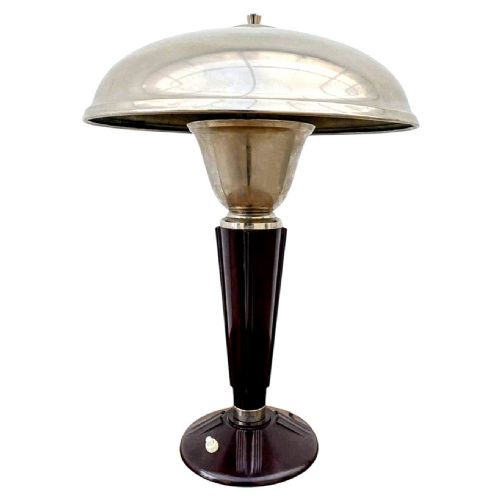
Makers and manufacturers adopted various materials beyond silver, incorporating brass, nickel, bakelite, and fabric elements into the designs. These variations span different decades, reflecting the changing tastes of nineteenth and twentieth century interiors.
How they were made
Makers constructed these lamps using metals such as brass, nickel, and sterling silver, frequently applying silver plate or electroplating over a base metal core. This technique provided the appearance and lustre of solid silver at a different scale of production.
Fluted Silver Desk Lamps Retail Price Guide 2026
Typical asking prices for fluted silver desk lamps among the pieces listed under this phrase on Sellingantiques today, from the lower quarter to the upper quarter. They describe what is for sale here now, not the wider market.
Listings feature table lamps spanning the Victorian, Edwardian, and Art Deco periods, created in materials from sterling silver to bakelite.
What varies in quality
The distinction between different examples lies in the crispness of the casting on the Corinthian capitals and the depth of the fluting along the column. Finer pieces display sharp architectural detail and substantial weight in the metal base.
The choice of primary material also marks a difference in standard, distinguishing electroplated metal and silver plate from solid sterling silver constructions. Additionally, the survival of original components and maker stamps contributes to the standing of an individual piece.
Eileen Grey·Goldsmiths
The Fluted Silver Desk Lamps Glossary
- Corinthian column
- An architectural order featuring an ornate capital decorated with acanthus leaves, frequently utilised as the main shaft for these lamps.
- Silver plate
- A layer of silver applied to a base metal core, such as brass or copper, to give the appearance of solid silver.
- Electroplated metal
- Metal coated with a thin layer of another metal through an electrolytic process, common in the production of nineteenth and twentieth century lighting.
- Bakelite
- An early form of synthetic plastic utilised in twentieth century pieces, particularly noted in Art Deco designs.
- Neoclassical
- A style inspired by the classical art and architecture of ancient Greece and Rome, heavily influencing Victorian and Edwardian column lamps.
Fluted Silver Desk Lamps: Frequently Asked Questions
What periods do these lamps come from?
The pieces span the Victorian and Edwardian eras, reaching into the Art Deco period of the twentieth century.
Most examples date from the nineteenth century up through the nineteen-thirties, showing shifts in design from classical revivals to modernist styles.
What is a Corinthian column lamp?
This form mimics ancient classical architecture, featuring a fluted cylindrical shaft topped by an ornate capital.
Such designs were especially popular during the Victorian period, serving as formal lighting for desks and tables.
How do I use them on a desk?
These table lamps function well as task or accent lighting on large desks, side tables, or writing surfaces.
They require a stable surface and a compatible shade, often made of fabric, to direct the light downward.
How can I tell the age of a lamp?
Age is indicated by the manufacturing techniques, material combinations, and any maker stamps or hallmarks present on the metal.
Victorian and Edwardian pieces often display distinct neoclassical motifs, while nineteen-thirties examples incorporate bakelite and Art Deco lines.