



Fluted Leg Library Desk
A fluted leg library desk offers a refined workspace, combining period craftsmanship with practical proportions that suit a study or library.
Fluted Leg Library Desk
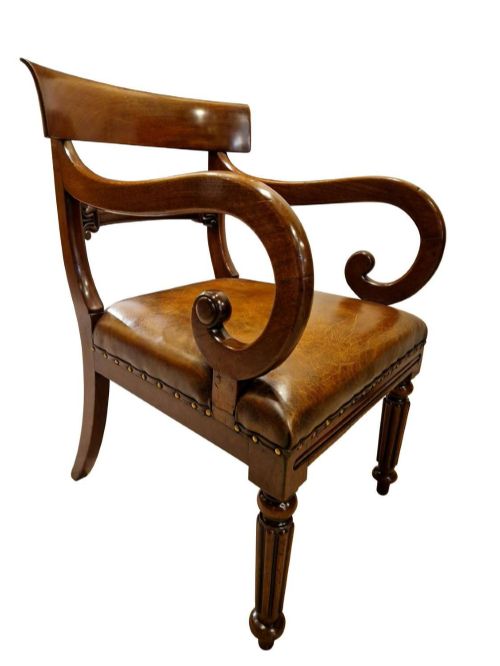
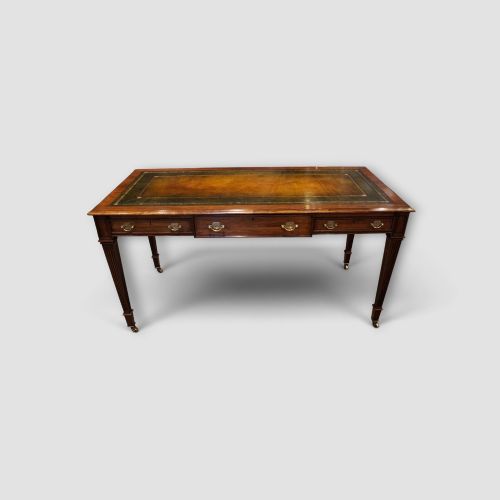
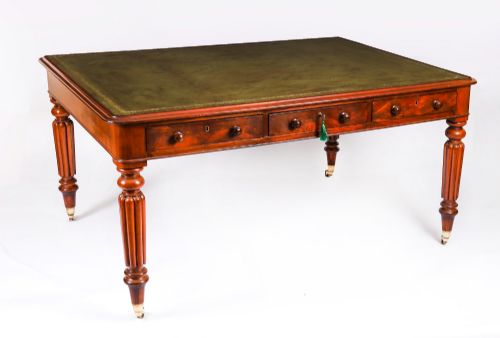
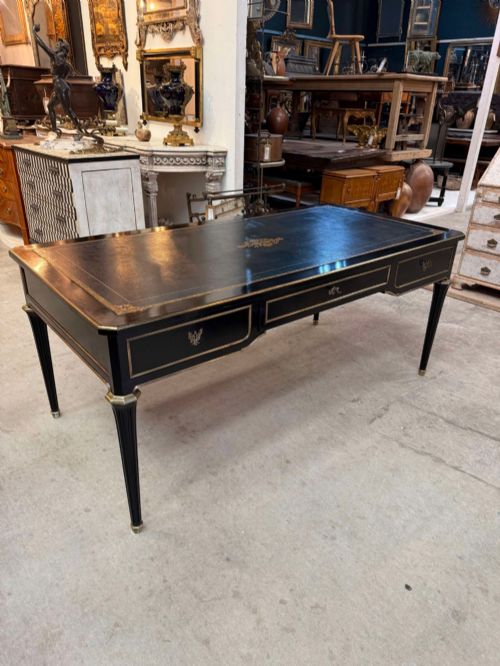
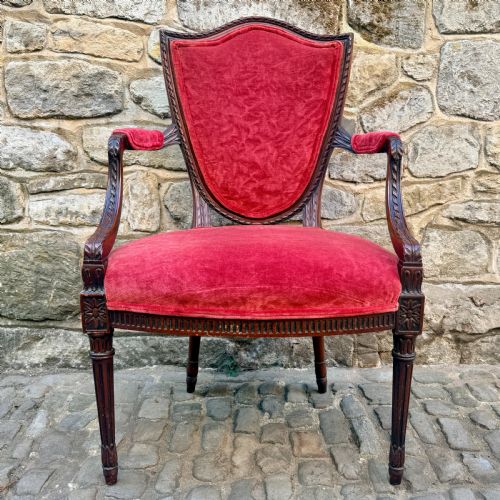
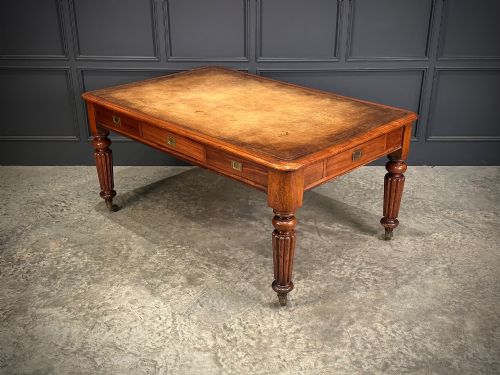
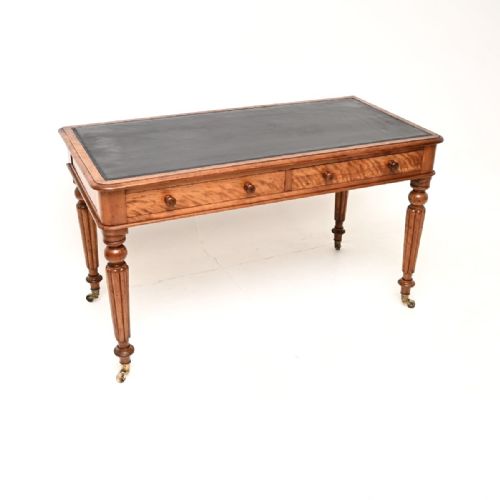
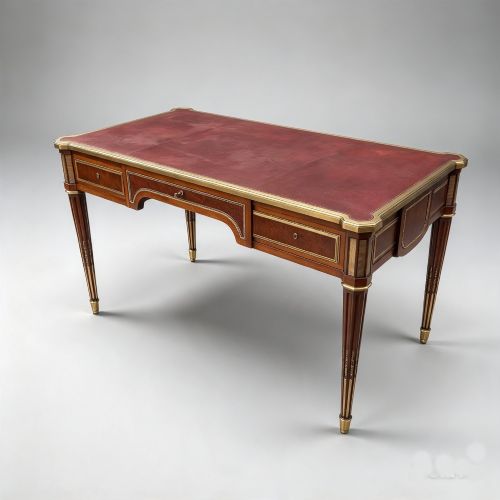
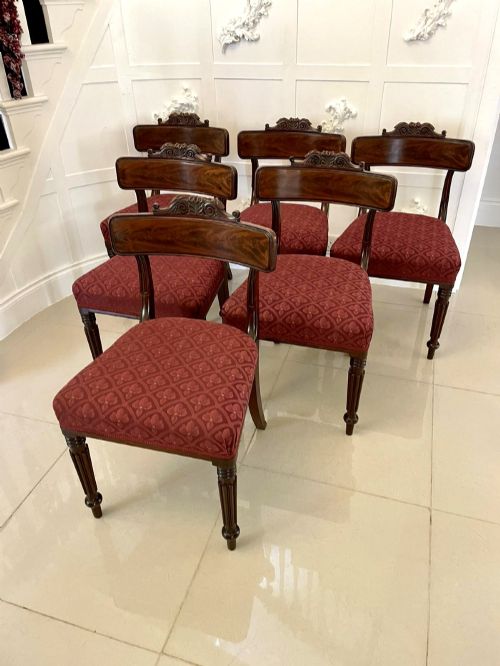
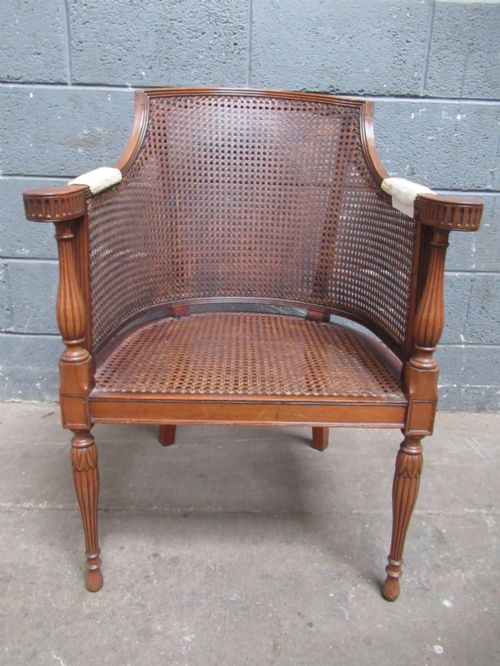
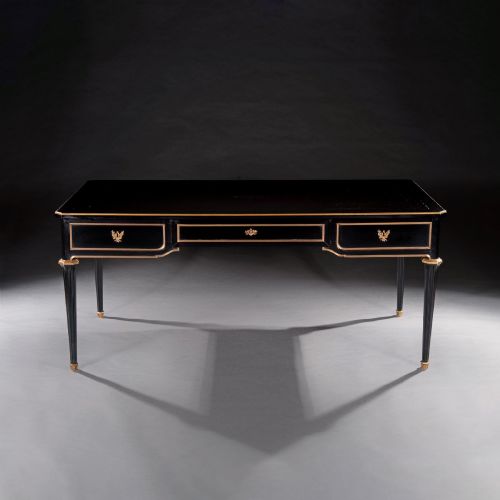
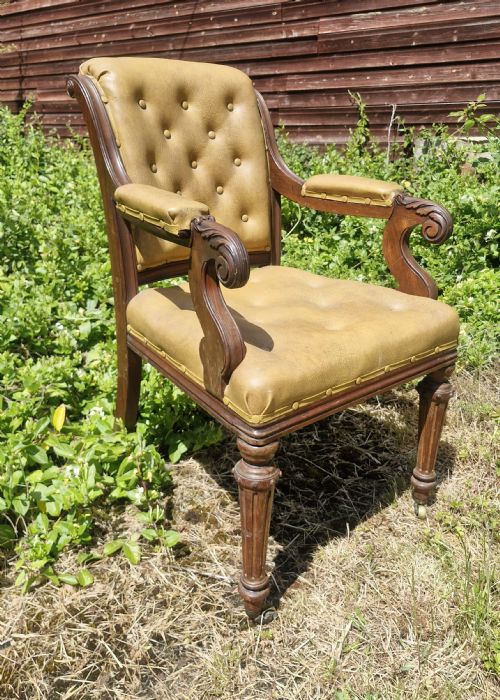
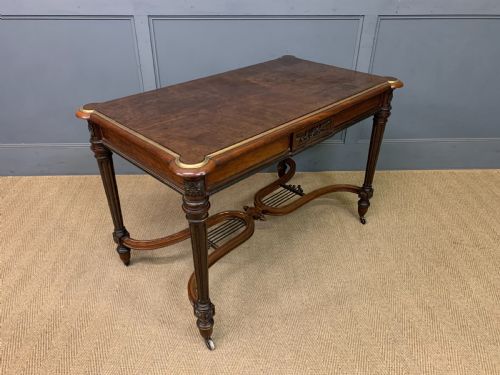
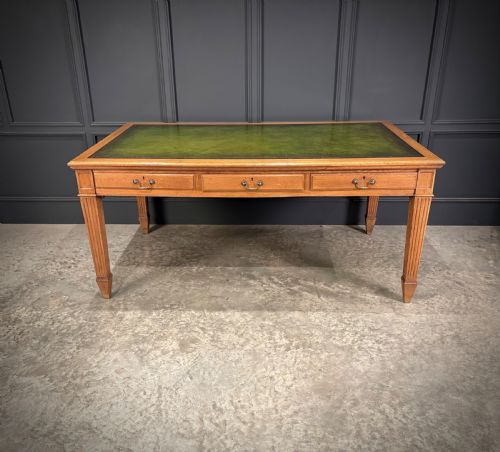
A fluted leg library desk is typically encountered as a mahogany writing table or partners desk dating from the Georgian, Regency, and Victorian periods. These pieces serve as substantial writing surfaces, often incorporating drawers for storage while displaying classic architectural detailing on the legs. The selection spans straightforward English mahogany forms alongside more decorative French styles.
The objects listed under this description also encompass related library furniture, such as centre tables and partner desks outfitted with leather tops and plan drawers. Examples range from eighteenth-century origins through to nineteenth-century interpretations and early twentieth-century reproductions. Buyers frequently encounter variations in wood species, including oak and ebonised finishes alongside the predominant mahogany.
How these desks were constructed
Cabinet makers built these tables primarily from solid mahogany and oak, often incorporating brass hardware and inset leather writing surfaces. Ormolu mounts and gilt bronze details appear on French influences, providing contrasting metallic accents against dark timbers.
Structural elements rely on traditional joinery techniques, paired with turned and carved fluting on the legs. Ebonised wood finishes and fabric upholstery complete the construction methods seen across the pieces.
Fluted Leg Library Desk Retail Price Guide 2026
Typical asking prices for fluted leg library desk among the pieces listed under this phrase on Sellingantiques today, from the lower quarter to the upper quarter. They describe what is for sale here now, not the wider market.
The listings on this site feature desks from the Georgian, Regency, and Victorian periods, constructed predominantly in mahogany and oak with leather inserts.
What separates the best pieces
Quality in these desks rests on the crispness of the carved fluting and the selection of figured timber veneers. Superior examples display careful attention to secondary timbers and robust internal drawer construction.
The integration of decorative mounts, such as ormolu or brass handles, distinguishes standard utilitarian tables from finer reception pieces. Original leather inserts and well-preserved surface patination further elevate the standing of an individual desk.
Gillows·W. Priest·Henry Dasson·Johnstone Jeanes Co
The Fluted Leg Library Desk Glossary
- Partners desk
- A large double-sided writing table designed for two people to work opposite one another, featuring drawers on both longitudinal faces. These tables often incorporate leather writing surfaces and substantial pedestals or columnar legs.
- Bureau plat
- A French freestanding writing table, typically fitted with one or more drawers in the frieze and often adorned with bronze or ormolu mounts. These pieces were designed to stand away from the wall in the centre of a room.
- Ormolu
- Gilded bronze ornamentation applied to furniture, frequently found on nineteenth-century French pieces in the Louis XVI style. The technique involves applying a mercury and gold amalgam to cast bronze.
- Ebonised wood
- Timber treated with a dark stain or finish to imitate the appearance of ebony. This treatment appears on nineteenth-century desks influenced by the Aesthetic Movement.
- Fluting
- Parallel concave grooves carved vertically into the shaft of a column or furniture leg. This classical detail derives from ancient architectural forms.
Fluted Leg Library Desk: Frequently Asked Questions
What is a fluted leg library desk used for?
These desks provide a dedicated writing and working surface designed to sit freestanding within a room. Their generous proportions accommodate paperwork while offering drawer storage for stationery and documents.
Historically, they served as central pieces in studies and libraries for estate management and correspondence. Today, they function effectively as executive desks in home offices or studies.
How do I identify a Regency period desk?
Regency desks typically display classical restraint, clean lines, and architectural details influenced by Greek and Roman design. Mahogany is the predominant wood, often complemented by brass stringing or gilt bronze mounts.
Legs on these pieces may be reeded, fluted, or saber-shaped, reflecting the aesthetic preferences of the early nineteenth century. Proportions tend to be balanced and formal.
What is a partners desk?
A partners desk is an oversized writing table built with drawers and cupboards accessible from both sides. This symmetrical layout allowed two people to work face-to-face simultaneously.
They are commonly fitted with inset leather writing surfaces and robust pedestals or supporting legs. These desks generally require ample floor space to be appreciated fully.
How should I care for a leather desk top?
Leather desk inserts require gentle cleaning with a slightly damp cloth to remove dust and debris. Specialised leather balms help maintain the suppleness and prevent cracking over time.
Avoid placing hot cups or moisture directly onto the leather surface to preserve the finish. Using blotters or desk pads protects the hide from daily wear.