

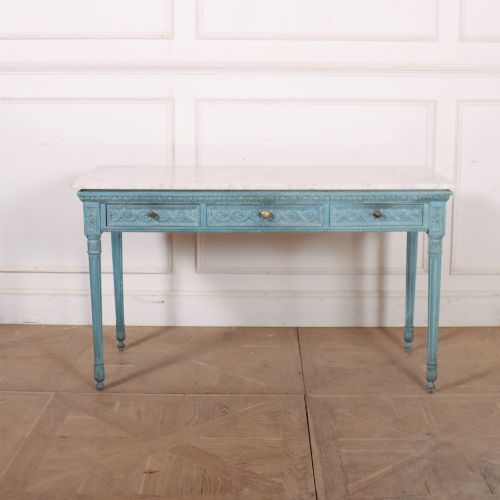

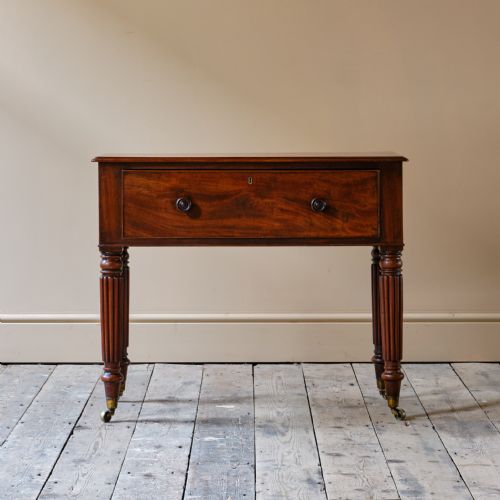


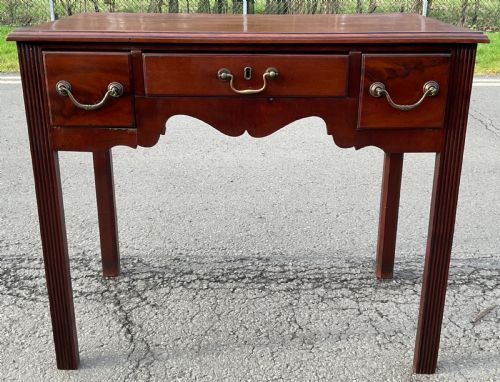

Fluted Leg Dressing Table
These fluted leg dressing table pieces combine practical drawers and mirrors with classical detailing, offering genuine period charm for the bedroom.
Fluted Leg Dressing Table
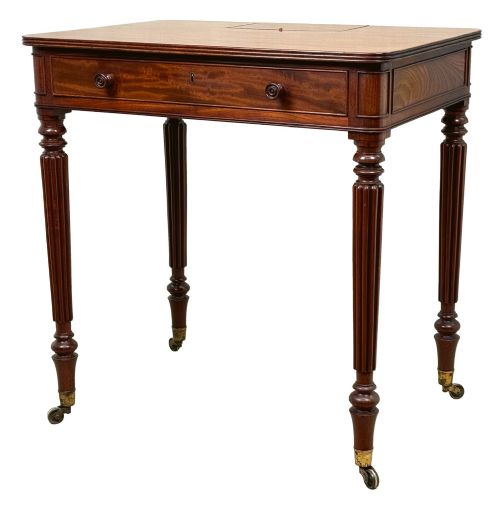
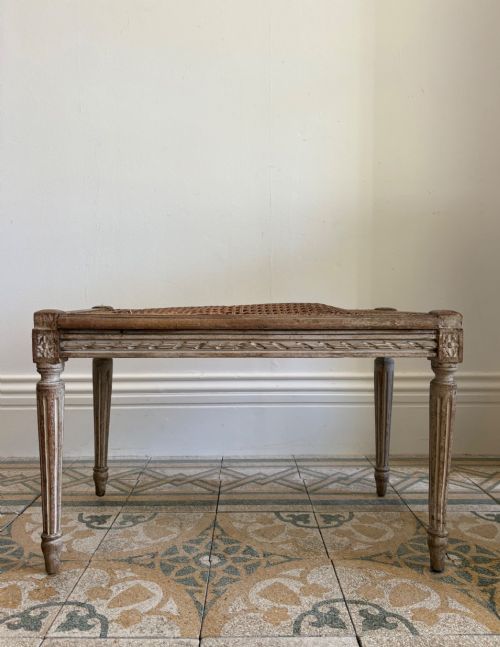
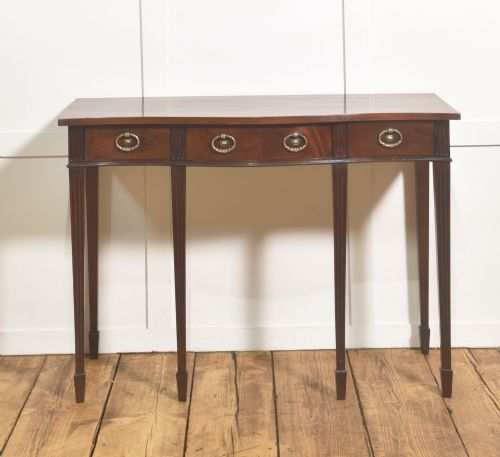
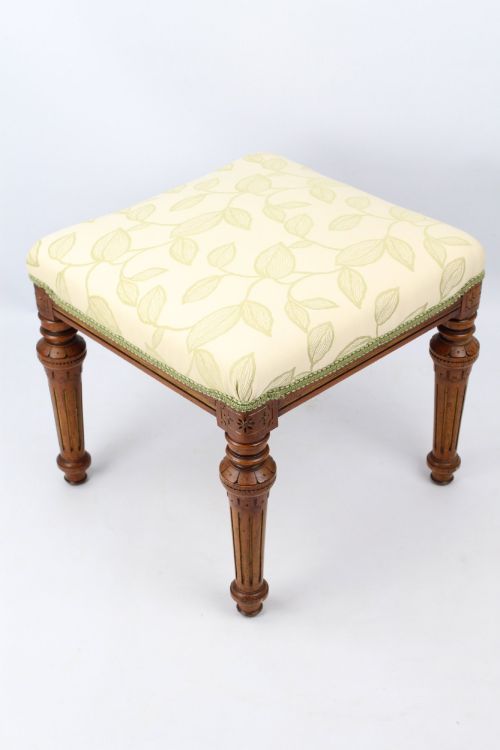
When you search for a fluted leg dressing table, you encounter pieces spanning the Georgian, Regency, Victorian, and Edwardian periods. These items incorporate related forms such as writing tables, side tables, and dressing stools in mahogany, oak, and satinwood.
The evidence shows forms originating from English workshops as well as French, Italian, and Swedish makers. Many examples utilise traditional timber construction with brass hardware, leather writing surfaces, and marble tops.
While specific dressing table listings share space with console tables and desks, the overarching aesthetic remains rooted in neoclassical restraint and quality cabinetmaking.
Materials and construction methods
Cabinetmakers relied heavily on solid and veneered mahogany, alongside oak and satinwood, to build these surfaces and frames. Timber selection determined both the structural integrity and the grain figure visible across the top and drawer fronts.
Decorative enrichment involved intricate inlaid details, giltwood highlights, and carved wooden fluting down the legs. Secondary materials such as tooled leather, marble inserts, and brass handles completed the functional design of each piece.
Fluted Leg Dressing Table Retail Price Guide 2026
Typical asking prices for fluted leg dressing table among the pieces listed under this phrase on Sellingantiques today, from the lower quarter to the upper quarter. They describe what is for sale here now, not the wider market.
The listings span the 18th, 19th, and early 20th centuries, covering Georgian, Regency, Victorian, and Edwardian periods.
Distinguishing quality across the range
The standard of timber selection and the crispness of the hand-carved fluting on the legs set finer examples apart from simpler workshop output. Cabinetmakers who invested time in precise joinery and well-figured mahogany produced pieces that have retained their structural stability over centuries.
Attribution to documented makers or specific regional houses elevates a piece, as does the survival of original brass hardware and untouched surface patination. The integration of secondary materials like tooled leather and marble also reflects the original commissioning budget.
Gillow Lancaster·Gillows·Maple & Co
The Fluted Leg Dressing Table Glossary
- Fluting
- Vertical rounded grooves carved into the shaft of a leg or column. This classical detail draws the eye and adds vertical elegance to the piece.
- Mahogany
- A durable tropical hardwood prized for its rich reddish-brown colour and stable grain. It served as the primary timber for high-end furniture throughout the Georgian and Victorian eras.
- Serpentine
- A gently curving front line that sweeps outward at the ends and inward at the centre. This shape required advanced woodworking skill to execute properly.
- Inlay
- The technique of embedding contrasting pieces of wood or metal into a solid wood surface to create decorative patterns. It demonstrates the skill of the cabinetmaker.
- Giltwood
- Wood that has been treated with a thin layer of gold leaf or gold paint. It frequently appears on decorative stools and frames from the Victorian period.
Fluted Leg Dressing Table: Frequently Asked Questions
How do I date a dressing table?
Dating relies on observing timber choices, construction methods, and stylistic cues recorded in the periods listed on this page. Georgian and Regency pieces often feature distinct proportions and hand-cut joinery.
Later Victorian and Edwardian examples introduce machine-sawn elements and different brass hardware styles. Comparing the secondary woods and drawer construction helps confirm the era of manufacture.
Where were these tables used?
These tables served primarily in bedrooms, dressing rooms, and private chambers for grooming and correspondence. Their versatile sizes also allowed them to function in small studies and hallways.
Many designs incorporated drawers for storage and surfaces for mirrors or writing materials. Their dual functionality made them central pieces in domestic spaces.
Are these pieces suitable for daily use?
Period tables and desks constructed from solid mahogany and oak remain robust enough for everyday tasks like writing or display. Using coasters and protective pads helps preserve the antique polish and leather surfaces.
Regular care keeps the timber conditioned and prevents the joints from drying out over time.
What styles are represented here?
The listings encompass Georgian, Regency, Victorian, and Edwardian aesthetic movements, alongside continental influences like Italian and French Neoclassical. Each style brings specific decorative vocabulary to the legs and drawer fronts.
Neoclassical designs favour symmetry and carved fluting, while later Victorian items often showcase heavier framing and gilt accents.