





Fluted Glass Lamp
A fluted glass lamp brings period weight and gathered light to a room, most often found here in Victorian and Edwardian brass-mounted oil lamps.
Fluted Glass Lamp
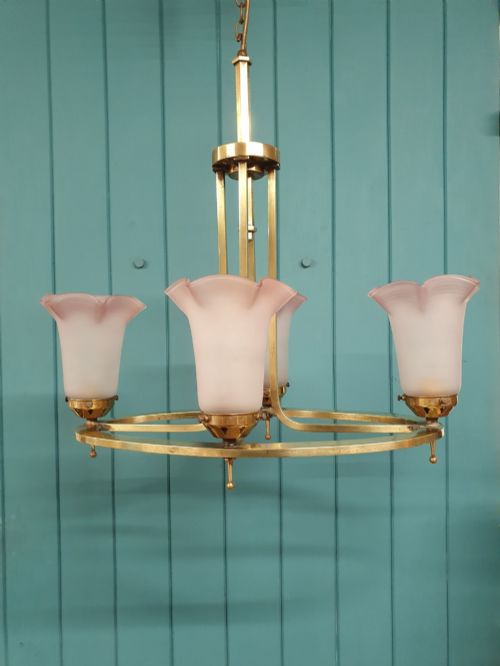
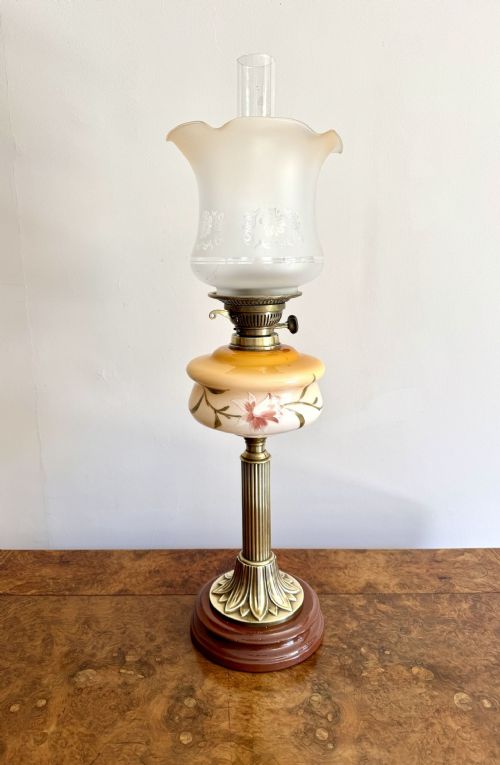
A fluted glass lamp is a functional light source shaped by its faceted or channelled glass body, spanning Victorian, Edwardian, and Art Deco periods. These items range from converted oil lamps with towering brass columns to pendant lights and chandeliers suspended on metal galleries.
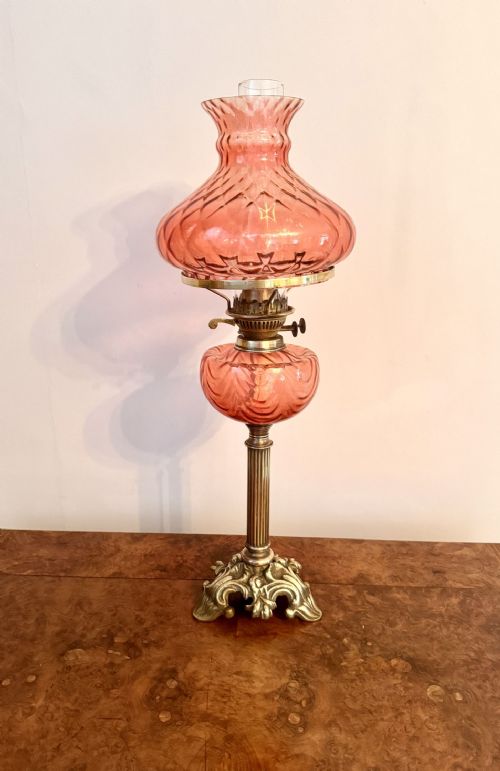
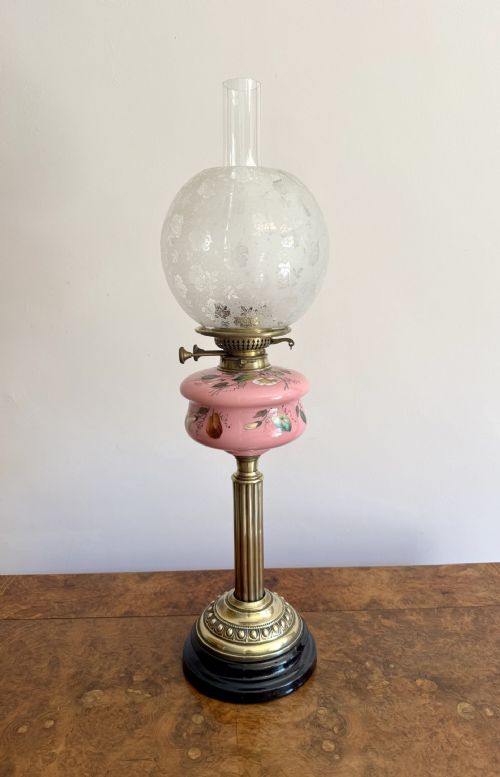
The versions most frequently met on this page are oil lamps from the nineteenth century onwards, pairing glass reservoirs or shades with brass, ceramic, or ormolu bases. Table lamps and pendant lights with opaline, cranberry, or cut glass components make up the bulk of the selection.
Originating primarily from English and French workshops, these pieces bridge domestic utility and decorative design. Buyers seek them to anchor a room with period materials and tactile glass surfaces that diffuse illumination.
How they were made
Makers shaped the glass elements through blowing and cutting, creating clean vertical flutes that catch and refract light. Cranberry glass, opaline glass, and frosted glass rely on specific mineral additions during melting to achieve their characteristic tones.
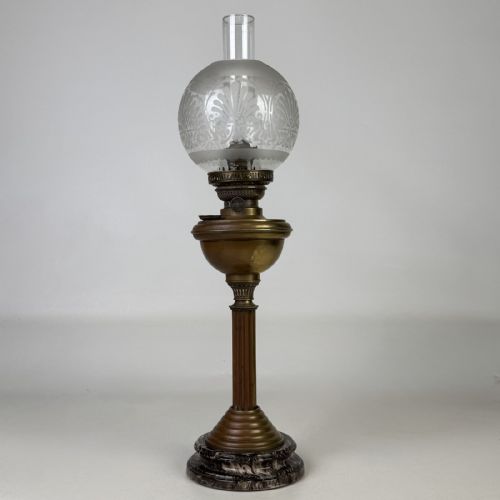
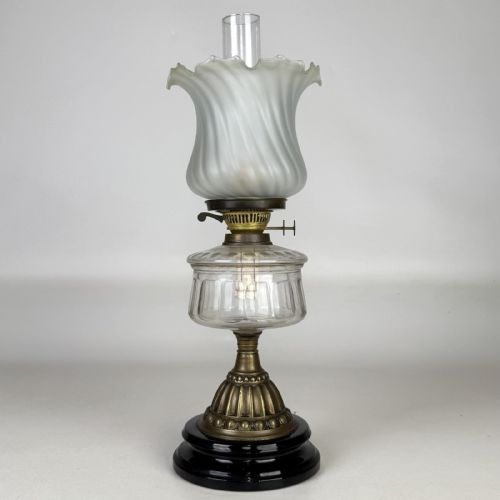
Metal components such as brass columns, ormolu mounts, and bronze bases were cast and turned to support the heavier glass reservoirs. Many lighting fixtures combine these cast metals with ceramic elements or black glass bases for stability.
Pendant lights and chandeliers integrate spun or cast metal galleries to secure glass shades, while converted oil lamps retain threaded brass burners and collars from their period of original use.
Fluted Glass Lamp Retail Price Guide 2026
Typical asking prices for fluted glass lamp among the pieces listed under this phrase on Sellingantiques today, from the lower quarter to the upper quarter. They describe what is for sale here now, not the wider market.
Some pharmacy pendant lights survived by moonlighting as domestic illumination after a career among heavy syrups and pills.
What varies in quality
The standard of a fluted glass lamp depends on the crispness of the glass cutting and the weight of the metal mountings. Superior pieces show precise fluting and heavy, well-cast brass or bronze components that sit squarely without wobble.
The integrity of the glass itself dictates the upper end of the range, particularly where hand-blown opaline or cranberry glass displays even colour distribution and unblemished surfaces. Lesser examples may show manufacturing bubbles or uneven thickness in the glass body.
Proportion and scale distinguish finer table lamps and chandeliers, where the relationship between the column and the reservoir appears balanced and purposeful. Details like original burners, matching shades, and refined chasing on the brass elevate the piece.
JOSEPH HINKS·Messenger
The Fluted Glass Lamp Glossary
- Opaline glass
- A semi-translucent white glass developed in the nineteenth century to soften light diffusion. It was frequently used for lamp shades and column bodies.
- Cranberry glass
- A rich red-pink glass coloured with gold chloride during the melting process. It is commonly found in Victorian oil lamp shades.
- Corinthian column
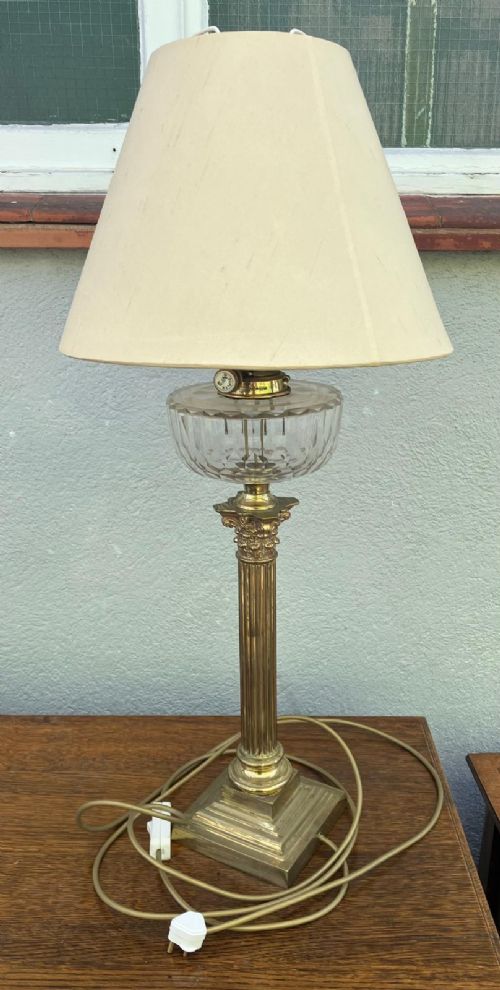
- An architectural column style featuring an ornate capital decorated with acanthus leaves. Many nineteenth-century brass table lamps adopt this form.
- Ormolu
- Gilded bronze or brass applied to decorative objects and furniture mounts. It provides a bright golden finish on high-status table lamps.
- Holophane
- A brand of prismatic glass designed to direct and diffuse light efficiently. These shades are typical of early twentieth-century industrial and domestic lighting.
Fluted Glass Lamp: Frequently Asked Questions
What is a fluted glass lamp?
A fluted glass lamp is a lighting fixture featuring glass shaped with vertical channels or grooves, encompassing Victorian oil lamps, Edwardian table lamps, and twentieth-century pendants.
These pieces combine glass bodies with brass, bronze, or ceramic mounts, originating primarily from the nineteenth and early twentieth centuries.
How do I date an antique oil lamp?
Dating relies on material combinations, burner mechanisms, and stylistic markers such as Corinthian columns or Art Deco geometric bases. Victorian and Edwardian examples often pair brass with cranberry or opaline glass.
Changes in manufacturing techniques and glass colours help narrow the period of production down to specific decades.
Were these lamps converted to electricity?
Many period oil lamps have been adapted for modern electrical use while retaining their original brass burners, collars, and glass reservoirs.
This conversion allows the historical character of the piece to be maintained within a contemporary domestic setting.
How do I choose between table and pendant lights?
Table lamps offer flexible placement on surfaces, frequently utilising brass columns and decorative glass shades to provide ambient room light. Pendant lights hang from ceilings, utilising opaline or cut glass to illuminate specific areas.
Selection depends on the spatial requirements of the room and the desired height of the light source.