

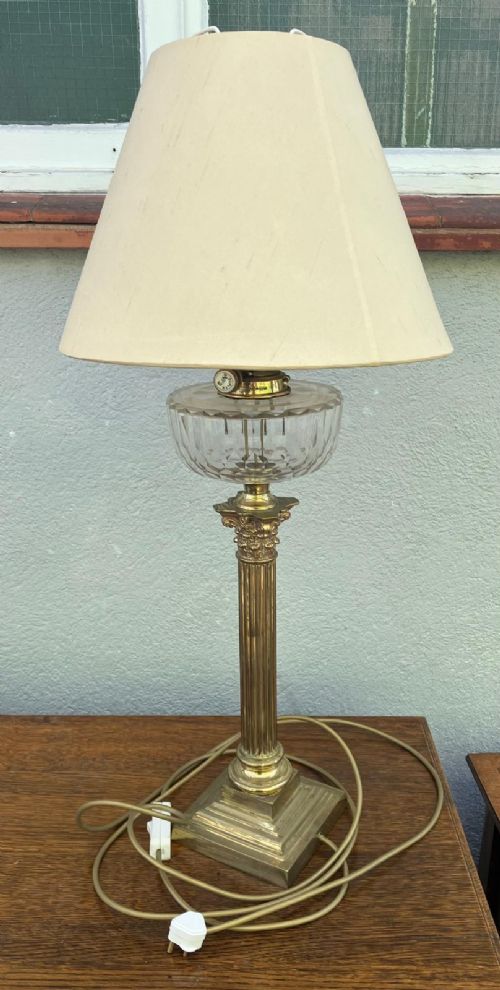


Fluted Glass Desk Lamp
These fluted glass desk lamp pieces combine brass and glass to sit neatly on a writing surface, bringing period light to a room.
Fluted Glass Desk Lamp
A fluted glass desk lamp brings together solid brass bases and detailed glass elements, drawing on Victorian, Edwardian, and Art Deco styles. When searching for a fluted glass desk lamp, a buyer encounters table lamps and oil lamps that have been converted for modern use, alongside pieces dating from the nineteenth century to the nineteen-thirties.
The items seen on this page span the Victorian and Edwardian eras, utilising Corinthian column designs and classical motifs. These fixtures serve both practical desk lighting and decorative display, maintaining the proportions typical of late nineteenth-century manufacture.
Most examples combine brass work with opaline or cut glass reservoirs and shades, creating substantial desk or table lighting. The forms range from classical column bases to shell-shaped Art Deco profiles.
Materials and construction
Makers built these pieces using cast brass and bronze for the columns and mounts, paired with blown or cut glass for the reservoirs and shades. Metal components were turned and cast to create crisp fluting and classical details.
Glass elements incorporate opaline, milk glass, and heavy cut glass, sometimes mounted on contrasting black glass bases. The assembly of metal collars, ceramic elements, and glass reservoirs required specialist fitting techniques common to period oil lamp production.
Fluted Glass Desk Lamp Retail Price Guide 2026
Typical asking prices for fluted glass desk lamp among the pieces listed under this phrase on Sellingantiques today, from the lower quarter to the upper quarter. They describe what is for sale here now, not the wider market.
Materials recorded across the selection include brass, bronze, opaline glass, cut glass, milk glass, and ceramic.
Judging quality in period lighting
Quality rests upon the crispness of the brass casting and the depth of the glass cutting, distinguishing standard production from finer workshop output. Heavier gauge metalwork and well-proportioned Corinthian capitals indicate superior manufacture.
The integration of materials reveals the standard of the piece, particularly where brass meets opaline glass or ceramic elements. Finer examples maintain precise alignment through the column and reservoir without clumsy mounting work.
JOSEPH HINKS
The Fluted Glass Desk Lamp Glossary
- Corinthian column
- A classical architectural column form with ornate acanthus leaf decoration at the capital, frequently utilised on nineteenth-century brass lamp bases.
- Opaline glass
- An opaque or translucent white glass popular in the Victorian and Edwardian periods, used extensively for lamp shades and reservoirs.
- Reservoir
- The container that held lamp oil before conversion to electricity, usually formed from cut, opaline, or coloured glass.
- Conversion
- The process of adapting an older oil lamp to accept electrical fittings while retaining the original body and base.
Fluted Glass Desk Lamp: Frequently Asked Questions
Are these lamps safe for daily use?
These pieces require professional rewiring to meet current electrical standards before regular use on a desk.
Working with a qualified electrician ensures the vintage brass and glass fittings accommodate modern wiring safely.
How do I date an antique lamp?
Dating relies on stylistic markers such as Corinthian capitals, brass patination, and the specific manufacturing methods of the glass components.
Victorian and Edwardian pieces often display registration marks or maker stamps on the brass burner collars.
Can I replace a missing shade?
Finding a period-correct replacement shade involves matching the fitter size and glass type, such as opaline or cut glass.
Exact matches take time to source because shade designs varied widely across nineteenth-century workshops.
What is an oil lamp conversion?
A conversion means the original internal oil mechanism has been replaced with electrical wiring and a lamp holder.
This allows nineteenth-century table lamps to function as desk lighting while preserving the exterior brass and glass body.