



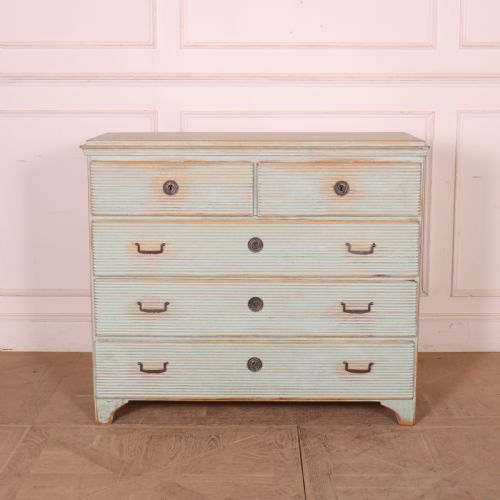

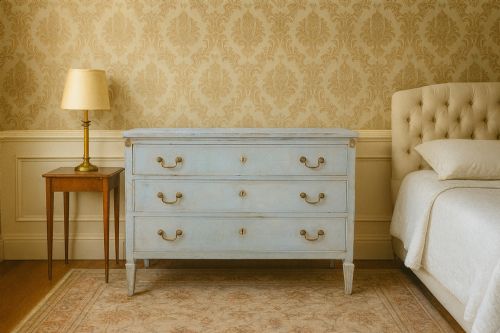


Fluted Commode
A fluted commode brings architectural line and practical storage to a room, offering the structured elegance of vertical carving on timber drawer fronts.
Fluted Commode
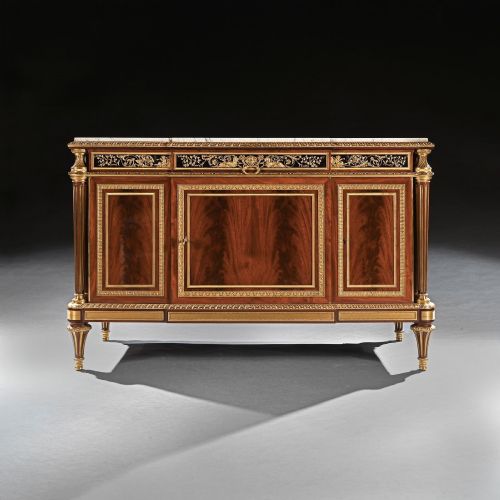
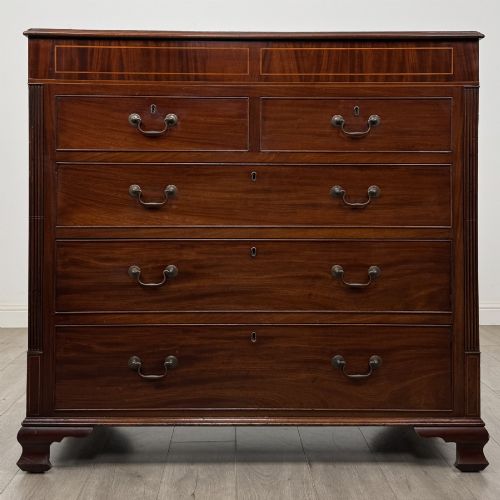
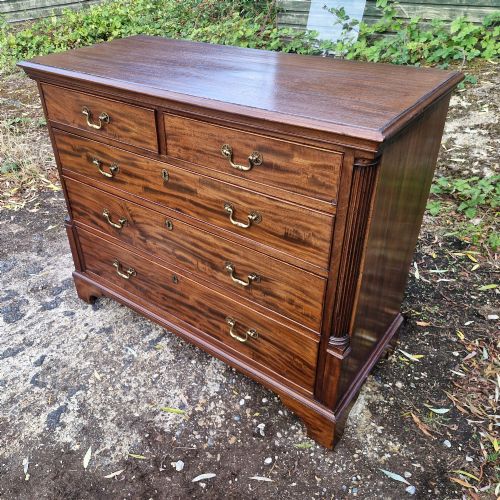
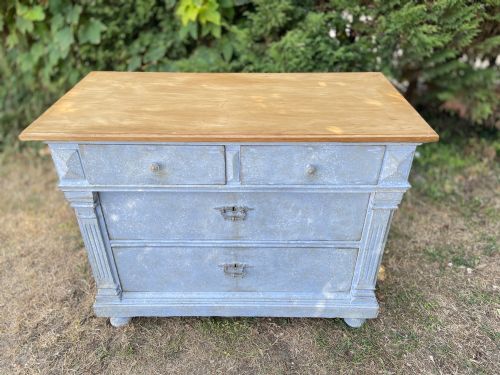
When you search for a fluted commode, you encounter a variety of storage pieces ranging from Georgian mahogany chests to Swedish painted neoclassical designs. These items function primarily as chests of drawers or side cabinets, bringing substantial storage capacity alongside refined surface detailing.
The pieces appearing here span the eighteenth, nineteenth, and early twentieth centuries, originating from English, French, Swedish, and Dutch workshops. You are most likely to meet mahogany or painted pine versions featuring distinctive vertical channeling or carved drawer fronts.
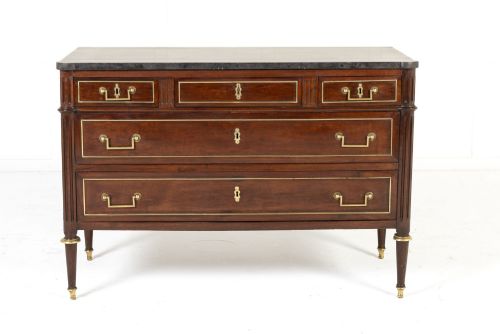
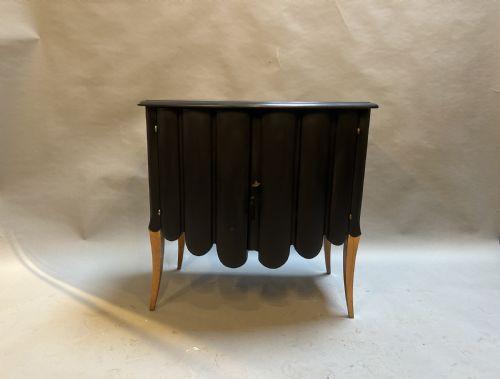
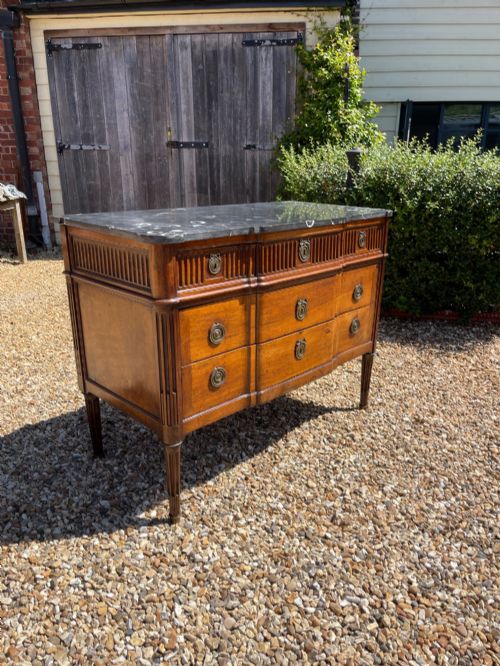
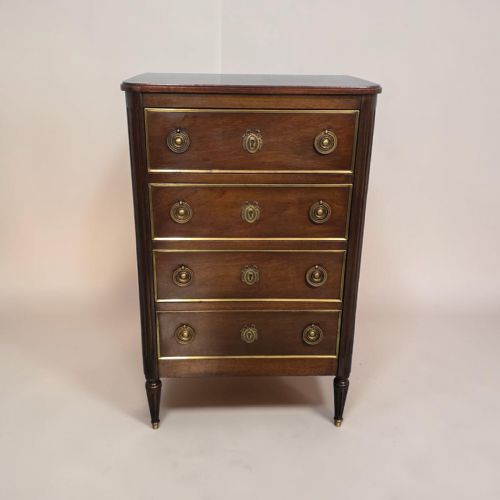
Forms vary from grand marble-topped French commodes to compact bedside tables and demi-lune cabinets. Each variation retains the core utility of a chest of drawers while displaying the distinct regional aesthetic of its period.
How they were made
Cabinetmakers constructed these pieces using solid and veneered timbers such as mahogany, walnut, oak, cherrywood, and pine, often incorporating secondary woods like pine for interior drawer linings. Structural integrity depended on traditional joinery, with dovetail joints securing the drawer boxes.
Surface ornamentation involved hand-carving vertical flutes directly into timber or onto applied mouldings, alongside crossbanding and intricate veneers. Marble slabs, frequently in shades of grey, were fitted to the tops of continental examples, while painted finishes utilised layered pigments over pine or oak substrates.
Fluted Commode Retail Price Guide 2026
Typical asking prices for fluted commode among the pieces listed under this phrase on Sellingantiques today, from the lower quarter to the upper quarter. They describe what is for sale here now, not the wider market.
Regional styles represented include Gustavian, Louis XVI, and Art Deco, moving from Swedish neoclassical painted wood to French polished mahogany.
What varies in quality
The distinction between standard and exceptional pieces rests upon the crispness of the hand-carved fluting and the selection of timber veneers. Finely figured mahogany, burr elm, or meticulously matched walnut elevate a piece beyond standard utility, showing deliberate intent in grain alignment.
Hardware and secondary materials further define the tier of craftsmanship, from original brass handles and escutcheons to the weight and finish of integrated marble tops. Superior construction is evident in the seamless movement of drawers and the preservation of original painted or polished surfaces.
The Fluted Commode Glossary
- Fluting
- Shallow, parallel concave grooves carved vertically into the surface of wood. This technique adds texture and a classical architectural rhythm to drawer fronts or furniture legs.
- Commode
- A low chest of drawers or cabinet originating in France during the seventeenth century. The term covers a multitude of decorative storage forms used across European drawing rooms and chambers.
- Demi-lune
- Having a half-moon or semicircular shape. These pieces sit flush against a wall and frequently serve as side cabinets or bedside tables.
- Crossbanding
- A strip of veneer applied perpendicularly to the grain of the primary surface. This borders the drawer fronts or tabletops to create a neat framing effect.
- Neoclassical
- A style drawing inspiration from the classical art and architecture of ancient Greece and Rome. It prioritises symmetry, straight lines, and restrained ornamentation over baroque curves.
Fluted Commode: Frequently Asked Questions
Where should I place a fluted commode?
These pieces suit living rooms, hallways, or bedrooms where their sculptural drawer fronts can act as a focal point. Their practical storage makes them adaptable for surface display and organising household items.
A compact version or demi-lune shape fits narrower corridors or bedside areas, whereas larger marble-topped variants anchor a main wall in a principal room.
How do I care for marble tops?
Marble requires gentle cleaning with a damp cloth and mild, non-acidic soap to preserve its polished surface. Avoid abrasive cleaners or acidic substances like vinegar or citrus that can etch the stone.
Using coasters and mats protects the surface from moisture rings and scratches, ensuring the stone remains smooth and intact over decades of daily use.
Are painted finishes original?
Many Swedish and continental pieces feature historic painted surfaces, often in pale tones characteristic of the Gustavian style. Examining the layers reveals signs of age and wear that distinguish period finishes from later repainting.
Preserving these original coats involves avoiding harsh solvents and maintaining stable indoor humidity to prevent flaking or cracking of the paint.
How do I identify a Georgian piece?
Georgian examples typically showcase warm mahogany or walnut timbers with understated proportions and precise joinery. They rely on the natural beauty of the wood grain rather than heavy applied ornamentation.
Details such as hand-cut dovetails on drawer interiors and original brass pull handles help confirm the eighteenth-century origin of the furniture.