
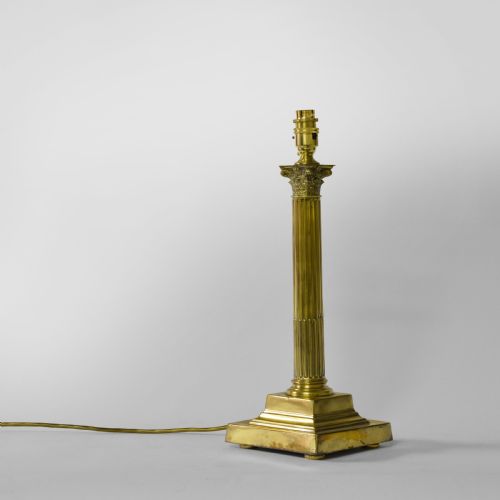


Fluted Column Lamp Base
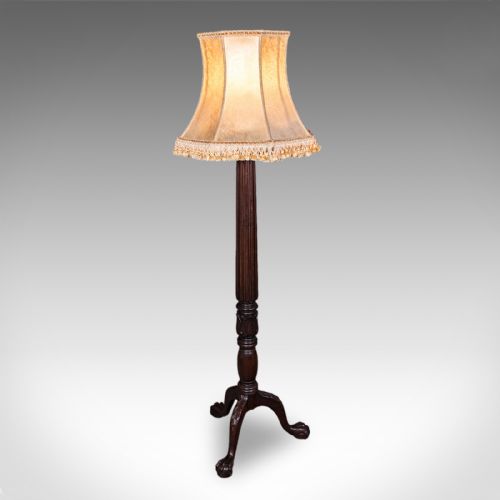
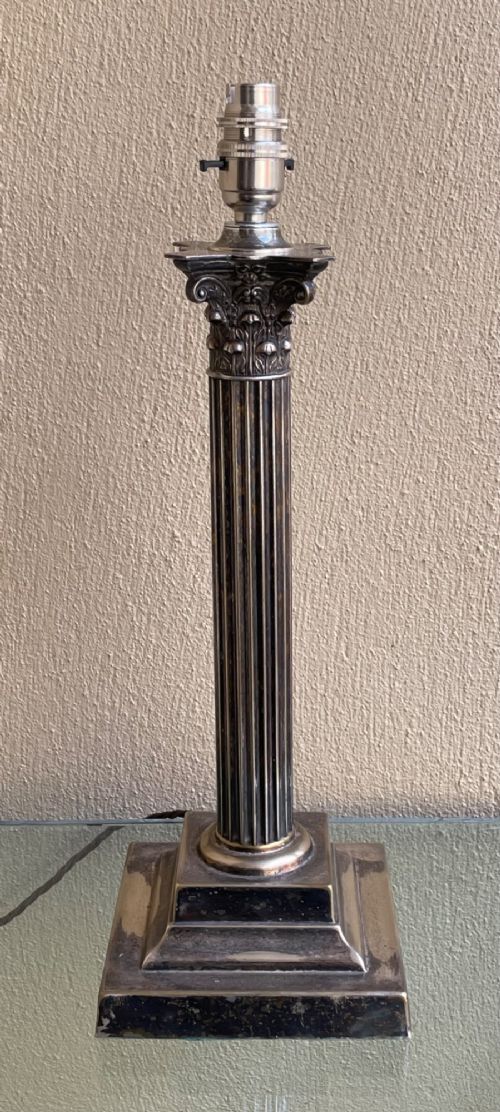
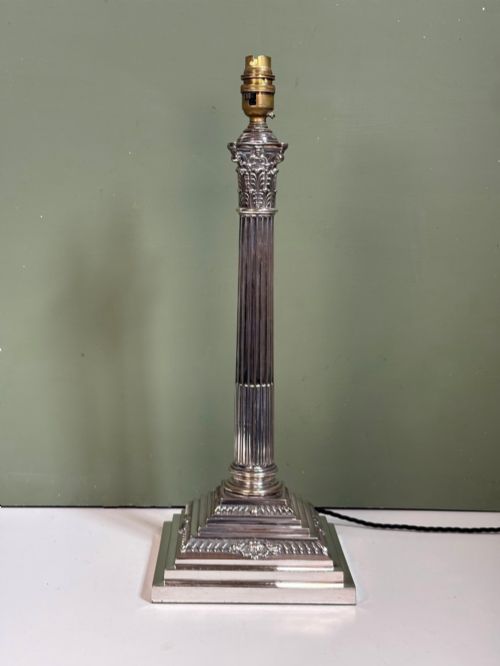
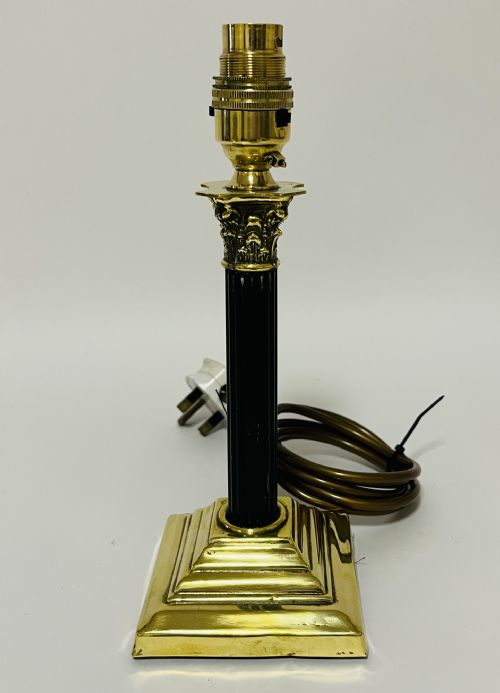
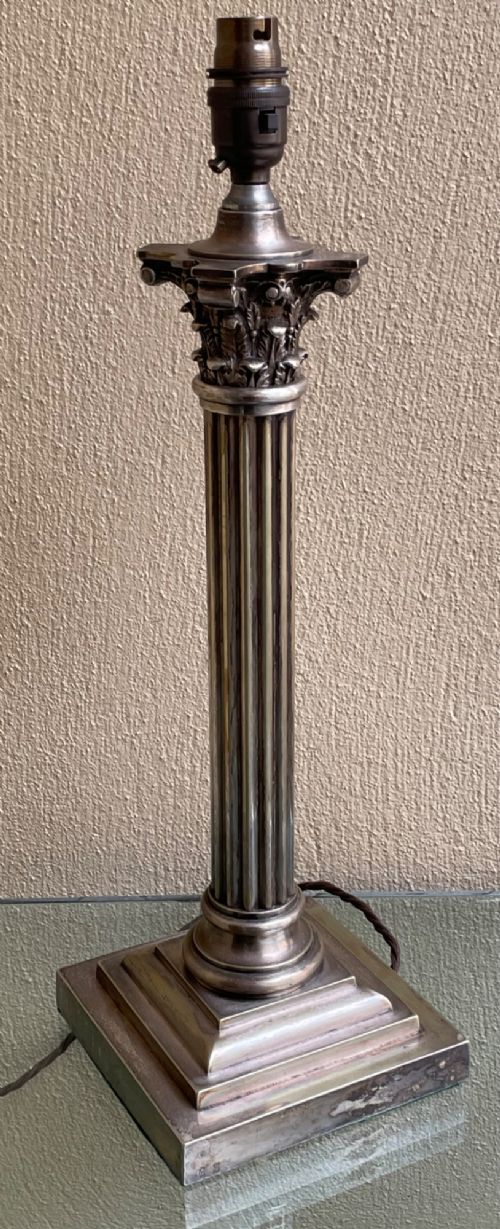
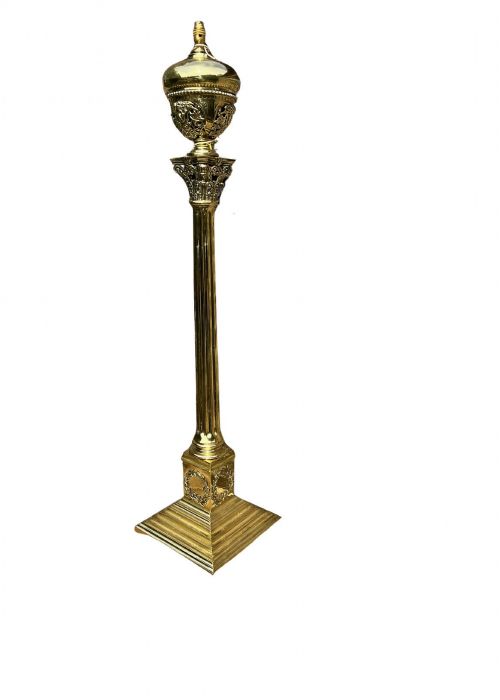
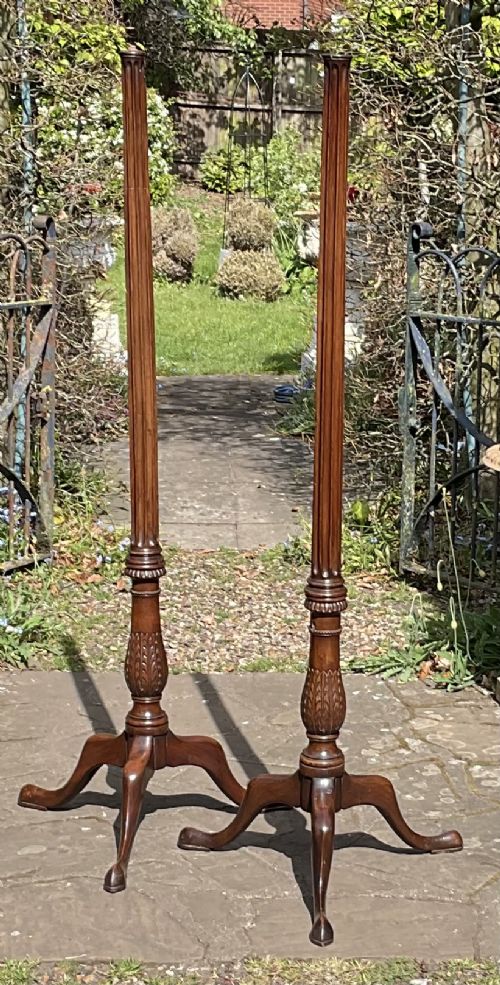
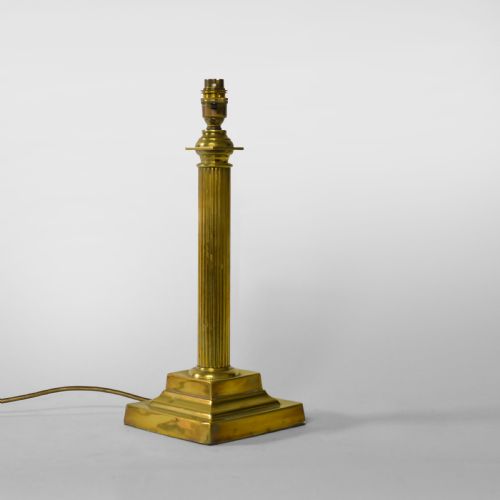
A fluted column lamp base brings classical order to a room, rising in brass, silver plate or mahogany through Victorian and Edwardian interiors.
Fluted Column Lamp Base
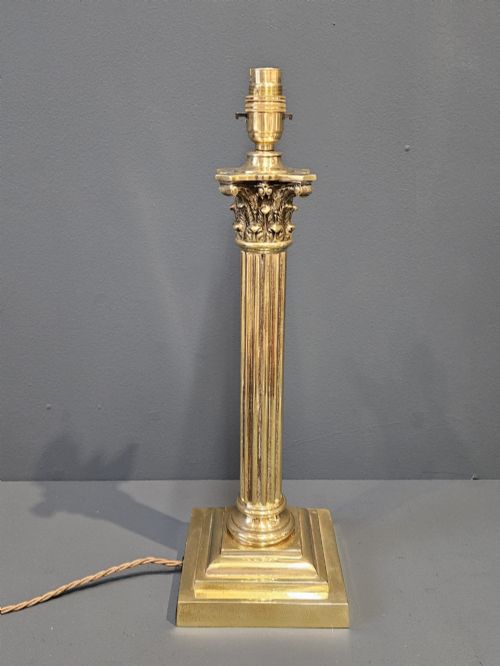
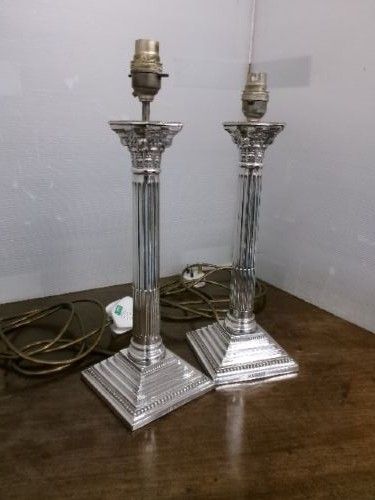
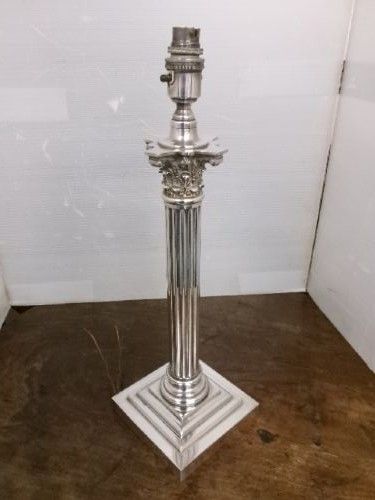
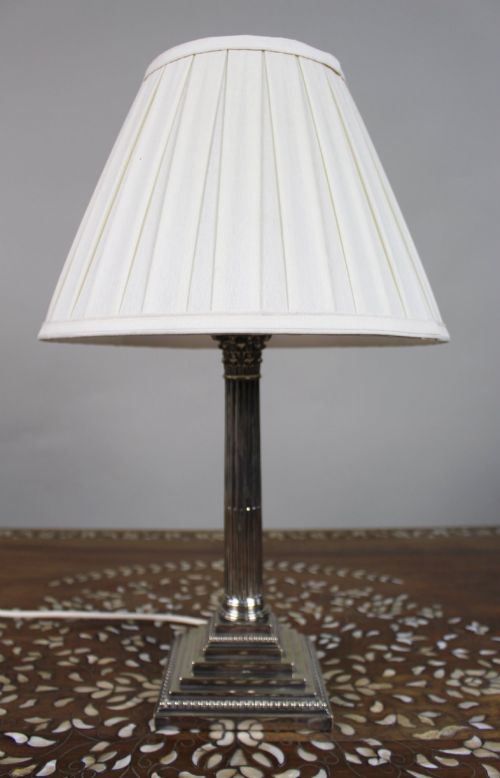
When you search for a fluted column lamp base, you encounter upright lighting fixtures modelled on classical architectural orders. The versions you meet most frequently on this page date from the Victorian era up to the early twentieth century, spanning table lamps and floor-standing standard lamps.
The selection ranges from tall brass and silver plated Corinthian columns to mahogany and giltwood floor standards. Many began life as oil lamps or church candlesticks before conversion to electricity, retaining their heavy metal reservoirs or stepped bases.
Makers and manufacturers produced these designs in quantity to satisfy a Victorian appetite for classical revival interiors. The form persists because the vertical fluting draws the eye upward while fitting neatly onto side tables and into corners.
How they were made
Makers turned mahogany and carved wood on lathes to create the slender wooden shafts of floor standards, whilst metalworkers cast brass and bronze components in sections. Silver plating was applied over base metals using electroplating techniques developed during the nineteenth century, creating a durable reflective surface.
Columns often feature detailed capitals, such as the acanthus leaves of the Corinthian order, cast separately and affixed to the main shaft. Cut glass reservoirs and opaline glass elements were integrated alongside metal collars and weighted bases to ensure stability.
Some slender columns hide their weight in cast iron internal rods designed to stop enthusiastic Victorian guests knocking them over.
What varies in quality
The distinction between standard production and superior examples lies in the crispness of the casting and the weight of the materials. Heavy gauge brass and thick silver plating retain their detail through decades of polishing, whereas thin metal wears down and reveals the base alloy beneath.
Proportion and scale dictate the visual success of the piece, with finer columns observing classical architectural ratios rather than arbitrary heights. The quality of assembly shows in how tightly the stepped bases, fluted shafts and capitals lock together without lean or wobble.
JOSEPH HINKS·Goldsmiths
The Fluted Column Lamp Base Glossary
- Corinthian column
- An architectural order featuring a capital decorated with stylized acanthus leaves. This motif appears frequently on nineteenth-century metal lamp bases.
- Standard lamp
- A tall floor-standing lighting fixture designed to illuminate a room from standing height. These often share the fluted column form of their smaller table-top counterparts.
- Pricket candlestick
- A candlestick featuring a central spike to hold a wax candle rather than a socket. Converted examples appear as tall table lamps with deep drip pans.
- Opaline glass
- An opaque pale glass used for reservoirs and bodies during the nineteenth century. It diffuses light softly and contrasts with polished brass mounts.
- Giltwood
- Timber treated with gold leaf or gilt gesso to simulate solid gold. This finish appears on decorative floor standards from the late period.
Fluted Column Lamp Base: Frequently Asked Questions
What is a fluted column lamp base?
A fluted column lamp base is a lighting fixture designed with vertical parallel grooves running down the shaft, mimicking ancient Greek and Roman architectural pillars.
They appear mainly in brass, silver plate and mahogany from the Victorian and Edwardian periods, adapted for domestic electric lighting or previous oil use.
Were these always electric lamps?
Many older examples started life as oil burners, paraffin lamps or church candlesticks before being converted to accept electrical fittings in the twentieth century.
This history accounts for the heavy metal reservoirs, burner galleries and weighted iron bases found beneath the columns.
How do I date a brass column lamp?
Dating relies on examining the assembly methods, the style of the capital, and any maker stamps or patent marks stamped into the metal.
Victorian pieces often display heavier casting and more intricate Corinthian detailing, while later twentieth-century versions simplify these classical elements.
How do I care for silver plated lamp bases?
Silver plated columns require gentle dusting with a soft cloth and occasional treatment with non-abrasive metal polish to prevent tarnish buildup.
Avoid aggressive scrubbing around the raised fluting and acanthus leaf capitals to protect the underlying plating from wear.