




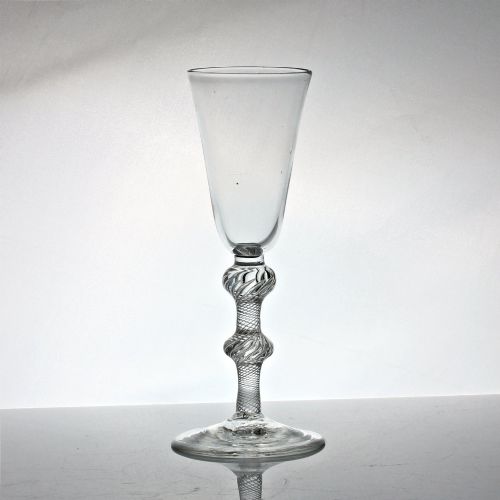




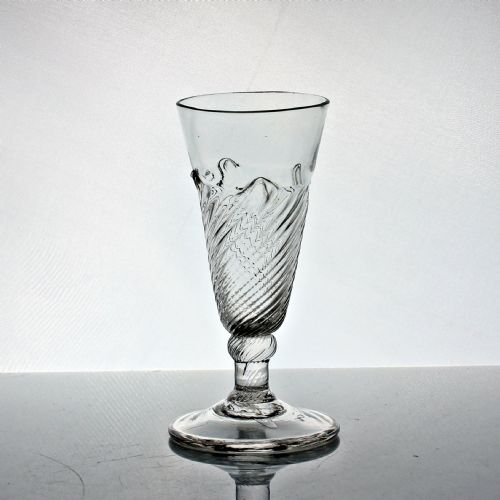


Fluted Ale Glass
These fluted ale glass pieces are historic drinking vessels holding centuries of craftsmanship, prized by collectors for their tactile stems and slender bowls.
Fluted Ale Glass
When you search for a fluted ale glass, you are looking at drinking vessels primarily originating from the Georgian and Edwardian eras. These pieces include tall flutes and dwarf forms designed for serving historical brews.
The versions you are most likely to meet on this page span the eighteenth century up to the early twentieth century. They showcase varied stem formations and slender profiles suited for historical dining and display.
How they were made
These items were shaped from lead glass, clear glass, flint glass, and lead crystal using hand-blown glass techniques. Artisans manipulated molten material to create slender bowls and delicate folded feet.
Makers incorporated decorative elements such as white enamel work, engraved hop and barley motifs, and complex internal stem formations including air twists and colour twists.
Fluted Ale Glass Retail Price Guide 2026
Typical asking prices for fluted ale glass among the pieces listed under this phrase on Sellingantiques today, from the lower quarter to the upper quarter. They describe what is for sale here now, not the wider market.
Georgian drinkers enjoyed their ales from vessels secretly embellished with tiny engraved hops, ensuring every toast honoured the brewing trade.
What varies in quality
Quality rests upon the dexterity shown in forming the internal twists and the crispness of any wheel-engraved ornamentation like hop and barley motifs. Pieces featuring intricate red colour twists or opaque elements demand greater technical skill from the glassblower.
Proportions dictate the standing of a vessel, with well-balanced dwarf forms and elegant flutes achieving higher regard among collectors than heavier, less refined examples.
The Fluted Ale Glass Glossary
- Air twist
- A decorative stem formation containing elongated spiral bubbles trapped inside the glass during manufacture. This technique required considerable skill from the glassblower.
- Folded foot
- A base edge turned underneath and pressed flat to create a thickened rim for extra strength. This feature appears frequently on mid eighteenth-century specimens.
- Wrythen
- A surface pattern of subtle spiral ribs or flutes twisted around the body of the vessel. It is formed by rotating the glass while blowing.
- Opaque twist
- A stem containing threads of white enamel glass drawn into intricate spiral patterns. These threads contrast sharply with the clear metal surrounding them.
- Facet cut
- Geometric planes ground and polished onto the stem or bowl of the vessel. This finish catches the light and gained popularity in the later eighteenth century.
Fluted Ale Glass: Frequently Asked Questions
What were fluted ale glasses used for?
These vessels served historical beers and ales during social gatherings and formal dinners. Their tall, narrow bowls helped retain the carbonation and aromas of the brew.
Over time, they transitioned from functional tavern and dining table items into treasured display pieces collected for their decorative stems and fine glasswork.
How do I tell eighteenth century ale glasses apart from later ones?
Eighteenth-century examples often feature handmade characteristics such as pontil marks on the base, folded feet, and complex internal air or opaque twists.
Later Edwardian pieces generally display heavier proportions, machine or tool-assisted cuts, and clearer uniformity across pairs, reflecting industrial improvements in glass production.
How should I display my ale glass?
Keep your glass in a stable cabinet away from direct sunlight and areas subject to sudden temperature shifts. Adequate spacing prevents accidental knocks against other delicate antiques.
Because many specimens feature fragile stems and delicate enamel decoration, handle them firmly by the lower foot rather than the upper bowl.
What does a dwarf ale glass mean?
A dwarf ale glass refers to a shorter, more compact version of the traditional tall flute. These pieces retained the narrow bowl shape while featuring reduced stem heights.
They were practical variants designed for smaller portions or lower table settings during the Georgian period.