




Flush Handle Storage Chest
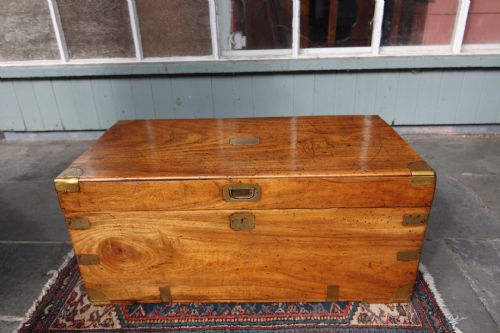
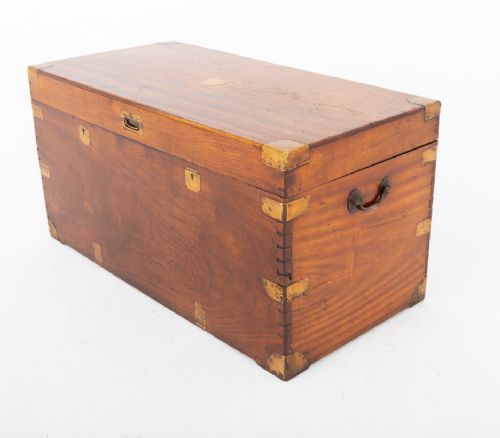
These flush handle storage chest pieces are robust travel companions built for officers and travellers, offering clever compartments and durable timber construction.
Flush Handle Storage Chest
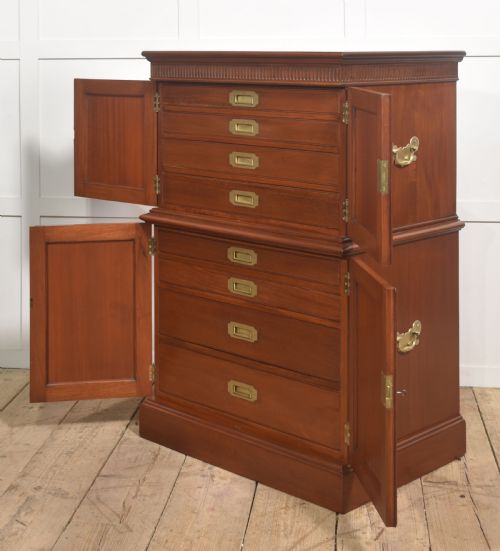
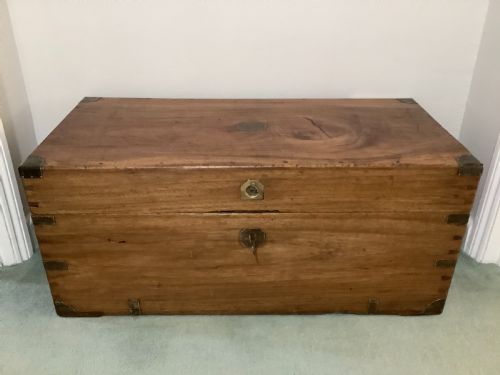
The styles range from Victorian military campaign chests to maritime trunks and pitch pine storage boxes. These forms reflect their practical origins, where protruding handles would otherwise catch or break during loading and unloading.
Collectors often find camphor wood, mahogany, and teak examples, each selected for its resilience against moisture and wear. These timbers provide the structural integrity required for heavy-duty storage while maintaining a formal appearance suitable for an officer's quarters.
Materials and construction
Cabinet makers utilised dense timbers such as camphor wood, mahogany, teak, and pitch pine to build these robust storage pieces. These woods resist warping and splitting, making them ideal for the varying climates encountered during nineteenth-century travel.
Brass corners, straps, and recessed handles reinforce the structural joints of the timber. These metal mounts protect vulnerable edges from impact while keeping the exterior surfaces completely flat.
Many camphor wood trunks still retain their distinct, natural scent after more than a century of travel.
Evaluating quality and finish
The fineness of a flush handle storage chest depends on the selection of timber and the precision of its brass fittings. Superior examples feature well-figured grain, tight joinery, and handles that sit flush within their recesses without rattle or play.
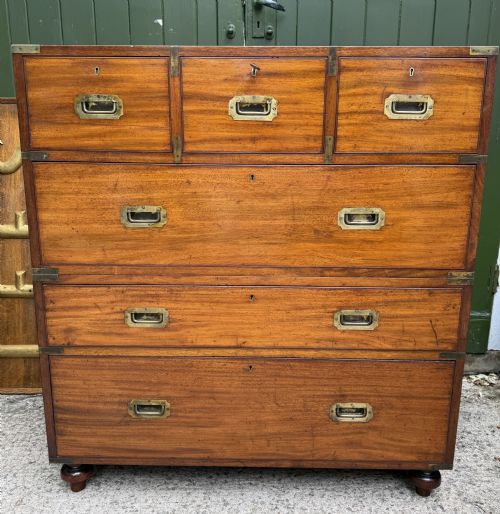
Internal organisation also separates standard utility boxes from finer pieces. Better chests include fitted drawers, secret compartments, and original brass locks that remain operational alongside their matching keys.
The Flush Handle Storage Chest Glossary
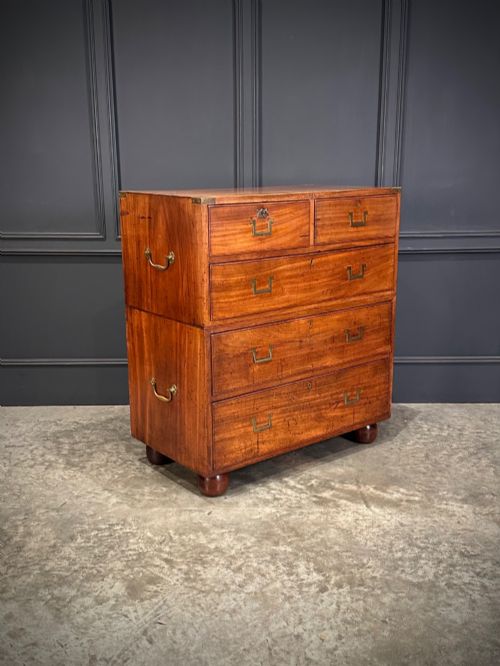
- Campaign chest
- A portable chest of drawers built in two or more sections for easy transport by military officers on active service.
- Recessed handle
- A pull or handle set into a cavity in the drawer front or lid so that it does not project beyond the surface.
- Brass-bound
- A method of reinforcing wooden trunk edges and corners with brass strips and corner pieces to prevent damage during transit.
- Two-part chest
- A modular cabinet design consisting of upper and lower carcases stacked together and secured with side brackets.
- Camphor wood
- An aromatic hardwood valued for its insect-repellent properties, commonly used for nineteenth-century travel trunks.
Flush Handle Storage Chest: Frequently Asked Questions
Why do these chests have recessed handles?
Recessed handles prevent the hardware from catching or protruding during transport and stacking. This design protects the surrounding timber and allows multiple trunks to pack tightly together.
Officers and travellers required flat exterior surfaces so their luggage could survive rough handling on ships and carriages without snagging.
How are two-part chests constructed?
Two-part chests consist of an upper and a lower cabinet section designed to separate for easier lifting and packing. Metal brackets or side carrying handles help secure the two halves together when stacked.
This modular approach was essential for military campaigns where baggage had to be loaded onto mules or wagons by hand.
What woods were commonly used?
Cabinet makers relied on dense tropical and regional hardwoods such as mahogany, teak, and camphor wood. Pitch pine also appears in maritime and utility contexts.
These materials were chosen for their durability, resistance to humidity, and ability to endure heavy bumps during nineteenth-century journeys.
How do I care for camphor wood?
Camphor wood requires minimal maintenance beyond occasional dusting with a dry cloth and protection from direct sunlight. Avoid harsh chemical polishes that can damage the traditional wax finish.
Keeping the timber in stable indoor humidity prevents the wood from drying out while preserving its natural aromatic qualities.