



Florentine Style Light
A florentine style light brings ornate Italian craftsmanship into a room, offering gilded illumination through elaborate wooden and metal frames.
Florentine Style Light
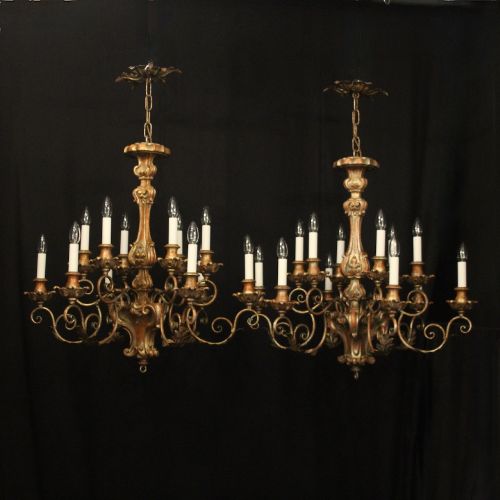
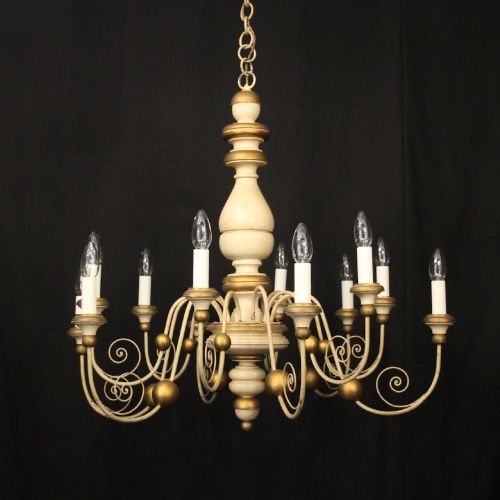
A florentine style light encompasses chandeliers, wall lights, girandoles, and standard lamps rooted in Italian design traditions. These fixtures date from the eighteenth century through to the mid-twentieth century, with the majority of examples on this page originating from the early decades of the twentieth century. They often feature multi-tiered forms, floral motifs, and substantial arm configurations designed to project illumination outward.
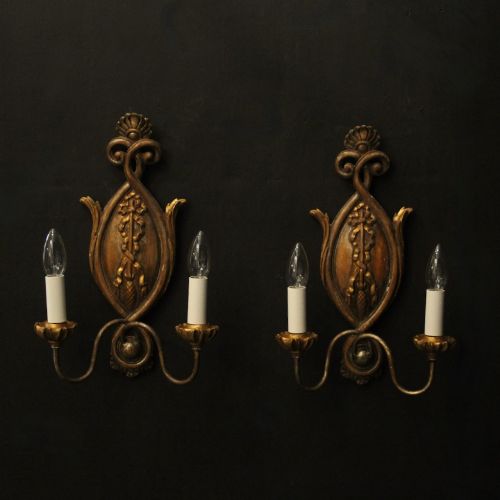
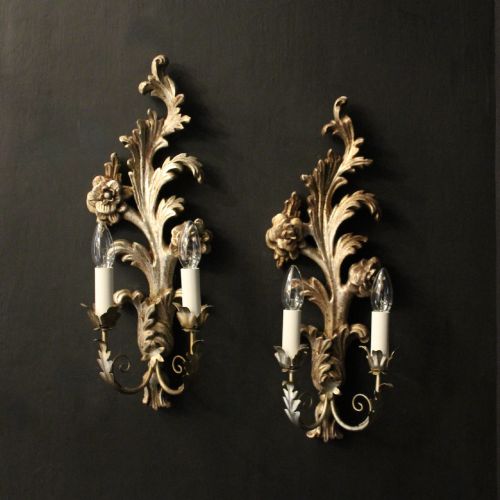
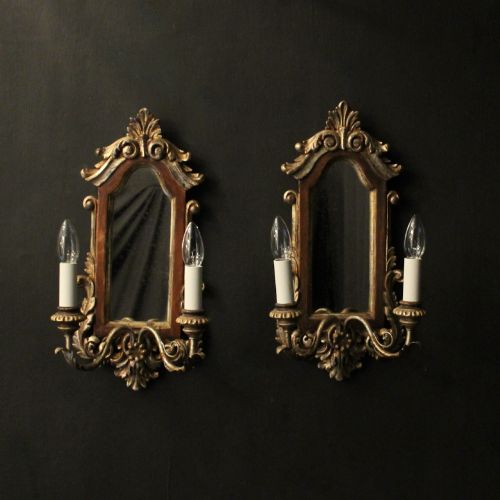
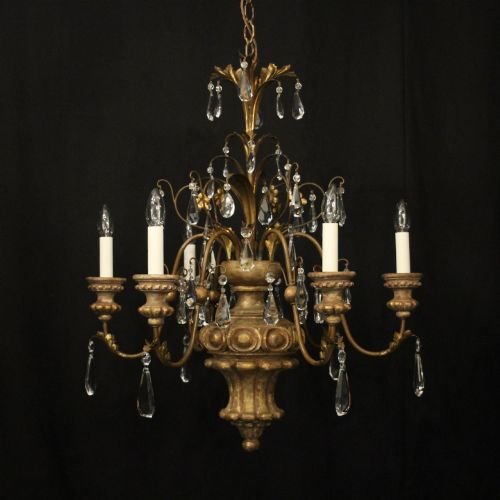
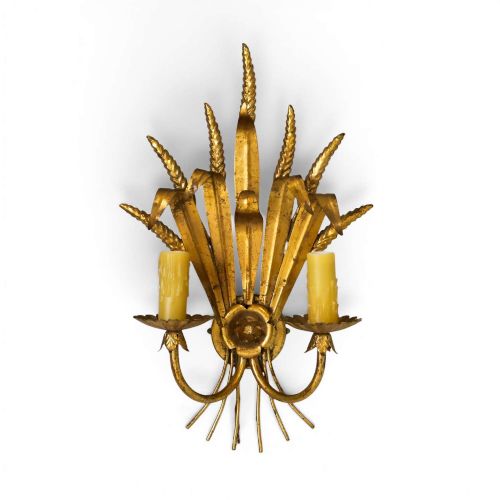
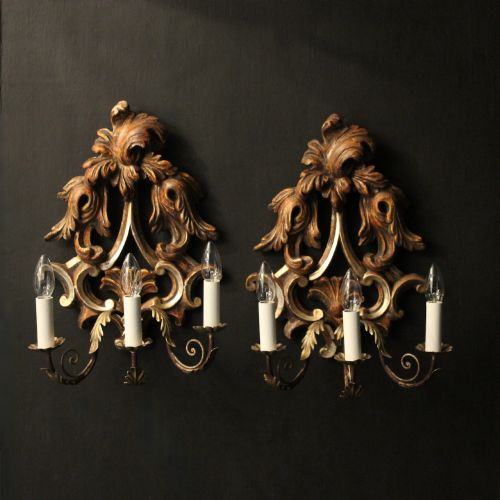
The selection ranges from grand multi-light chandeliers with crystal beads down to twin-arm wall sconces and hanging lanterns. Pieces heavily reflect Florentine Baroque and Rococo aesthetics alongside Italian Venetian influences. Buyers encounter both single fixtures and matched pairs suitable for coordinating symmetrical spaces.
Materials span giltwood, carved wood, gesso, gilt metal, glass, crystal, and gold leaf. Polychrome finishes also appear, combining painted details with traditional gilding. Standard lamps and table lamps extend these decorative lighting forms into floor and surface placement.
How they were made
The construction of a florentine style light relies heavily on carved wood and gesso frameworks finished with gold leaf or silver giltwood. Artisans shaped timber into intricate scrollwork and floral elements before applying successive layers of gesso to create a smooth base for gilding. Metal components, including gilt metal and bronze, provide structural integrity for larger chandeliers and multi-armed wall sconces.
Crystal and glass elements are integrated into the designs through wired drops, beaded strands, and decorative floral bobeches that catch and refract the light. Polychrome versions incorporate hand-painted pigments over the gilded or gessoed surfaces to introduce subtle colour variation. These traditional techniques resulted in robust yet visually ornate lighting fixtures built to last across centuries.
Florentine Style Light Retail Price Guide 2026
Typical asking prices for florentine style light among the pieces listed under this phrase on Sellingantiques today, from the lower quarter to the upper quarter. They describe what is for sale here now, not the wider market.
Several pieces include delicate beaded crystal drops that would have originally shimmered by candlelight.
What varies in quality
The distinction between tiers of quality in a florentine style light lies in the depth and precision of the carving and the application of the surface finish. Finer examples display crisp, hand-carved wooden details and complex multi-tiered structures with integrated beaded crystal elements, whereas simpler versions rely on moulded compo or heavier cast metal. The nuance of the gilding, whether genuine gold leaf or silver giltwood, dictates how the fixture catches ambient light.
Proportion and scale also separate the standard production from the exceptional. Larger chandeliers holding numerous lights require balanced arm distribution and sturdy internal ironwork to maintain alignment over decades of hanging. The presence of original polychrome highlights and intact crystal drops further elevates the visual coherence of an antique piece.
The Florentine Style Light Glossary
- Giltwood
- Wood that has been coated with a thin layer of gold leaf or gold paint. This technique gives the appearance of solid gold while utilising lighter underlying timbers.
- Gesso
- A plaster-like mixture applied to wood surfaces to create a smooth preparation for gilding or painting. It allows craftsmen to model fine relief details before applying gold leaf.
- Girandole
- An ornamental branched wall light featuring a mirror or a reflective backplate. The reflective surface helps to amplify the illumination cast by the candles or bulbs.
- Bobeche
- A small collar or saucer fitted beneath a candle nozzle to catch melting wax. In these fixtures, they are frequently carved from wood or cast in metal to match the primary frame.
- Polychrome
- The practice of decorating architectural elements or objects in a variety of colours. In Italian lighting, this often combines painted floral tones with traditional gilding.
Florentine Style Light: Frequently Asked Questions
How do I hang a heavy chandelier?
These large fixtures require anchorage directly into the ceiling joist using a rated hook capable of supporting the substantial weight of carved wood and metal.
Professional electrical installation ensures the internal wiring safely accommodates the multi-bulb configurations typical of these pieces.
Where do wall lights work best?
Twin-arm wall lights and girandoles suit flanking positions around fireplaces, doorways, or large mirrors to create balanced ambient illumination in reception rooms.
Their projecting arms cast light across the wall surface, accentuating the carved giltwood and gesso details.
How do I clean antique gilding?
Dusting requires a very soft, dry brush to prevent disturbing the delicate gold leaf or painted polychrome surfaces accumulated over the decades.
Moisture and chemical cleaners must be avoided entirely to protect the historical gesso and wood foundations from damage.
What defines Florentine Baroque style?
Florentine Baroque design emphasises dramatic curves, exuberant floral motifs, and rich surface textures that create a strong sense of movement.
This aesthetic translates into densely carved wooden chandeliers and wall lights finished in glowing giltwood.