



Florentine Sconces
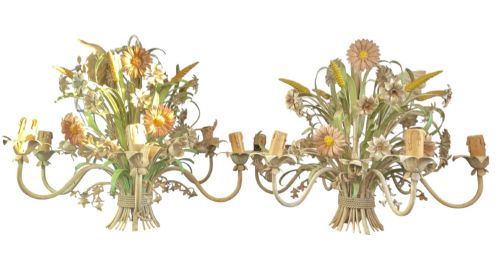
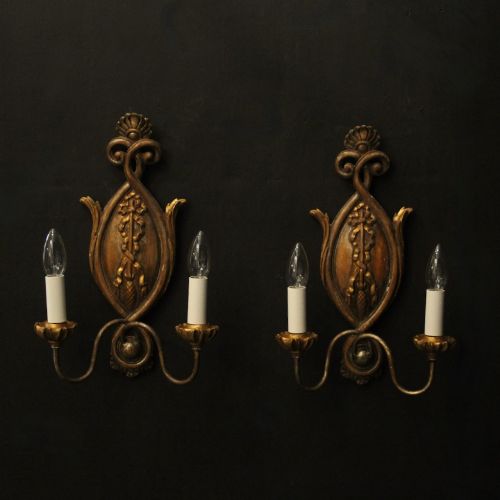
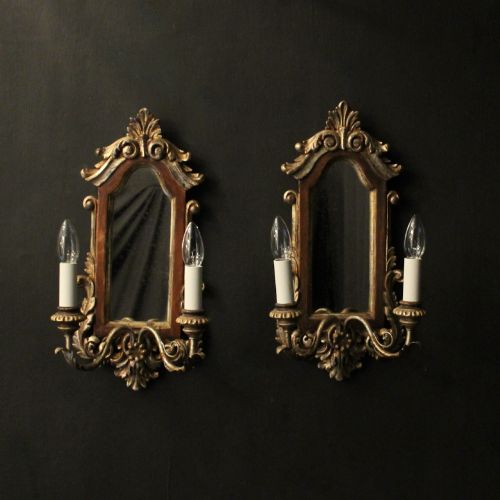
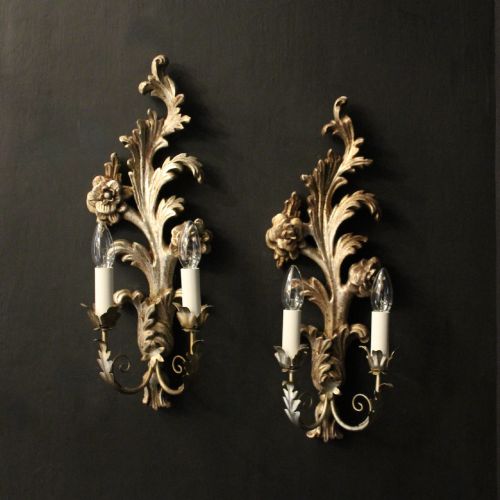
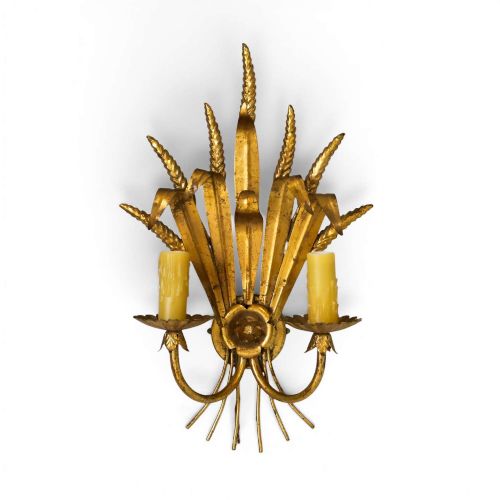
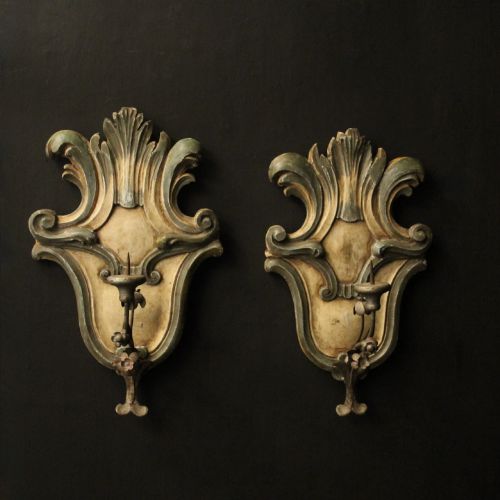
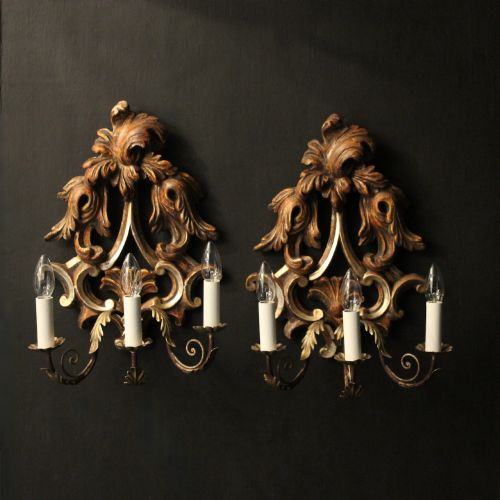
These florentine sconces bring carved warmth and gilded reflection to a wall, offering the decorative depth that collectors seek.
Florentine Sconces
When searching for florentine sconces, a buyer is looking at wall-mounted light fittings and mirrors originating from Italy, predominantly rendered in carved wood and finished with gold or silver leaf. The examples met most frequently on this page date from the early twentieth century, specifically the 1920s and 1930s, alongside nineteenth-century pieces.
The forms span twin-arm and triple-arm wall lights, girandoles, and hanging lanterns, often styled in Florentine Rococo or Baroque revivals. These pieces function both as sources of illumination and as sculptural wall ornaments that catch candlelight or electric light alike.
How they were made
The construction of these pieces relies heavily on carved wood, gesso, and applied gold or silver leaf, creating a luminous surface that catches the eye. Craftsmen shaped wooden bases and layered gesso to achieve high-relief ornamentation, such as leaf motifs and scrollwork, before applying precious metal leaf.
Alternative materials include wrought iron for shelves and various metals for electric wall sconces, while polychrome finishes introduce painted colour alongside gilding. Glass elements appear in girandoles and mirrors, pairing reflective surfaces with the carved wooden frames.
Florentine Sconces Retail Price Guide 2026
Typical asking prices for florentine sconces among the pieces listed under this phrase on Sellingantiques today, from the lower quarter to the upper quarter. They describe what is for sale here now, not the wider market.
Some wall lights feature up to four arms, ensuring your hallway receives an abundance of historic sparkle.
What varies in quality
Quality in these pieces rests upon the crispness of the wood carving and the depth of the gesso work beneath the leaf, which determines how sharply the light plays across the ornament. Superior examples display intricate, hand-carved leaf details and harmonious proportions across multi-arm configurations.
The integrity of the gilding surface also distinguishes the range, with finer items retaining rich layers of gold or silver leaf rather than flat modern paints. The balance between the structural wooden support and the decorative elements dictates the lasting presence of the wall light.
The Florentine Sconces Glossary
- Giltwood
- Wood that has been coated with a thin layer of gold leaf. This finish provides the characteristic warm sheen found on traditional Italian wall lights.
- Girandole
- An ornamental bracket wall light featuring a mirror or reflective backplate. The glass multiplies the glow of the candles placed in the arms.
- Gesso
- A plaster-like mixture applied to wood surfaces as a base for gilding. It allows carvers to model intricate relief details before applying metal leaf.
- Polychrome
- Decorated in several colours. This finish appears on wooden pieces alongside gilding to add painted depth to the carved ornament.
- Pricket candle
- A candle supported by a sharp metal spike inserted into the base of the candle. It represents an older method of holding wax illumination.
Florentine Sconces: Frequently Asked Questions
How do I light these wall sconces?
Many period examples are designed for candles, whilst later adaptations or specific mid-century pieces accommodate electric bulbs. Buyers should inspect the backplates and arm fittings to determine the original method of illumination.
For candle sconces, standard taper or pricket candles fit the existing cups or spikes. Electric conversions require professional wiring to ensure safe installation against the wall.
What periods do these pieces date from?
The selection spans from the eighteenth century through to the mid-twentieth century. Nineteenth-century and earlier pieces often display hand-carved detailing associated with traditional Italian workshops.
Pieces from the 1920s and 1930s form a large part of the available selection, reflecting a strong demand for revival styles during the interwar period.
How are girandoles different from wall lights?
Girandoles incorporate a mirror plate into the design of the wall light, serving to reflect the illumination of the attached candle arms. Standard wall lights provide the arm fixtures and decorative backplates without the central mirror.
Both forms share similar carved wooden and gilded constructions, functioning as prominent decorative focal points on a room's wall.
Where should I place a hanging lantern?
Hanging lanterns suit entrance halls, stairwells, or high-ceilinged rooms where vertical space allows them to hang freely. Their enclosed glass and metal or wooden frames project light downwards and outwards.
Careful placement ensures the lantern remains a central architectural feature while providing adequate clearance for movement beneath.