


Florentine Gilt Lights
Florentine gilt lights bring Italian craft and glowing warmth to a room, offering grand chandeliers and carved wall sconces.
Florentine Gilt Lights
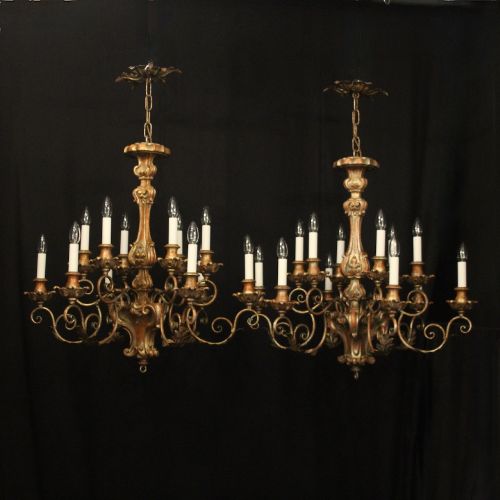
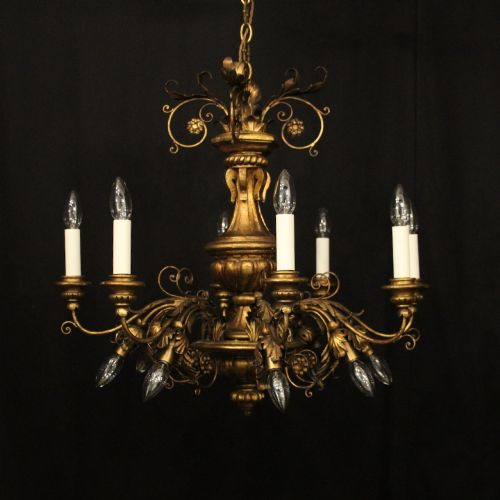
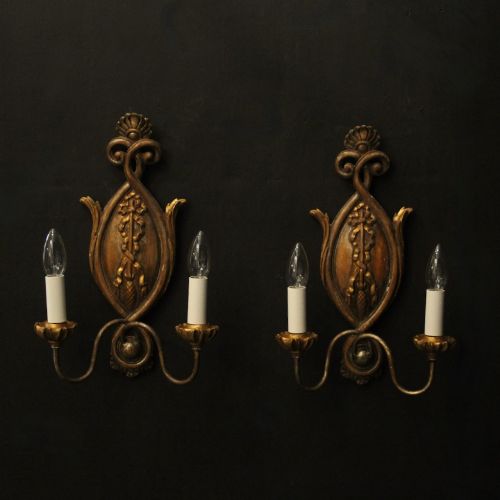
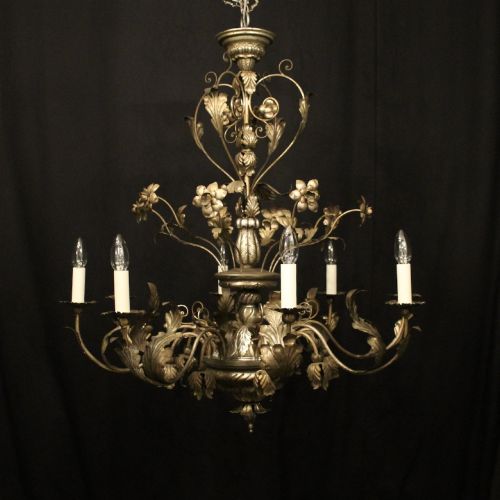
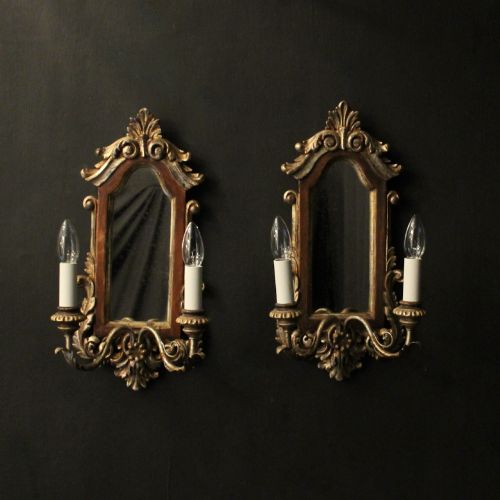
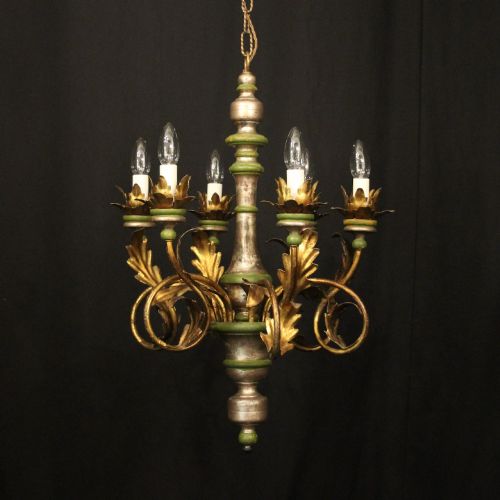
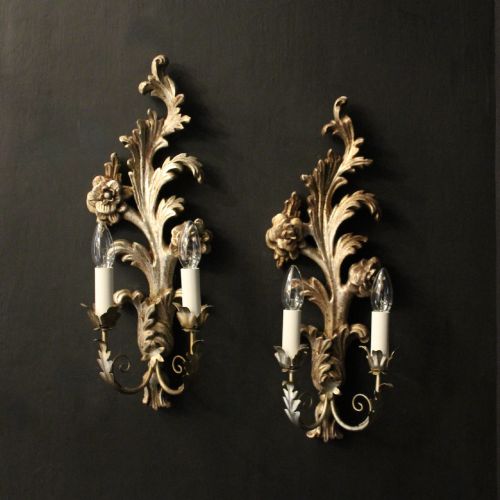
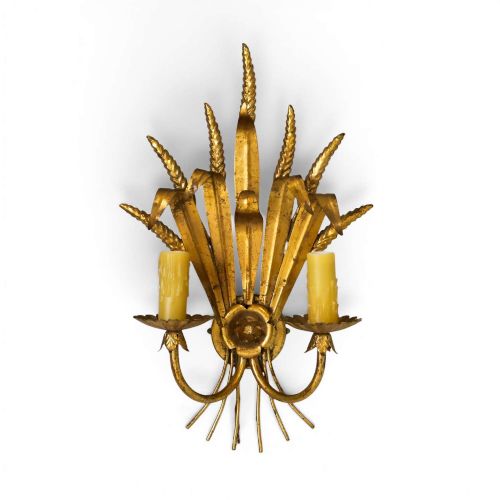
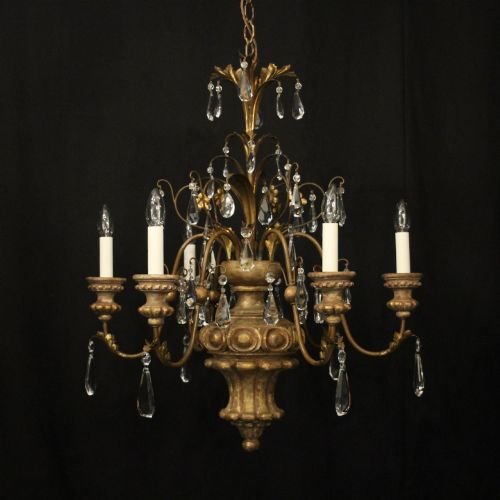
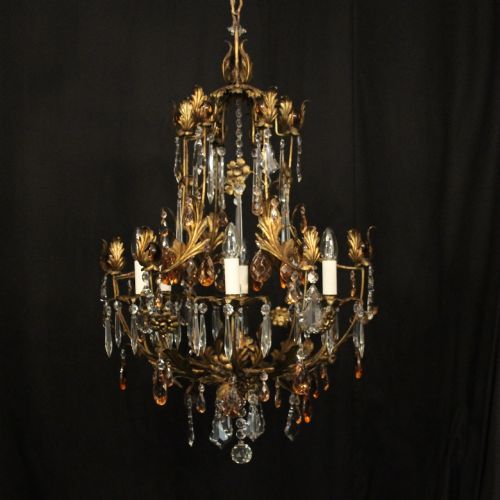
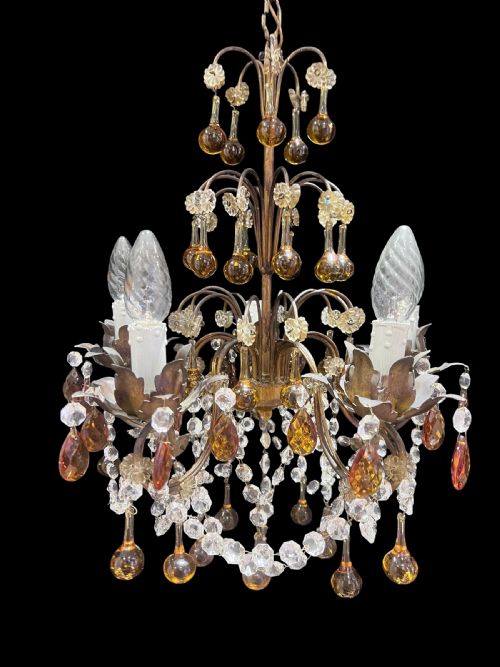
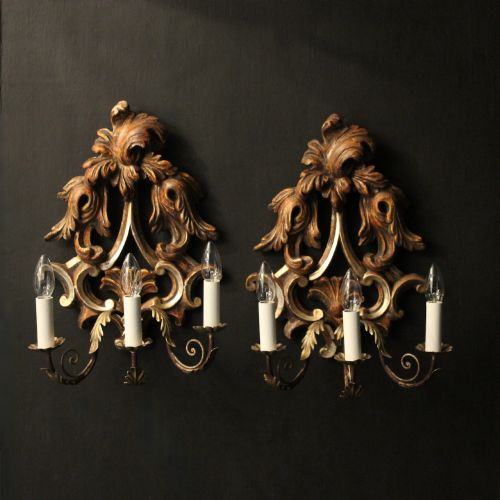
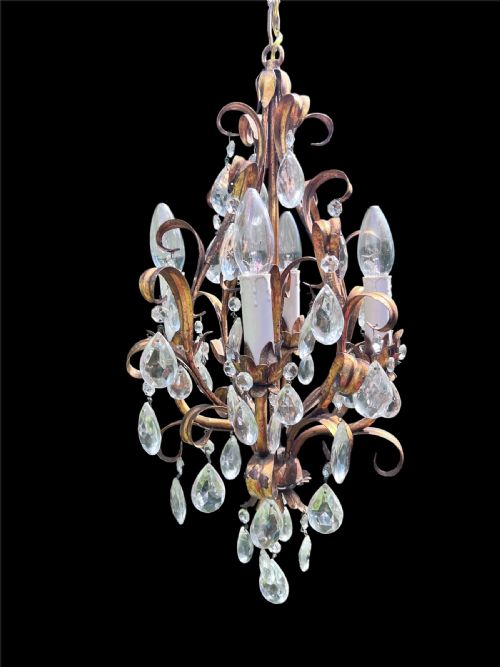
Florentine gilt lights encompass an array of illuminating forms, most frequently appearing as multi-armed chandeliers and paired wall lights originating from the twentieth century and the nineteenth century. Buyers seeking this aesthetic will encounter grand hanging fixtures adorned with numerous candle lights alongside matching twin-arm or triple-arm sconces designed to mount directly onto walls. These pieces draw heavily upon traditional Italian design motifs, bringing sculptural presence to domestic interiors.
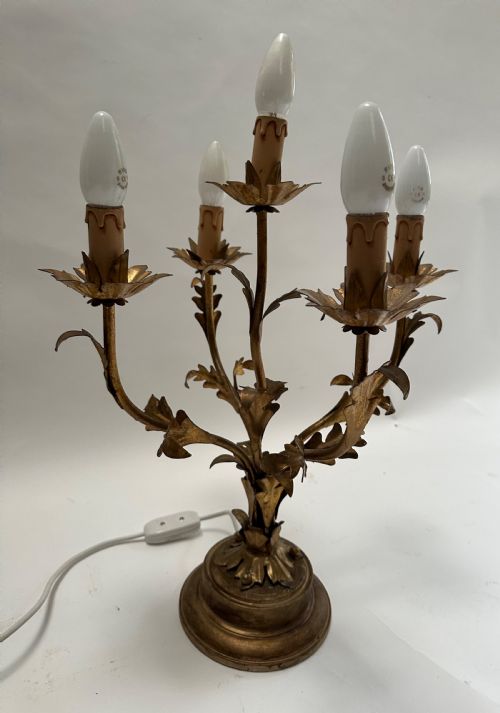
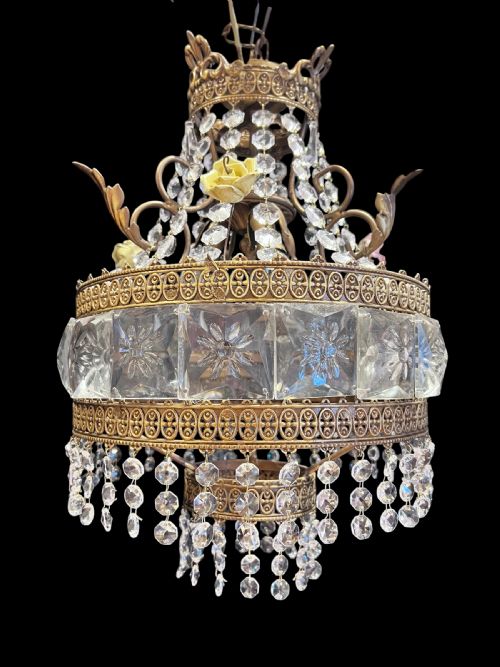
The selection ranges from substantial twelve-light chandeliers down to smaller pendant lights, standard lamps, and table lamps. Pieces frequently display regional characteristics, with Florentine, Italian, and occasional English mid-century interpretations shaping the available forms. Giltwood structures dominate the selection, often complemented by crystal droplets and polychrome details.
How Florentine gilt lights were made
Makers constructed these fixtures primarily from wood, metal, and gesso, applying gold leaf, silver leaf, or polychrome paint to the surfaces. Carved giltwood forms provide the structural foundation for many chandeliers and wall lights, requiring skilled joinery and manual carving before gilding takes place. Artisans utilised layers of gesso to prepare wooden surfaces for gold leaf application, ensuring a smooth and reflective finish.
Lighting assemblies incorporate glass, crystal, and occasionally porcelain elements such as moulded flowers and coloured fruits. Wiring and metal armatures support the heavier multi-light configurations, balancing crystal drops and gilded candle tubes. The combination of carved wood, applied metal leaf, and hanging crystals defines the physical construction of the category.
Florentine Gilt Lights Retail Price Guide 2026
Typical asking prices for florentine gilt lights among the pieces listed under this phrase on Sellingantiques today, from the lower quarter to the upper quarter. They describe what is for sale here now, not the wider market.
The furniture forms include standard floor lamps, table lamps, multi-armed chandeliers, and paired wall sconces.
What varies in quality in Florentine gilt lights
The standard of carving and the application of surface finishes define the upper tier of these pieces. Fine examples exhibit crisp detailing in the wood and gesso work, where leaf application adheres smoothly to intricate contours without obscuring the artisan's chisel marks. Inferior pieces often rely on hurried moulding and flat gilding that lacks depth and tactile engagement.
The integration of glass and crystal components also separates grade levels. Higher quality fixtures employ clear, heavy crystal drops and carefully wired floral elements that catch and refract light evenly across multiple tiers. Lesser examples feature cloudy glass or loose metal armatures that compromise the structural harmony of the chandelier or sconce.
The Florentine Gilt Lights Glossary
- Giltwood
- Wood that has been coated with gold leaf or a gold-coloured metallic finish. This material forms the primary structure for many Florentine wall lights and chandeliers.
- Girandole
- An ornamental branched wall light fitted with a mirror or designed to reflect candlelight. These fixtures appear frequently in pairs within the Florentine tradition.
- Polychrome
- Decorated in several colours. This technique adds painted floral or decorative highlights to gilded wooden surfaces.
- Gesso
- A plaster mix applied to wood as a base for gilding. It provides a smooth surface that takes gold leaf cleanly.
Florentine Gilt Lights: Frequently Asked Questions
What periods do these lights come from?
The inventory spans the nineteenth century, Edwardian era, and twentieth-century decades up to the 1950s. Most pieces cluster around the 1920s and 1930s.
Buyers will also find nineteenth-century examples and occasional mid-century interpretations. These dates reflect the persistent manufacturing traditions of Italian workshops.
How were these lights originally powered?
Many early fixtures were constructed to hold candles before later conversion to electricity. Surviving examples often show adaptation for modern wiring.
Chandeliers and wall sconces listed today typically accommodate standard electrical bulbs while retaining their historic socket covers and candle tubes.
Where should wall lights be placed?
Twin-arm and triple-arm wall lights function best when mounted in pairs flanking mirrors, fireplaces, or architectural doorways. Their design is inherently symmetrical.
Placing them at eye level ensures the gilt surfaces and crystal droplets catch the ambient room lighting effectively.
What materials make up a Florentine chandelier?
Construction relies heavily on giltwood, gesso, and metal frameworks supporting glass and crystal elements. Some pieces incorporate porcelain flowers.
Gold leaf and silver leaf dominate the surface finishes, occasionally paired with polychrome paintwork for added decorative contrast.