


Florentine Carved Wall Lights
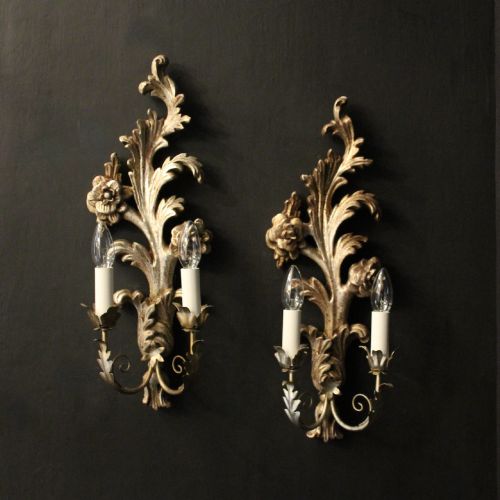
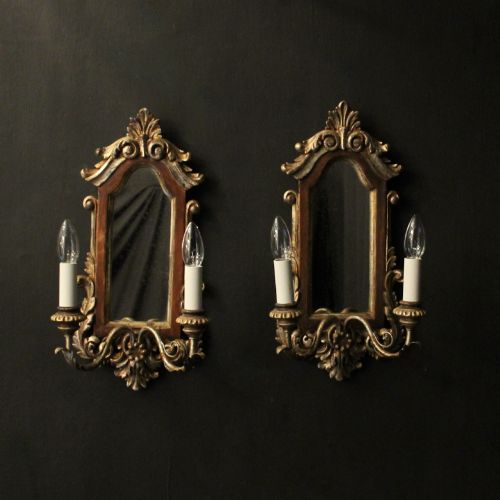
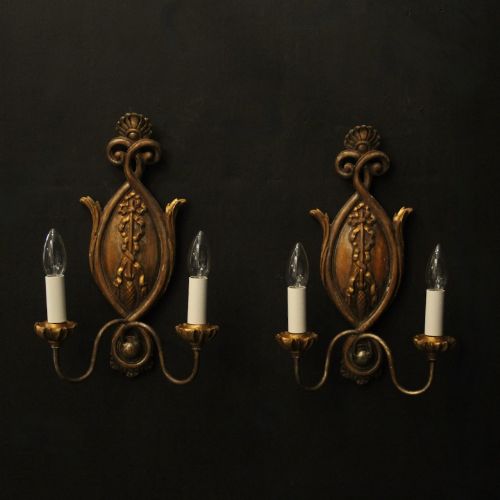
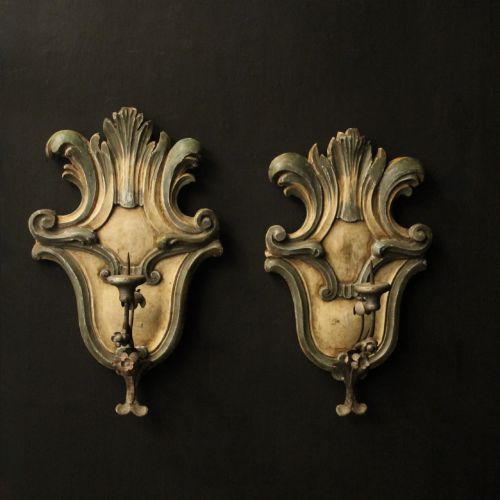
Florentine carved wall lights bring theatrical Italian illumination and rich surface texture to a room.
Florentine Carved Wall Lights
Florentine carved wall lights encompass wall sconces, girandoles, and hanging lanterns originating from Italian workshops. These decorative pieces provide atmospheric lighting while serving as sculptural elements on a wall.
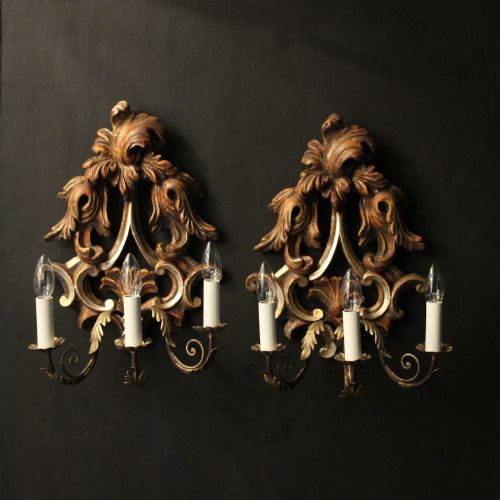
The versions most commonly met on this page date from the nineteenth century through to the 1930s. They frequently appear as matched pairs configured with twin, triple, or four arms for candles or electric illumination.
Makers drew heavily on regional design vocabulary, producing items classified under Florentine Baroque and Florentine Rococo styles. Their forms range from simple carved wooden brackets to elaborate mirrored girandoles and hanging lanterns.
How they were made
Makers constructed these fixtures primarily from wood, applying gesso to build up intricate surface ornamentation before carving. This combination allowed artisans to achieve deep relief work and sharp architectural details on the arms and backplates.
Surfaces were frequently finished with gold leaf or silver leaf to catch the light of candles or lamps. Polychrome paint finishes also appear, sometimes combined with gilding to highlight specific carved motifs such as leaves and fruit baskets.
Listings feature works spanning the nineteenth century and several decades of the twentieth century, rendered in giltwood, silver leaf, and polychrome finishes.
What varies in quality
The depth and crispness of the hand carving separate standard production from superior examples. Master carvers achieved naturalistic movement in leaf scrolls and acanthus motifs that lesser hands rendered stiffly.
The application and preservation of the metal leaf determine the visual richness of the surface. Skilled gilding displays subtle tonal variations and depth, whereas inferior finishing can appear flat or uniform.
The Florentine Carved Wall Lights Glossary
- Giltwood
- Wood that has been coated with gold leaf over a prepared gesso ground. This technique creates a luminous metallic surface that defines many Italian lighting fixtures.
- Girandole
- A branched wall fixture featuring a mirror inset into the backplate. The reflective glass serves to multiply the illumination cast by the candles.
- Gesso
- A mixture of binder and chalk applied to a wooden base to create a smooth surface for carving and gilding. It allows for the formation of sharp relief details.
- Polychrome
- Painted in several colours, often used alongside gilding on wooden wall lights to depict naturalistic elements like fruit and foliage.
- Pricket candle sconce
- A lighting fixture that supports a candle on a sharp metal spike rather than inside a socket. This form reflects earlier liturgical and domestic lighting traditions.
Florentine Carved Wall Lights: Frequently Asked Questions
How are these lights wired?
Most antique fixtures are adapted for modern electrical circuits by professional restorers working within the hollow channels of the carved arms. The conversion aims to preserve the external wooden and gilded structure while accommodating modern internal wiring.
Buyers should consult a qualified electrician to ensure the vintage fittings meet current safety standards upon installation in a domestic interior.
Where should I hang a girandole?
Girandoles function effectively in hallways, dining rooms, or above mantlepieces where the mirrored backplate can reflect ambient light. Positioning them opposite a window or near a light source enhances their luminosity.
Ensure the wall construction can support the combined weight of the carved wood, gesso, and glass components.
How do I clean gilded wood?
Dust gilded surfaces gently with a soft, dry brush to prevent the accumulation of dirt within the carved crevices. Avoid using liquid cleaners, moisture, or chemical solvents, which can damage the delicate gold leaf and underlying gesso.
Professional conservation advice should be sought if the surface requires deeper cleaning or consolidation.
How do I identify the period?
Dating relies on stylistic indicators such as the heavier ornamentation of Baroque designs compared to the lighter, asymmetrical curves of Rococo revival pieces. Construction methods, wood shrinkage, and the patina of the gilding also provide clues to age.
Items seen here span from the nineteenth century through the early decades of the twentieth century.