

Floral Wood Table
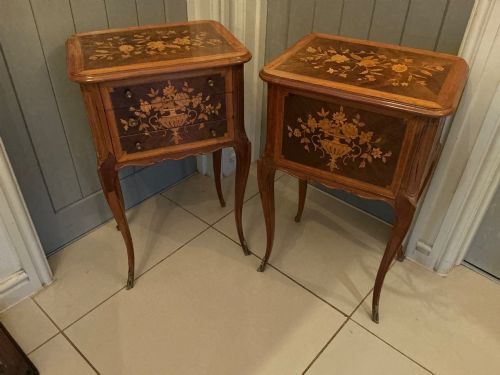
A floral wood table brings botanical marquetry, painted blossoms, and carved foliage into daily rooms, uniting timber with garden ornament.
Floral Wood Table
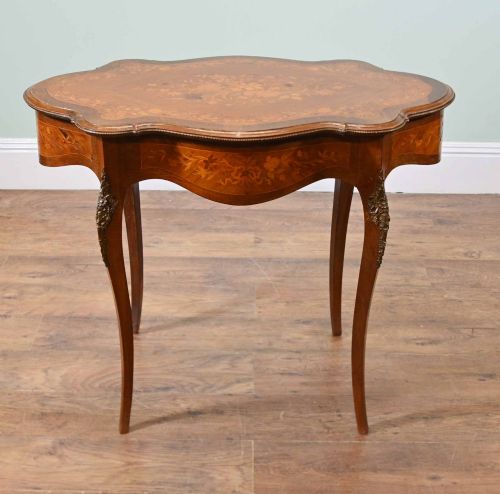
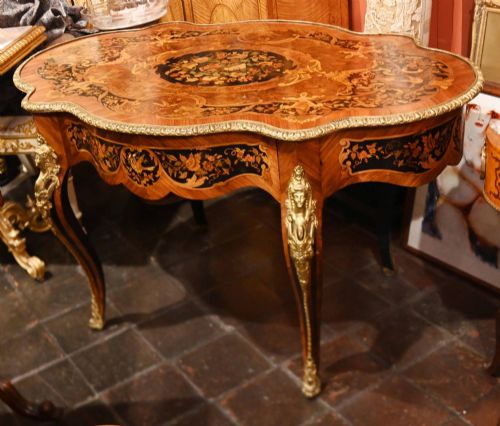
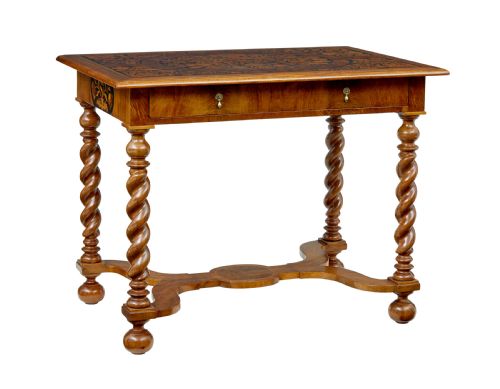
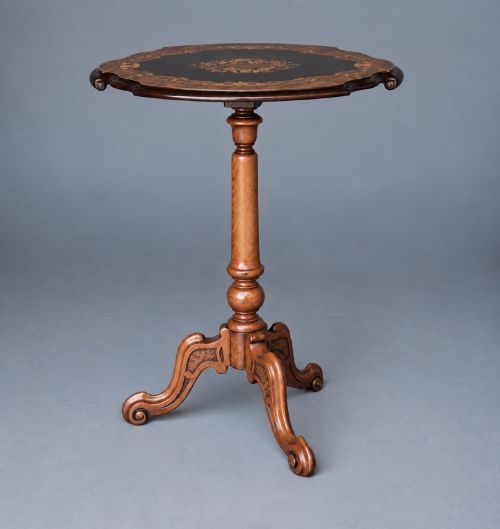
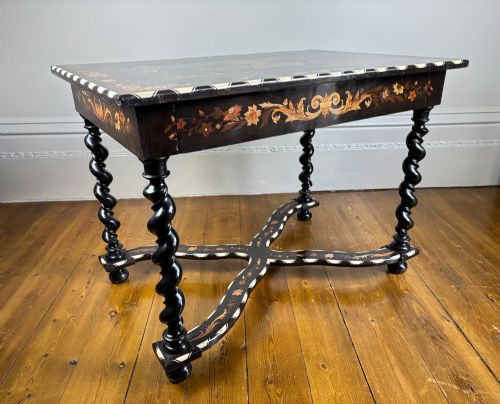
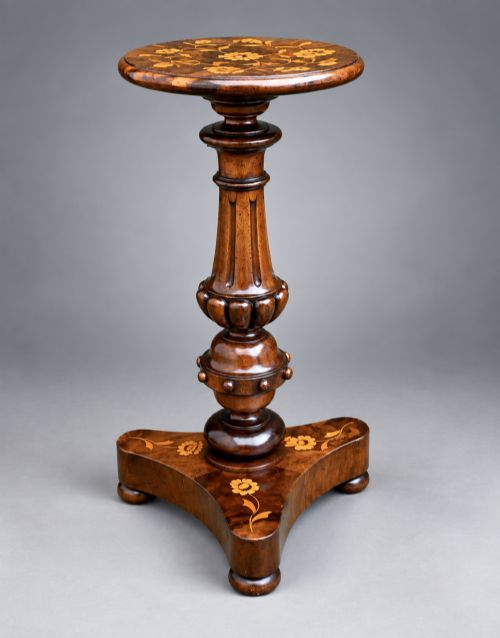
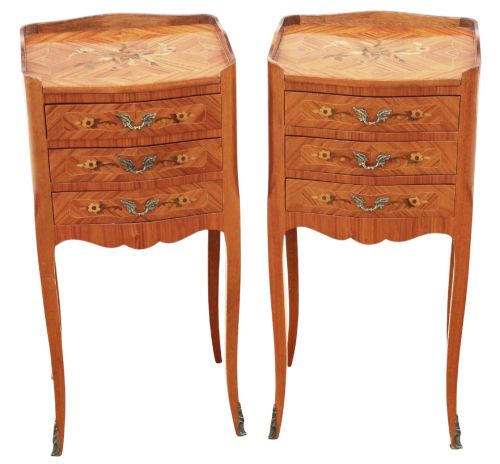
A floral wood table spans side tables, occasional tables, coffee tables, and larger centre pieces designed for domestic service and display. These items emerge primarily from the nineteenth century, the Edwardian era, and the nineteen-twenties, incorporating diverse international aesthetics.
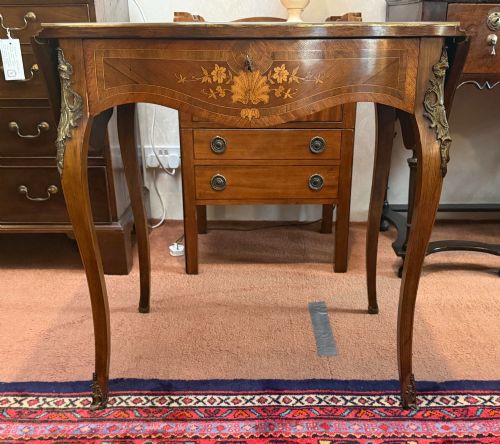
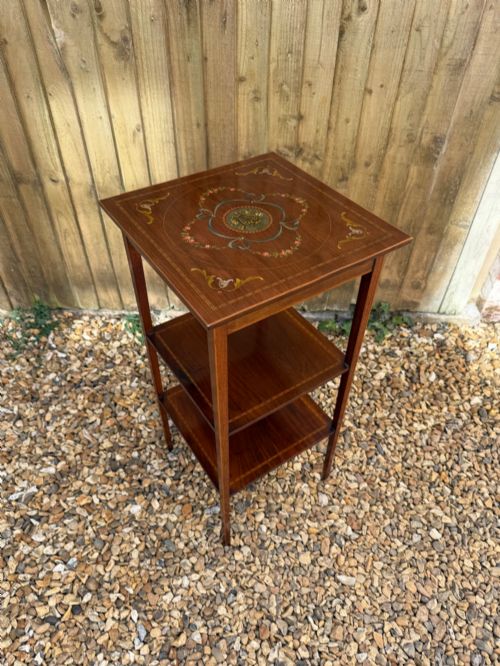
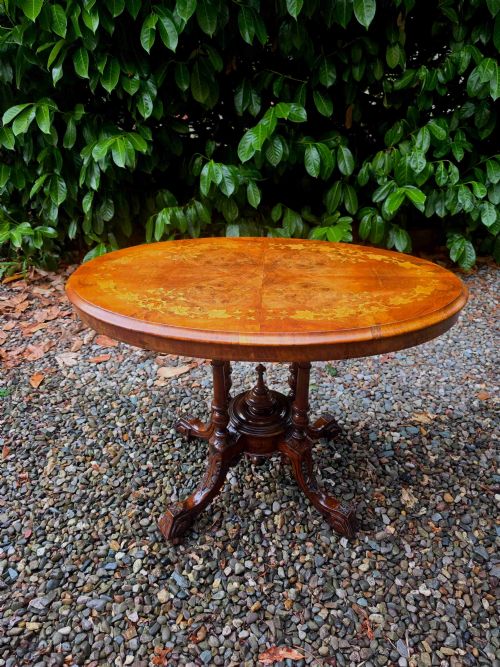
The form frequently appears as an inlaid occasional table or a French-influenced marquetry piece decorated with floral motifs. Makers utilise walnut, mahogany, rosewood, and satinwood as grounds for intricate wood veneers or painted floral programmes.
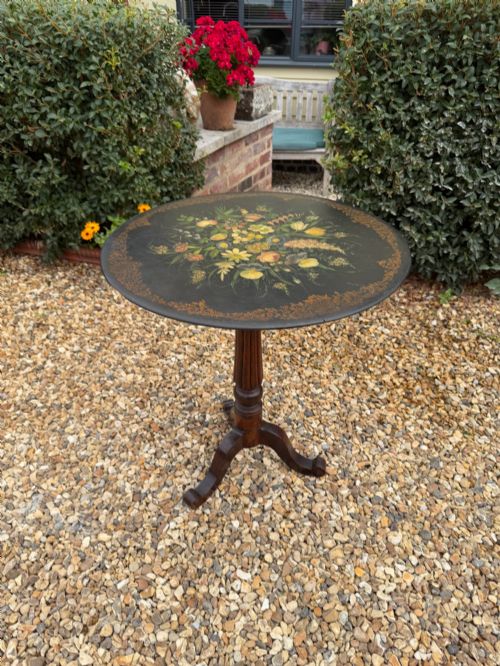
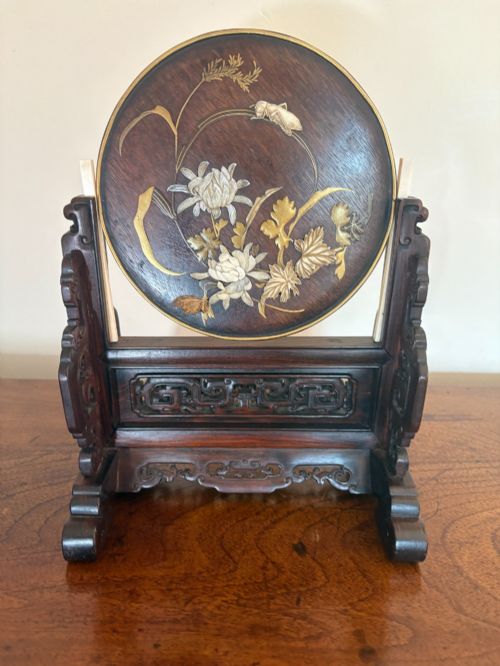
Surviving examples reflect varied stylistic traditions, ranging from Dutch floral marquetry and Anglo-Indian carved surfaces to Edwardian satinwood pieces with painted flower garlands. Each variant demonstrates how different workshops interpreted botanical ornament across decades of domestic furniture production.
How they were made
Cabinetmakers construct the primary carcase using foundational hardwoods such as mahogany or walnut, applying contrasting veneers of satinwood, kingwood, tulipwood, and rosewood over the surfaces. These veneers are cut and fitted by hand to form complex pictorial floral marquetry.
Alternative ornamentation relies on detailed surface painting, bone inlay, or deep relief carving in linden wood and other timbers. Brass mounts, wirework, and marble tops frequently supplement the timber structures to complete the tables.
Several tables feature floral marquetry so detailed that individual petals are shaded with hot sand.
What varies in quality
The standard of a floral wood table rests upon the precision of the veneer cutting and the natural variation within the timber grains used for petals and leaves. Finer pieces display meticulous shading achieved by scorching veneer edges in hot sand.
Structural integrity and the crispness of hand-carved foliage or painted detail separate standard production from exceptional workshops. The harmony between the botanical design and the underlying cabinetwork dictates the overall distinction of the piece.
Liberty & Co·Liberty of London·Edwards & Roberts
The Floral Wood Table Glossary
- Marquetry
- Decorative veneer work arranged in pictorial patterns such as flowers, using different coloured woods laid onto a carcase. This technique requires exceptional skill to fit minute pieces together seamlessly.
- Satinwood
- A pale, lustrous hardwood prized for its fine grain and golden yellow tone. It serves as an ideal contrasting background for painted floral decoration or darker inlay.
- Kingwood
- A dense, richly figured timber featuring dark violet-brown and golden stripes, frequently utilised in French cabinetmaking. It provides a striking contrast in floral marquetry compositions.
- Etagere
- A tiered movable shelving unit used for displaying small objects or ornaments. These pieces often incorporate delicate wood inlays and slender supports.
Floral Wood Table: Frequently Asked Questions
How do I clean a marquetry table?
Dust gently with a dry, soft cloth to prevent abrasive particles from scratching the delicate wood veneers. Avoid modern chemical polishes that can degrade historic French polish or wax finishes.
Keep the timber away from direct sunlight and steady heat sources to prevent the veneers from drying, cracking, or lifting from the base.
Where should I place an occasional table?
Position these smaller surfaces beside seating areas or against hallways where their decorative inlays can be easily admired. Their compact proportions allow them to function effectively as plant stands or lamp tables.
Ensure the room maintains stable humidity levels to protect older hardwoods and delicate bone or brass inlays from shifting.
How do I date an inlaid table?
Examine the secondary timbers on the underside and interior construction methods, as machine-cut components generally point towards later periods. Style markers like Edwardian satinwood or Victorian walnut provide reliable chronological boundaries.
Look for maker stamps or retail labels applied to the woodwork, which help confirm the exact workshop origin and period.
What is the difference between marquetry and inlay?
Marquetry involves assembling an entire picture of veneers on a sheet before gluing it down to cover the structural surface. Inlay refers to cutting recesses directly into solid wood and fitting pieces into those cavities.
Both techniques create floral patterns, but marquetry dominates finer French and Dutch decorative tables.