



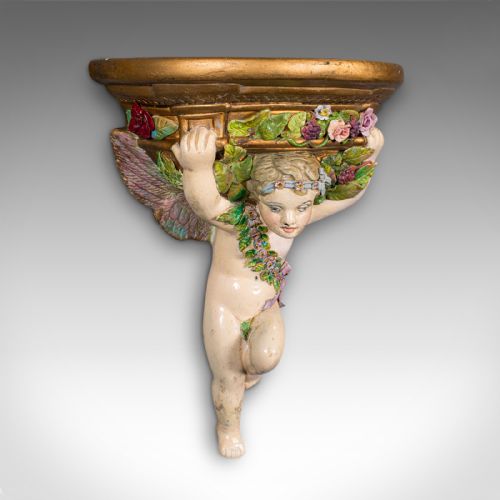
Floral Wall Sconces
Floral wall sconces bring botanical form and ambient light to interiors, spanning nineteenth-century revival styles and twentieth-century French designs.
Floral Wall Sconces
Floral wall sconces encompass candle and electric wall lighting decorated with botanical motifs, ceramic blooms, and plant-inspired frames. When you search for floral wall sconces, you encounter pieces functioning as wall lights, brackets, and illuminated mirrors designed for domestic placement.
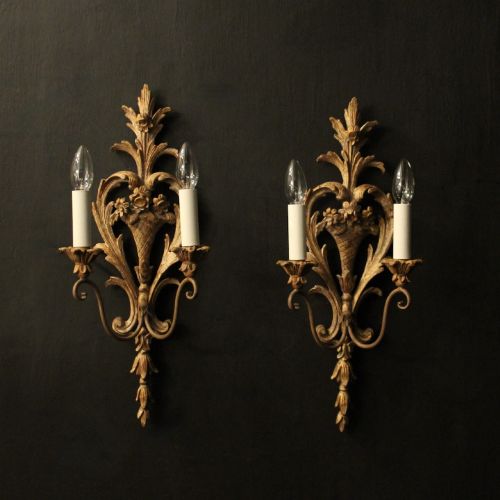
The selection ranges from Victorian porcelain interpretations and Florentine giltwood carvings to French toleware and wrought iron pieces from the nineteen-thirties. You are most likely to meet French pairs dating from the early twentieth century featuring painted metal foliage and porcelain flowers.
Earlier nineteenth-century examples lean towards ornate Rococo Revival forms and continental porcelain mirror frames, while later twentieth-century items utilise polychrome finishes and brass work. Each piece fixes to a wall surface to project light outwards through candle arms or electrical fittings.
Materials and construction
Metal fabrication forms the backbone of these fixtures, utilising brass, wrought iron, gilt metal, and shaped toleware to construct branching arms and supportive wall plates. Artisans shaped and painted these metals to mimic natural stems and leaves, often adding coloured enamel or polychrome paint for botanical realism.
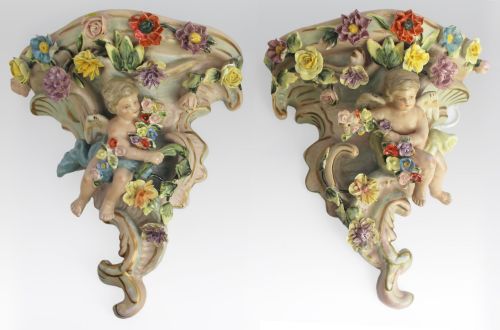
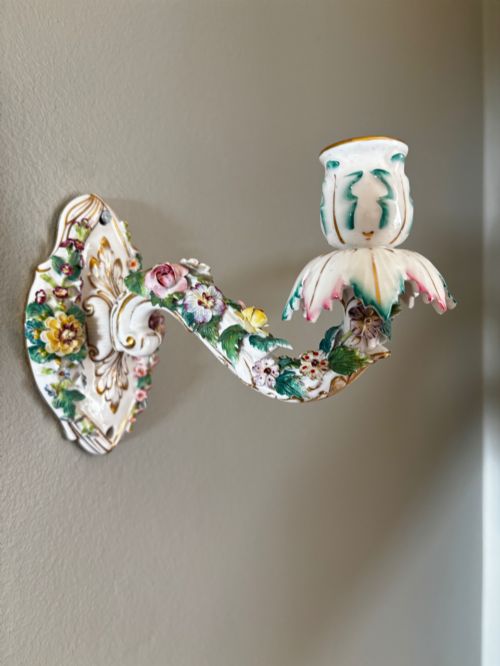
Ceramic and porcelain elements introduce moulded petals and figures into the designs, seen in German porcelain works and continental wall corbels. Gilding techniques apply thin layers of gold to wood and metal surfaces, particularly within Florentine and Rococo Revival pieces, creating reflective surfaces for candlelight.
Floral Wall Sconces Retail Price Guide 2026
Typical asking prices for floral wall sconces among the pieces listed under this phrase on Sellingantiques today, from the lower quarter to the upper quarter. They describe what is for sale here now, not the wider market.
French workshops dominate the twentieth-century material record here, producing wrought iron and polychrome wall lights decorated with ceramic flowers.
Judging quality in construction
Quality reveals itself in the hand-modelling of ceramic flowers and the precise articulation of metal leaves, where superior examples show distinct individual petals rather than uniform cast blocks. The weight of the brass, iron, or giltwood frame dictates structural integrity, separating substantial wall brackets from lighter, pressed metal alternatives.
Painted finishes demonstrate craftsmanship through subtle colour shading and layered polychrome details rather than flat, uniform coats. The integration of mirror glass, porcelain figures, and candle arms into a cohesive design marks the distinction between standard decorative items and finer workshop productions.
Meissen·Von Schierholz
The Floral Wall Sconces Glossary
- Toleware
- Painted or lacquered tinplate used extensively for decorative domestic objects. It allows artisans to shape intricate floral petals and leaves that hold vibrant polychrome paint.
- Corbel
- A structural or decorative bracket projecting from a wall to support a weight above. In lighting fixtures, it provides a solid porcelain or plaster base for candle sconces.
- Giltwood
- Wood that has been treated with gold leaf or gold paint. This finish creates a reflective surface suited to ornate Florentine and Rococo Revival frames.
- Polychrome
- Decorated in several colours. This term describes painted metal and ceramic wall lights that use varied hues to render realistic botanical foliage.
- Rococo Revival
- A nineteenth-century style drawing on the asymmetrical scrolls, shell motifs, and natural forms of the eighteenth-century Rococo movement. It heavily influences the curves of Victorian and continental wall sconces.
Floral Wall Sconces: Frequently Asked Questions
How were floral wall sconces used?
These fixtures mounted to interior walls in pairs or singles to provide ambient illumination in principal rooms and hallways. They held candles or early electric bulbs, often positioned beside mirrors to maximise the spread of light.
Domestic spaces utilised them in reception rooms and bedrooms where decorative metalwork and porcelain flowers contributed to the overall interior aesthetic.
How do I style wall sconces at home?
Mount them at eye level or slightly above in pairs flanking a mirror, fireplace, or doorway to create balanced illumination. Ensure the wiring or candle placement suits the room's function and complements existing period fixtures.
Pairing porcelain or gilt floral designs with traditional or transitional interiors allows the botanical motifs to function as wall art when unlit.
How do I date a wall sconce?
Examine the materials, manufacturing marks, and underlying style to establish a period. Nineteenth-century examples often feature heavy porcelain, hand-carved giltwood, or early brass framing.
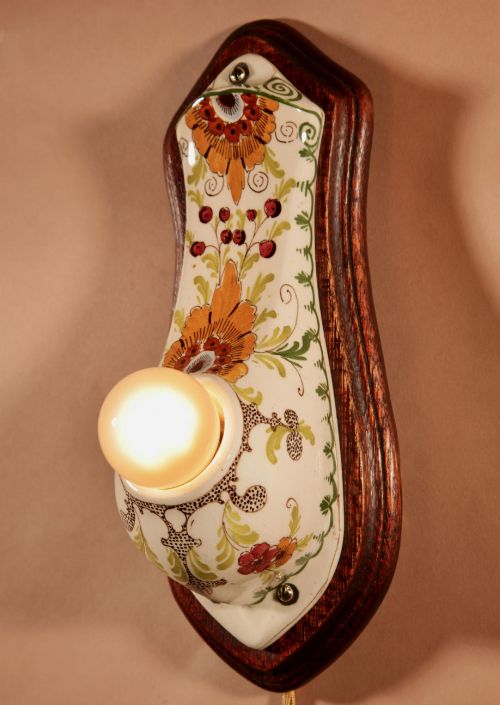
Twentieth-century pieces from the nineteen-thirties frequently incorporate painted wrought iron, toleware, and specific continental ceramic techniques associated with Gouda or German factories.
What is the difference between toleware and brass sconces?
Toleware consists of painted or lacquered tinplate shaped into pliable botanical forms, offering matte or brightly coloured floral surfaces. Brass provides a rigid metallic structure with a polished or aged golden finish that reflects light directly from the metal arm.
While toleware relies on paint for its visual impact, brass sconces depend on metal casting and engraving to define their floral and scrollwork details.