

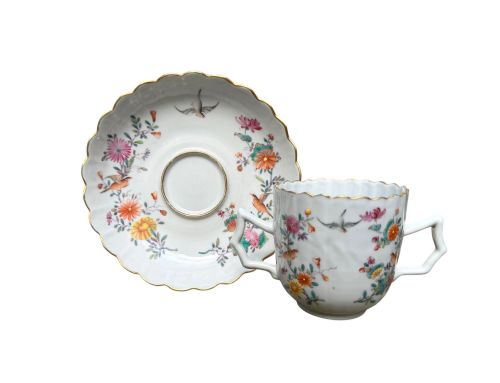
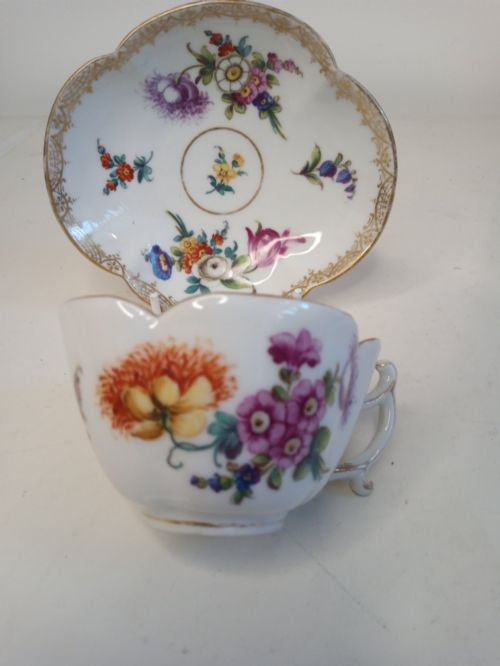


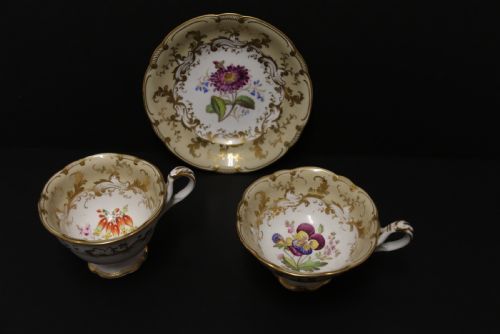


Floral Tea Cup and Saucer
A floral tea cup and saucer brings delicate botanical hand-painting to the table, offering a tangible link to Georgian, Regency, and Victorian dining habits.
Floral Tea Cup and Saucer
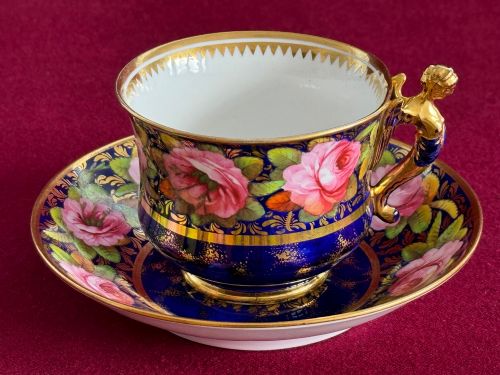
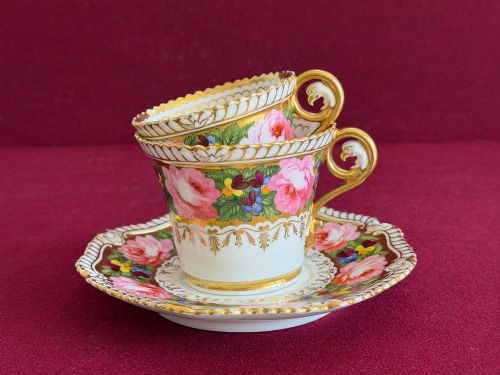
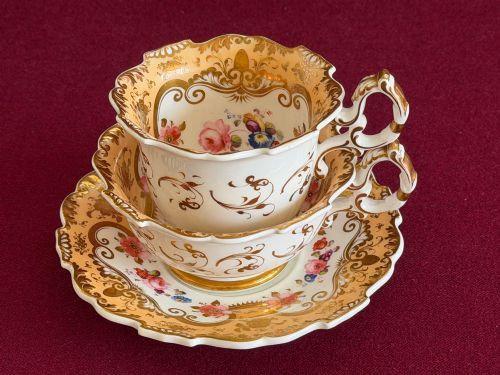
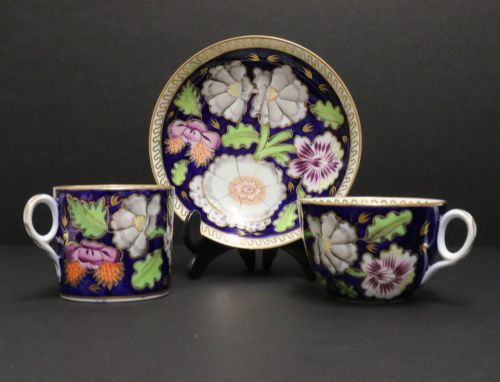
A floral tea cup and saucer encompasses intimate matched drinking vessels and trios decorated with botanical motifs, most commonly found from the eighteenth, nineteenth, and early twentieth centuries. These sets span English factories like Spode, Davenport, and Worcester, alongside continental and Chinese export pieces.
Buyers will frequently encounter Regency and Victorian examples on this page, often featuring hand-painted roses, cabbage roses, or blue scale grounds. The forms range from standard teacups and saucers to cabinet trios that include coffee cups or side plates.
Materials and manufacture
These pieces are constructed primarily from porcelain or bone china, shaped by hand or moulded in traditional factories. Potters applied detailed hand-painted botanical designs directly onto the white ceramic body.
Gilding, gold leaf, and gold gilt provide rich borders and handle accents, fixed to the surface through high-temperature firing. Enamel colours are layered within the glaze to create lasting floral patterns such as famille rose or pink cabbage roses.
Floral Tea Cup and Saucer Retail Price Guide 2026
Typical asking prices for floral tea cup and saucer among the pieces listed under this phrase on Sellingantiques today, from the lower quarter to the upper quarter. They describe what is for sale here now, not the wider market.
Early nineteenth-century painters occasionally hid tiny painted beetles beneath tea cup rims to surprise the drinker.
Assessing quality in antique teaware
Quality rests in the crispness of the hand-painted brushwork and the precision of the gilding applied to the rims and handles. Superior examples display delicate, individual floral studies rather than mechanical transfer printing.
The refinement of the porcelain paste itself, combined with the weight and translucency of the body, separates standard production wares from fine cabinet trios and factory masterpieces.
Spode·H & R Daniel·Chamberlain Worcester·Davenport·Newhall·Royal Worcester·Coalport·Gardner Porcelain·Yates·Minton·Hutschenreuter
The Floral Tea Cup and Saucer Glossary
- Trio
- A matched set consisting of a teacup, coffee cup, and saucers, or a teacup, saucer, and matching plate. These grouped items were popular for formal morning or afternoon tea service.
- Famille rose
- A palette of opaque enamel colours dominated by pink or rose, used extensively in Chinese porcelain decoration. It gained favour during the eighteenth century for export wares.
- Blue scale
- A dark underglaze blue pattern resembling fish scales, often interrupted by shaped panels of flowers. First Period Worcester utilised this decorative ground extensively.
- Bat printing
- An engraving technique using a flexible glue bat to transfer delicate stippled designs onto porcelain. This method produced fine, faint grey or sepia prints before hand colouring.
- Cabinet piece
- An item intended for display in a glass-fronted cabinet rather than everyday use. These wares usually feature exceptional painting and heavy gilding.
Floral Tea Cup and Saucer: Frequently Asked Questions
Can I still use my antique tea cup and saucer?
Most eighteenth and nineteenth-century porcelain can handle gentle use, though hand washing in lukewarm water is essential to protect delicate gold leaf and enamel painting. Avoid sudden temperature changes to prevent thermal shock to the old ceramic body.
Because many pieces were intended for display or have fragile handles, frequent daily use carries risks. Many collectors prefer to reserve them for special occasions or admire them in a cabinet.
What is the difference between a tea cup and a teabowl?
A teabowl is a small cup without a handle, reflecting the early Chinese custom of drinking tea from handled vessels. They appear commonly in eighteenth-century sets alongside matching saucers.
By the nineteenth century, handles became standard on teacups, making them much easier to hold while drinking hot tea. Both forms remain collectible depending on the desired period.
How do I date a floral tea cup and saucer?
Dating relies on factory marks stamped or painted on the base, the shape of the handle, and the ceramic body type. Soft-paste porcelain generally points to the eighteenth century, while bone china and specific factory shapes help narrow down nineteenth-century decades.
Stylistic clues like Regency scroll handles or Victorian blush ivory grounds also provide clear chronological markers. Comparing pattern numbers with factory records offers further confirmation.
What does cabinet trio mean?
A cabinet trio typically includes a teacup, a coffee cup, and a saucer, or a teacup, saucer, and matching plate. These sets were designed for display in drawing room cabinets rather than routine dining.
Their superior decoration, extensive gilding, and fine porcelain bodies mark them out from standard everyday tea service wares. They showcase the highest skills of the factory painters.