

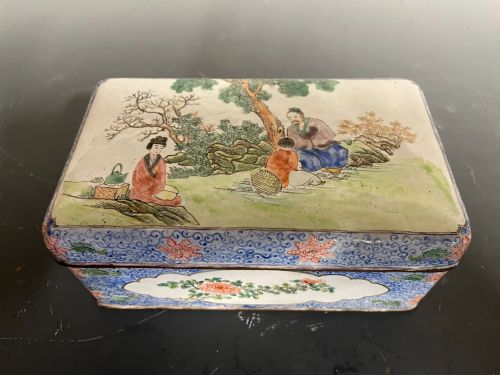
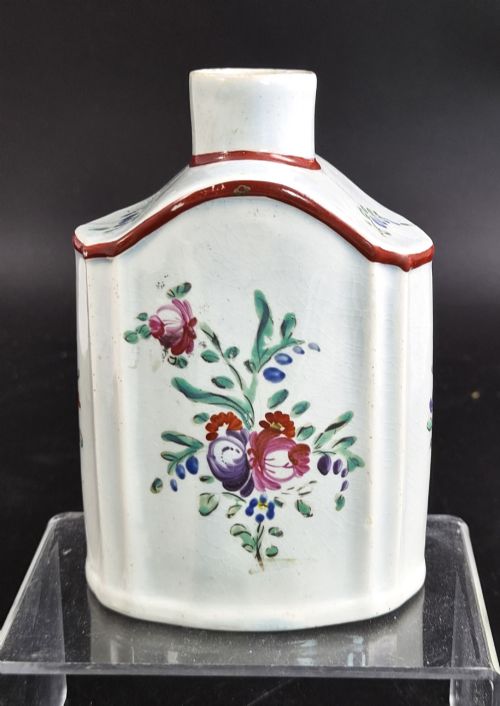
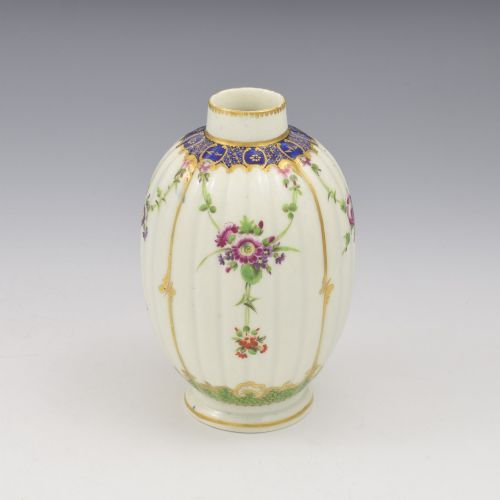
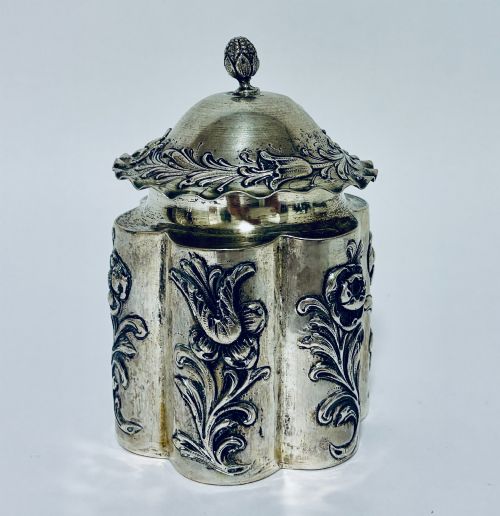


Floral Tea Caddy
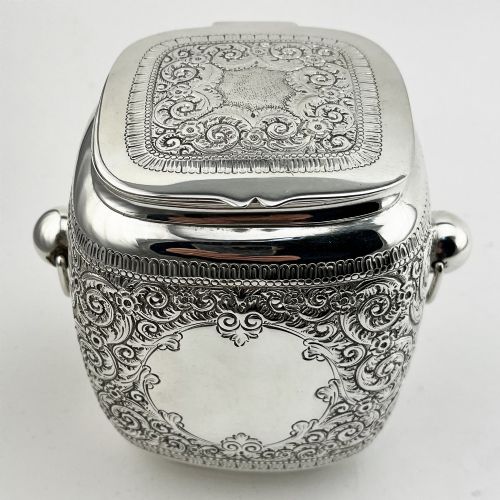
A floral tea caddy brings together botanical decoration and period craftsmanship, offering a functional vessel designed to preserve precious leaves.
Floral Tea Caddy
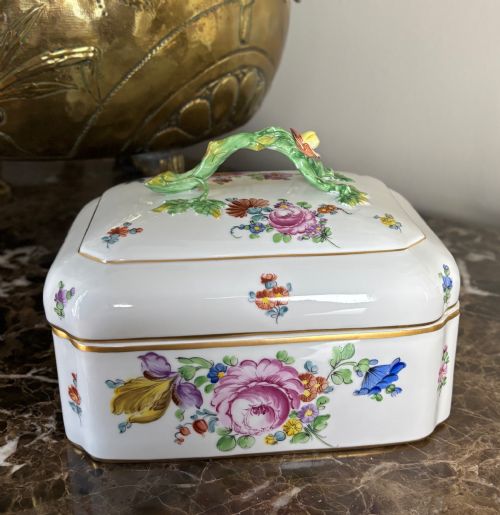
A floral tea caddy is a specialised storage container for loose leaves, often adorned with painted or inlaid botanical motifs. When exploring this selection, buyers encounter various forms ranging from Georgian and Regency wood boxes to eighteenth-century porcelain canisters.
The material palette spans cabinet timbers such as harewood, mahogany, and satinwood alongside ceramics like earthenware and porcelain. Examples frequently showcase decorative techniques including marquetry, penwork, and hand-painted enamels.
Pieces originate from periods including the eighteenth century, the Regency era, and the Victorian epoch, reflecting changing domestic habits. Domestic containers designed for tea storage dominate the offerings, occasionally accompanied by related biscuit barrels and caddy spoons.
Construction and Materials
Wooden vessels are constructed from timbers such as harewood, rosewood, and mahogany, frequently enhanced with marquetry, inlay, or delicate penwork. Cabinetmakers utilised these fine woods to create geometric and organic shapes, securing decorative veneers to the carcase.
Ceramic examples, including those from Leeds Pottery and Worcester, rely on porcelain and earthenware shaped into canisters and sugar boxes. Artisans applied floral enamels, blue and white pigments, and hand-painted details before glazing and firing the ceramic bodies.
Floral Tea Caddy Retail Price Guide 2026
Typical asking prices for floral tea caddy among the pieces listed under this phrase on Sellingantiques today, from the lower quarter to the upper quarter. They describe what is for sale here now, not the wider market.
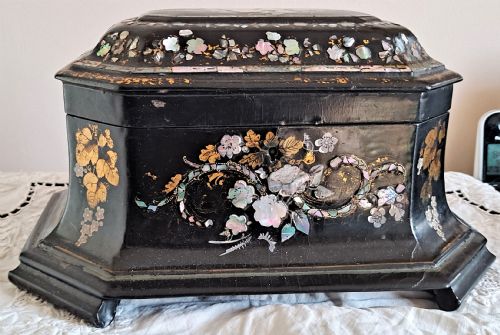
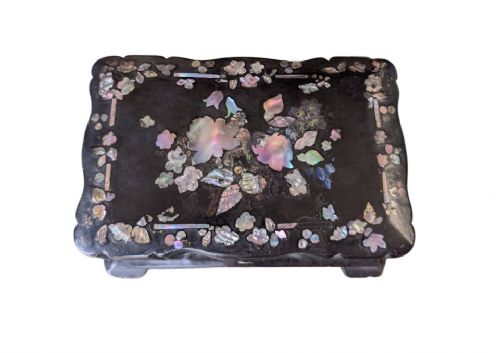
Some nineteenth-century makers concealed floral mother of pearl inside dark papier-mâché boxes just to surprise the eye upon opening.
Evaluating Quality and Execution
Quality rests in the crispness of the botanical decoration, whether executed through intricate wood marquetry, penwork lines, or hand-painted ceramic enamels. Superior examples display careful alignment of inlay and refined brushwork that remains well-preserved across the surface.
The integrity of the construction and the selection of cabinet timbers or porcelain bodies dictate the standing of a piece. Finer items exhibit thoughtful handling of materials, from figured grain in harewood and mahogany to well-balanced proportions in porcelain canisters.
Joseph Willmore·Leeds Pottery·Martin Hall And Co·Carlton Ware
The Floral Tea Caddy Glossary
- Harewood
- Sycamore wood that has been stained grey, frequently utilised in Georgian and Regency cabinetmaking for decorative veneers.
- Penwork
- A decorative technique using fine ink lines on a prepared ground to simulate marquetry or engraving on small boxes.
- Marquetry
- The art of applying pieces of veneer to a structure to form decorative patterns, often featuring floral motifs.
- Canister
- A closed vessel designed for storing dry goods, commonly used in the eighteenth century for tea leaves before caddies took standard box forms.
- Biscuit barrel
- A ceramic or plated container with a fitted lid intended for storing dry biscuits at the dining table during the Victorian period.
Floral Tea Caddy: Frequently Asked Questions
What is a floral tea caddy?
A floral tea caddy is a decorative storage container made to hold loose tea leaves, featuring botanical ornamentation through painting, carving, or inlay.
These pieces range from wooden boxes produced in the Georgian and Regency periods to porcelain canisters originating in the eighteenth century.
How were tea caddies used?
Tea caddies were kept in the formal rooms of the house to store valuable tea leaves safely under lock, as tea was a costly commodity.
Hosts would dispense the leaves themselves rather than leave them to servants, making the caddy both a practical utensil and a decorative object.
How do I identify a Regency caddy?
Regency caddies often exhibit specific decorative methods like penwork or classical furniture forms executed in mahogany and other fine timbers.
They date from the early nineteenth century and typically display restrained classical proportions combined with botanical motifs.
What materials are common?
The materials vary between cabinet woods such as harewood, mahogany, and satinwood, and ceramic bodies like porcelain and earthenware.
Some examples also incorporate brass, mother of pearl inlay, and silver plating to highlight the floral designs.