



Floral Tapestry Carpet
These floral tapestry carpet pieces bring warmth and pattern to a room, offering the decorative impact of antique textiles underfoot.
Floral Tapestry Carpet
A floral tapestry carpet combines textile traditions from European workshops and folk practices, ranging from grand French Aubusson weaves to rustic Bessarabian kilims. Buyers seek these items for their intricate botanical designs and rich colour palettes.
The selections span from the mid nineteenth century through the early decades of the twentieth century. The most frequent variants encountered here are Portuguese needlepoint rugs and flatweave kilims featuring floral motifs.
Formats vary from large area rugs to wall hangings and smaller carpets. The origins stretch across France, Portugal, Romania, and Scandinavia, reflecting diverse regional textile methods.
Judging quality in textile pieces
Quality rests in the precision of the needlework and the complexity of the botanical composition. Tighter stitching and well-defined floral patterns distinguish superior examples from simpler folk pieces.
The harmony of the dye palette and the integrity of the base fabric dictate the overall standard. Superior items retain their original proportions and structural firmness.
Floral Tapestry Carpet Retail Price Guide 2026
Typical asking prices for floral tapestry carpet among the pieces listed under this phrase on Sellingantiques today, from the lower quarter to the upper quarter. They describe what is for sale here now, not the wider market.
Some Bessarabian kilims were woven by villagers who translated grand French floral Aubusson plates into rustic flatweave wool.
The Floral Tapestry Carpet Glossary
- Aubusson
- A woven tapestry style originating from French workshops, known for classical floral scenes and pastoral compositions. These items typically lack a knotted pile, functioning as flat weaves.
- Kilim
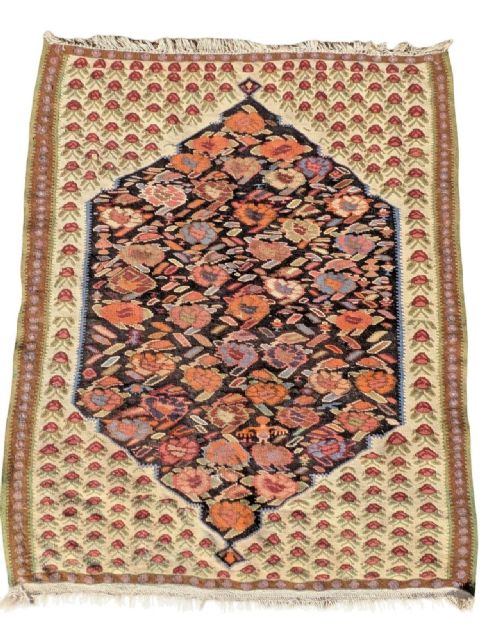
- A flatwoven textile lacking a raised pile, produced across Eastern Europe and the Near East. These pieces utilise slit-weave techniques to create sharp geometric and floral borders.
- Needlepoint
- A form of canvas work where yarn is stitched through a stiff open-weave mesh by hand. This method allows for detailed pictorial and floral rendering.
- Crewelwork
- A type of embroidery utilising wool yarn on a plain-weave linen or cotton ground. It creates textured, raised floral surfaces suitable for wall hangings and decorative textiles.
- Flatweave
- A textile produced by interweaving warp and weft threads without forming a vertical pile. These pieces lie thin on the floor and display pattern equally on both sides.
Floral Tapestry Carpet: Frequently Asked Questions
What is a floral tapestry carpet?
A floral tapestry carpet is a woven or stitched textile featuring botanical motifs designed for floor or wall placement. These items encompass French Aubusson weaves, Portuguese needlepoints, and Eastern European flatweaves.
They serve both decorative and functional roles in historical interiors. Makers utilised wool and cotton fibres to build durable surfaces with intricate flower patterns.
Where were these textiles made?
Production centres span several European regions, notably France, Portugal, and Romania. French works often reflect formal chateau styles, while Portuguese and Eastern European pieces display folk traditions.
Workshop traditions varied by country, influencing the choice of stitch type and botanical motifs. Each region developed distinct colour combinations using natural dyes.
How do I care for an antique rug?
Maintenance requires gentle vacuuming without a rotating brush to protect the wool fibres and stitched grounds. Professional textile cleaning is recommended for deep maintenance.
Keeping the textile out of direct sunlight prevents the natural dyes from fading. Placing an appropriate underlay beneath the piece prevents slipping and reduces wear.
How do I distinguish regional styles?
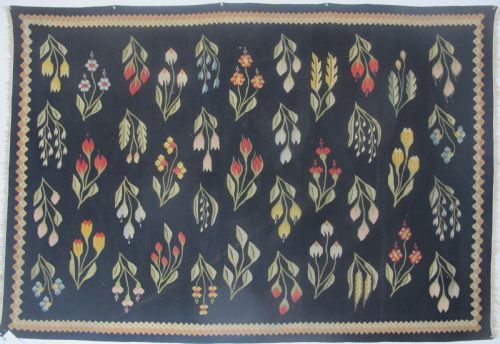
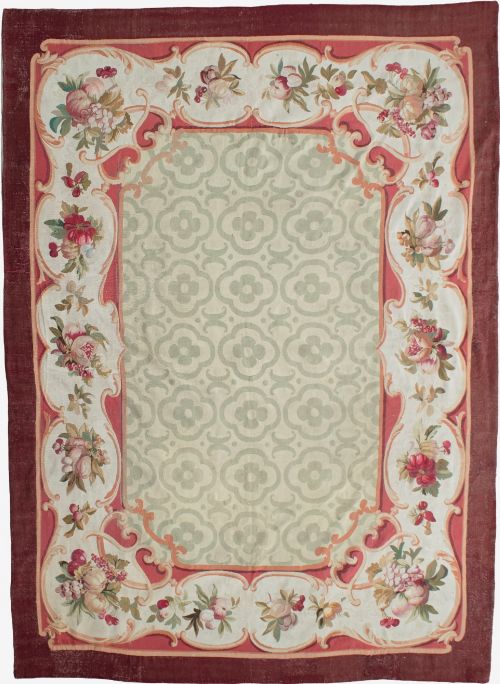
French Aubusson pieces typically display formal floral bouquets within rococo borders. Bessarabian kilims feature darker backgrounds with bold, stylised folk flowers.
Portuguese needlepoints often present delicate pastel botanicals on canvas grounds. Examining the weave structure and stitching technique clarifies the geographical origin.