




Floral Shade Lamp
A floral shade lamp brings botanical colour and warm illumination to a room, spanning periods from Victorian brass to Art Deco ceramic.
Floral Shade Lamp
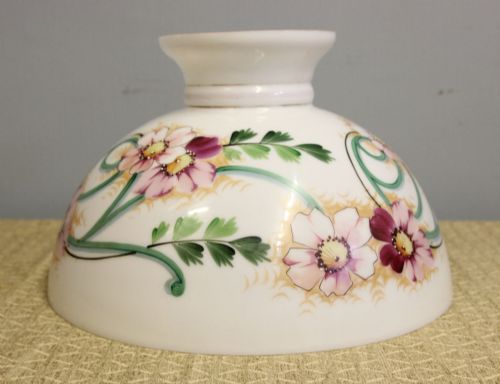
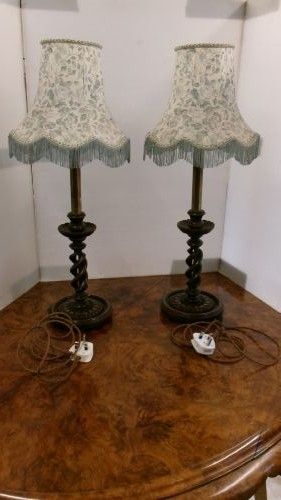
A floral shade lamp is primarily encountered as a table lamp, oil lamp, or hanging shade featuring botanical decoration across periods from the nineteenth century into the 1930s. These pieces combine functional lighting with painted, moulded, or leaded glass flower motifs, often paired with bases of brass, ceramic, or wood.
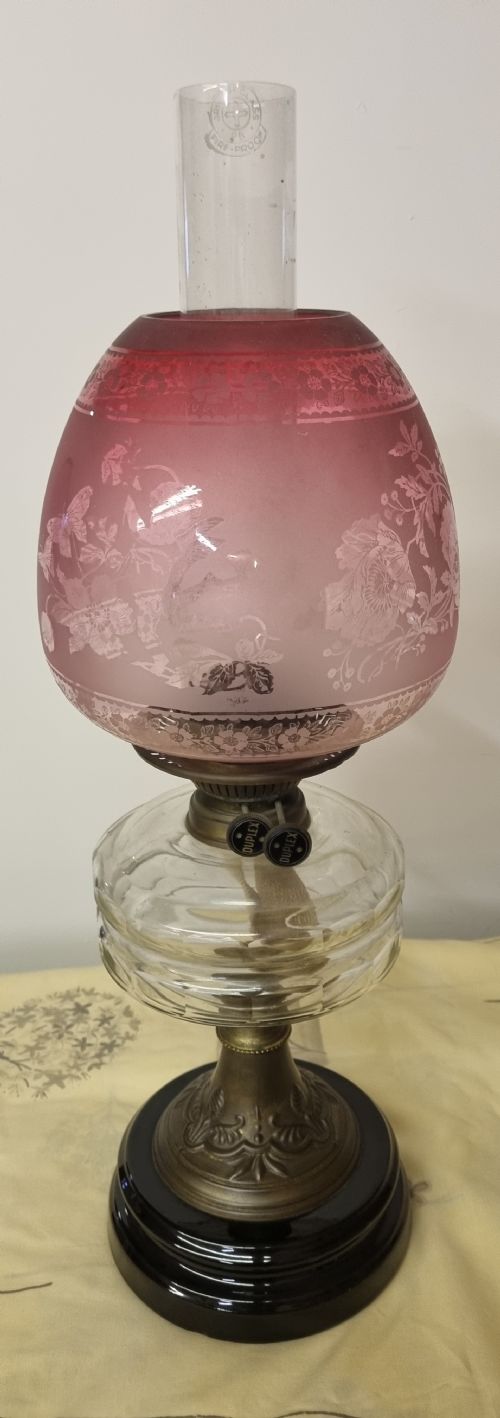
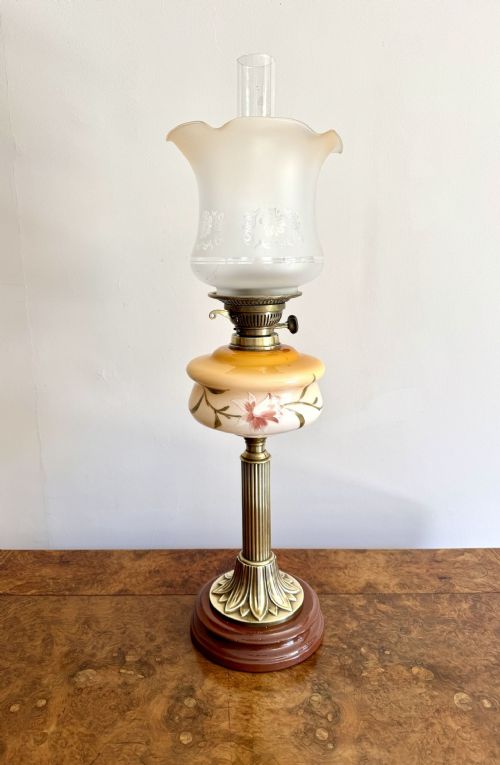
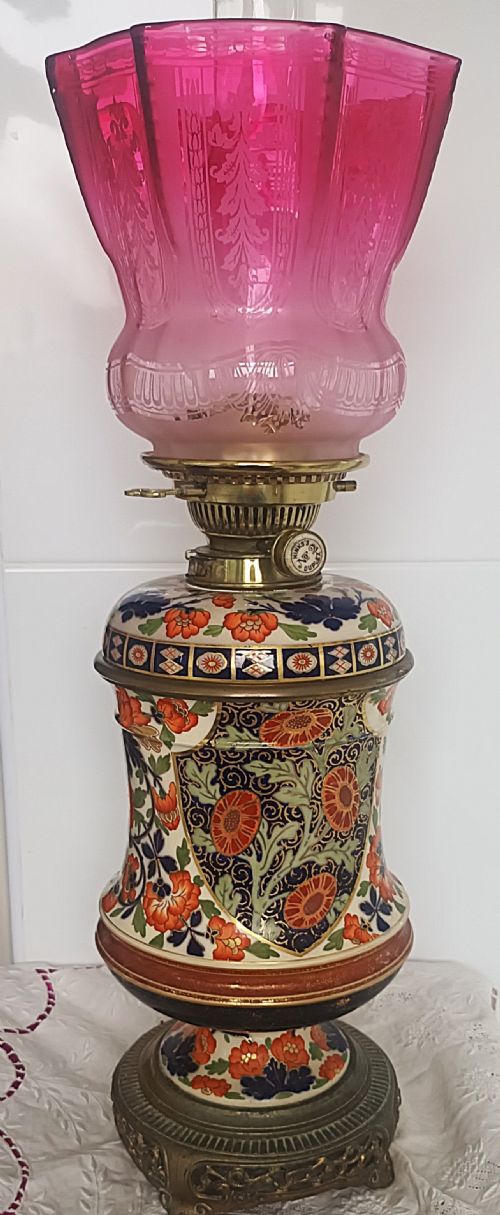
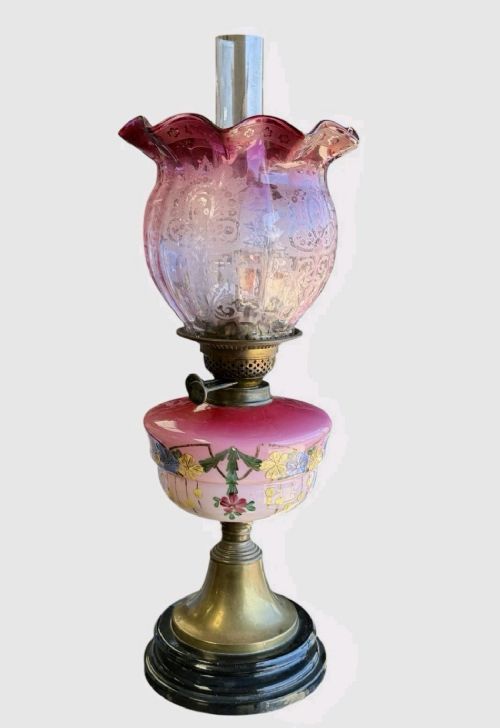
The versions most frequently met on this page include Victorian oil lamps with cranberry or green glass shades and early twentieth-century table lamps with hand-painted glass. Styles range from Victorian and Edwardian to Art Nouveau and Art Deco, reflecting shifting tastes in floral ornament over several decades.
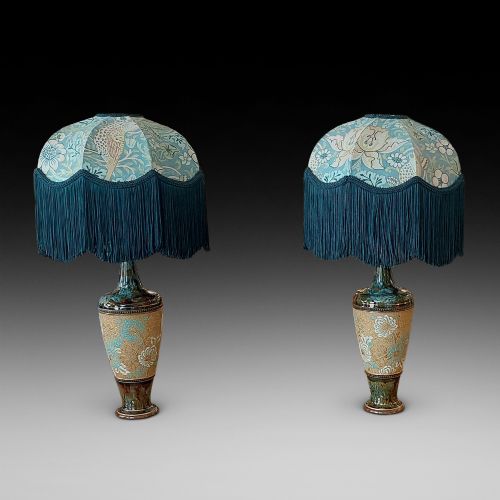
Makers and origins vary from English factories like Royal Doulton and Taylor Tunnicliff to French porcelain works and Kashmiri wood pieces. The unifying element across these varied forms remains the floral motif expressed through shade design or base ornamentation.
Materials and construction
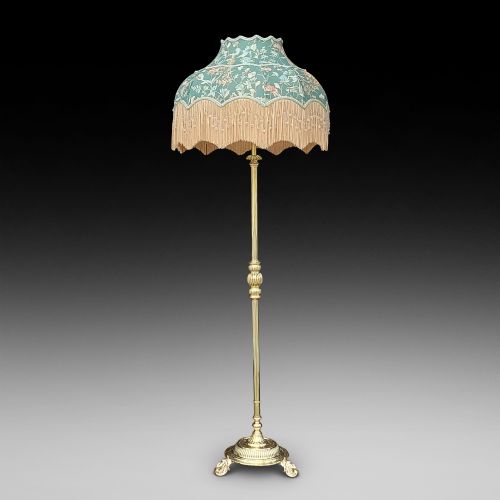
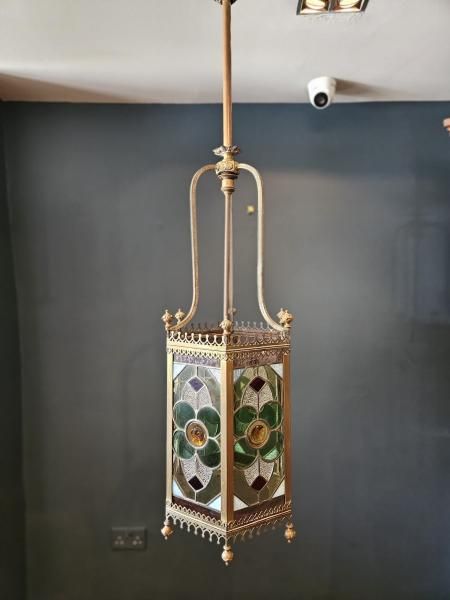
Brass and glass form the backbone of these pieces, utilising cast metal for adjustable standards, floor lamps, and chandelier arms alongside blown or frosted glass for shades. Cranberry glass, opaline, and leaded glass require specialised thermal manipulation and colour compounding during manufacture.
Ceramic and porcelain elements, including stoneware from Royal Doulton and figures from Sitzendorf, involve high-temperature firing and hand-painting techniques. Wood components appear in turned table lamps, while toleware and wire work shape specific decorative frames.
Decoration relies heavily on hand-painting directly onto glass surfaces or porcelain bodies, alongside carved openwork in brass bases. Assembly combines threaded metal fittings, weighted bases for stability, and fitted collars for glass shades.
Floral Shade Lamp Retail Price Guide 2026
Typical asking prices for floral shade lamp among the pieces listed under this phrase on Sellingantiques today, from the lower quarter to the upper quarter. They describe what is for sale here now, not the wider market.
Listings span periods from the 1880s through the 1930s, showing an evolution from heavy Victorian brass oil lamps to lighter Art Deco ceramic and alabaster fixtures.
Quality variations
Quality reveals itself in the crispness of casting detail on brass components and the weight of the metal used in standards and bases. Heavy, substantial brass and well-defined floral openwork separate better examples from lighter, simpler utilitarian items.
Glass execution dictates much of the visual standard, distinguishing hand-painted shading and deep cranberry hues from simpler tinted glass. Porcelain quality hinges on the finesse of figurine modelling and the precision of surface decoration by makers like Sitzendorf.
Integration between shade and base also marks distinction, where matching periods and unified artistic intent create a more complete object. Pieces showing careful hand-finishing across both ceramic body and metal mount stand apart from standard production.
Royal Doulton·Taylor Tunnicliff·Baccarat·Sitzendorf·Samson
The Floral Shade Lamp Glossary
- Cranberry glass
- A rich red-pink glass created by adding gold chloride to the molten batch. It is frequently seen in Victorian oil lamp shades.
- Opaline glass
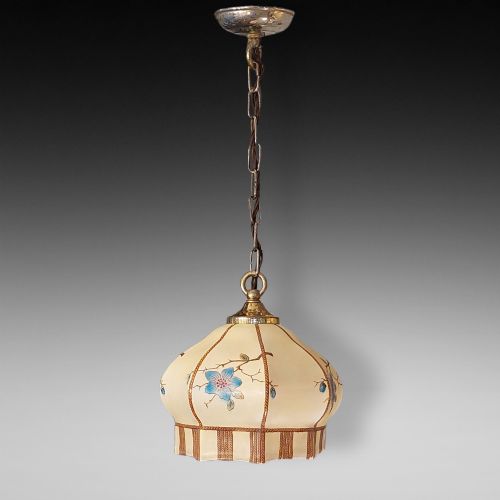
- A semi-translucent pale glass that diffuses light softly. It appears commonly in hanging oil lamp shades from the early twentieth century.
- Toleware
- Painted or enamelled sheet metal used for decorative components. It often incorporates floral motifs in French lighting.
Floral Shade Lamp: Frequently Asked Questions
How do I identify a Victorian oil lamp?
Victorian oil lamps are characterised by heavy brass standards, ceramic bodies, or glass fonts designed to burn paraffin or oil. They often feature characteristic burner mechanisms and substantial weighted bases.
Many incorporate cranberry, green, or hand-painted glass shades that sit atop the burner assembly. The proportion and weight of the metalwork usually point directly to nineteenth-century production standards.
What is cranberry glass?
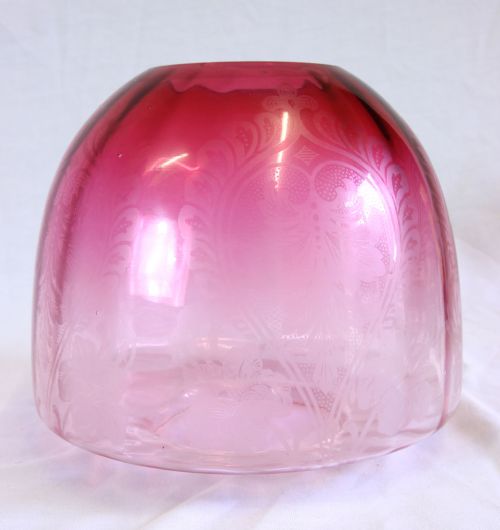
Cranberry glass is a distinctively tinted transparent glass achieved by introducing gold into the molten glass mixture. It gained immense popularity during the Victorian era for decorative table items and lighting.
In lamps, it appears both in smooth globe shades and moulded tulip designs. The depth of the pink-red colour varies depending on the gold concentration used by the glassmaker.
How should I clean a painted glass shade?
Cleaning painted glass requires gentle handling with lukewarm water and mild soap to protect hand-painted floral details. Harsh chemical cleaners and abrasive cloths must be avoided entirely.
Allow the shade to dry completely before re-attaching it to the lamp fitting. Regular dusting with a soft cloth prevents grime buildup on delicate surfaces.
Are these lamps converted for modern use?
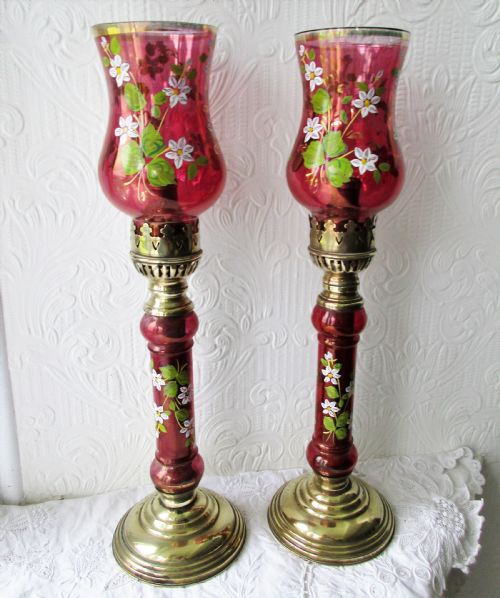
Many older oil lamps and candle-lamps have been adapted for electricity to suit contemporary living. This conversion typically involves running a cord through the central column while preserving the exterior appearance.
Original oil burners and fonts are often retained alongside modern wiring for safety and convenience. Such adaptations allow period glass and brass to function safely as standard table lamps.