





Floral Satsuma Porcelain
Floral satsuma porcelain brings intricate earthenware to your collection, offering finely painted botanical motifs enhanced with rich gilding.
Floral Satsuma Porcelain
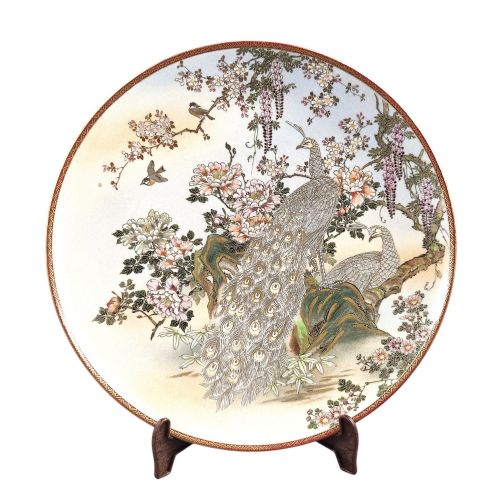
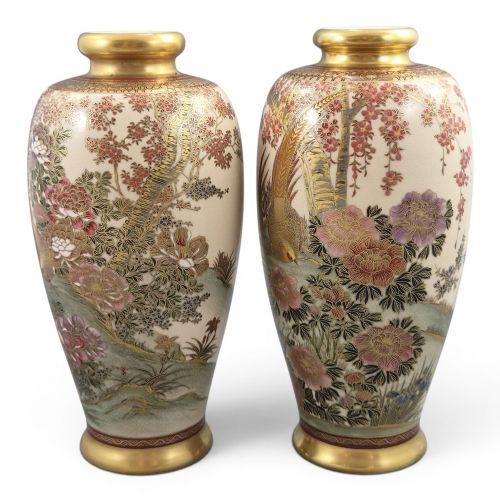
Floral satsuma porcelain encompasses earthenware pieces decorated with elaborate botanical motifs, often depicting flowers such as peonies, wisteria, and thousand flower designs. These items span periods including the 19th Century, Meiji Period, and Edwardian era, reflecting both traditional Japanese artistry and historical export production.
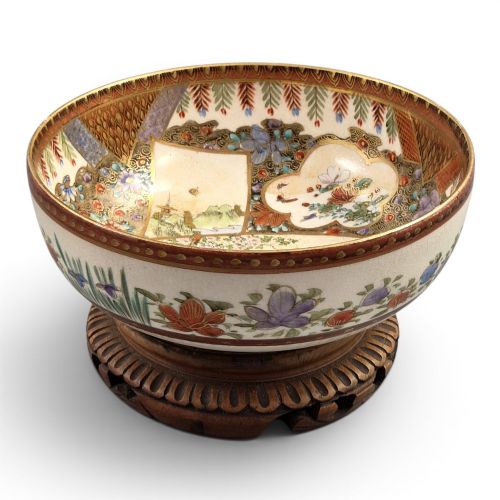
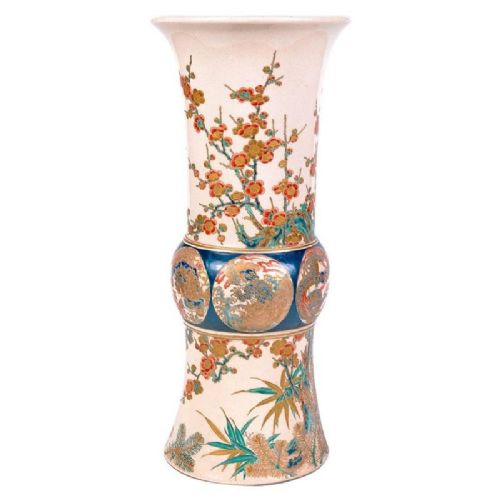
The objects available on this page most commonly include vases, decorative bowls, chargers, and bowls and saucers. Buyers will encounter both large statement pieces and intimate vessels, many featuring characteristic regional signatures or crests.
The aesthetic bridges the late 19th century and early 20th century, capturing the transition from the Meiji Period into the Edwardian era and Early Showa Period. Each form serves primarily as a decorative vessel, distinguished by dense enamelwork and gilt detailing.
Assessing quality and craftsmanship
The distinction between standard production and top tier examples lies in the precision of the enamelwork and the density of the botanical compositions. Finer pieces demonstrate exceptionally controlled brushwork and meticulous application of gold leaf.
Signatures from recognised makers and inclusion of the Shimazu crest elevate the standing of individual items. Superior craftsmanship is further evidenced by the crispness of raised moriage details and the balanced integration of complex geometric or floral panels.
Floral Satsuma Porcelain Retail Price Guide 2026
Typical asking prices for floral satsuma porcelain among the pieces listed under this phrase on Sellingantiques today, from the lower quarter to the upper quarter. They describe what is for sale here now, not the wider market.
Count the tiny petals on a thousand flowers bowl and discover an entire Victorian garden rendered in gold leaf.
Manpei·Kozan·Ryuzan·Nikko·Tagawa·Hododa·Kinkozan
The Floral Satsuma Porcelain Glossary
- Satsuma ware
- A type of Japanese earthenware traditionally featuring a crackle glaze and decorated with polychrome enamels and gold. It originated in Satsuma Province and later expanded to major production centres like Kyoto and Kobe.
- Moriage
- A decorative technique in Japanese ceramics where slip or enamel is applied in raised dots or lines to create a textured, three-dimensional effect. This method is frequently utilised on floral and avian motifs.
- Millefleur
- A decorative pattern densely packed with a multitude of small flowers, often translated as thousand flowers. In these ceramics, the entire surface is covered in minute, intricate floral blooms.
- Shimazu crest
- The heraldic mon or badge of the Shimazu clan, rulers of the Satsuma domain. Its presence on the base or body denotes a direct connection to the traditional patronage of the ware.
- Charger
- A large decorative plate intended for display rather than for serving food. These pieces provide a wide surface area suited for expansive pictorial scenes.
Floral Satsuma Porcelain: Frequently Asked Questions
Are satsuma pieces made of porcelain or earthenware?
Satsuma ware is fundamentally an earthenware body rather than true high-fired porcelain, typically finished with a fine, characteristic crackle glaze.
This absorbent clay base allowed artists to apply the detailed enamel and gilt decorations that define the style.
How do I identify the Meiji period pieces?
Meiji period items correspond to the late 19th and early 20th centuries, often featuring elaborate hand-painted natural motifs and distinct maker signatures.
Examining the bottom for workshop stamps or signatures can help narrow down the production era alongside stylistic indicators.
What is the Shimazu crest on these items?
The Shimazu crest is a traditional Japanese mon associated with the ruling family of the Satsuma domain.
Its appearance on bowls and vases signifies a connection to the heritage and provenance of authentic Satsuma production.
How should I display floral satsuma vessels?
These pieces function best as standalone decorative objects on stable surfaces away from direct, harsh sunlight.
Because they feature delicate enamel and gilt work, careful placement protects their raised surface details and gold leaf.