



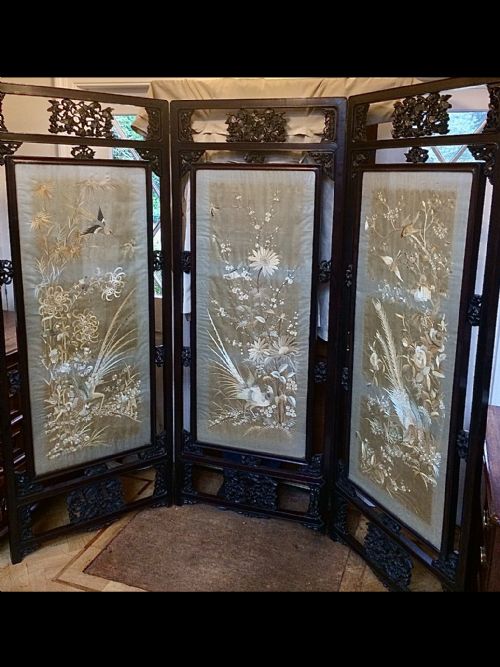

Floral Room Divider
These floral room divider pieces offer painted canvas, leather, and silk panels that partition interior spaces with botanical motifs.
Floral Room Divider
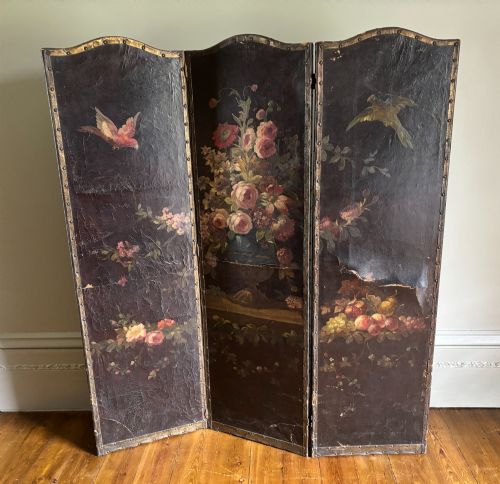
A floral room divider acts as a hinged partition that creates private zones or conceals sections of a room using painted folding panels. Most examples encountered here are multi-fold screens dating from the nineteenth century, featuring canvas or leather surfaces decorated with botanical motifs.
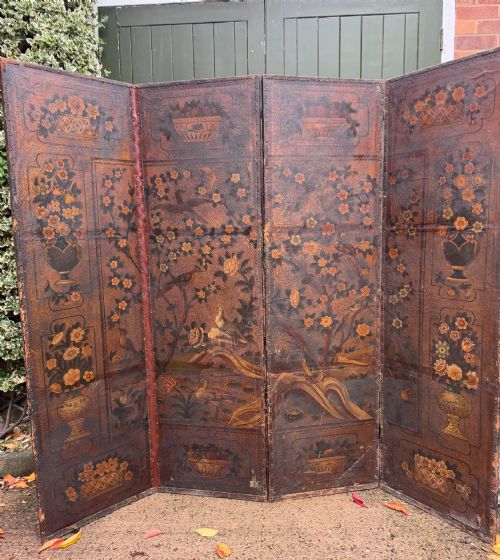
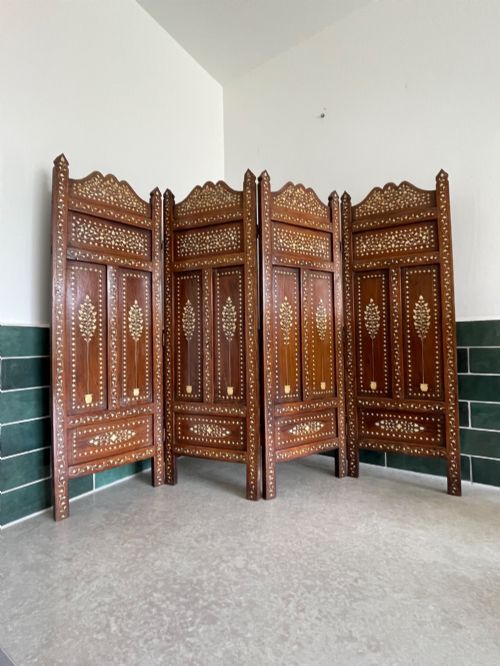
The forms span from grand four-fold canvas and leather screens down to smaller table screens and three-panel privacy barriers. Pieces arrive from various design traditions, including English country-house styles, French aesthetics, Chinese Qing Dynasty work, and Anglo-Indian production.
Makers utilised wood frameworks to support hinged panels of silk cotton, painted leather, or canvas. The nineteenth-century examples often employ polychrome decoration to render botanical scenes across multiple vertical folds.
Materials and construction methods
Makers built these screens using wooden internal frameworks covered in materials such as canvas, leather, metal, and silk cotton. The surfaces then received hand-painted oil or polychrome finishes depicting floral and botanical subjects.
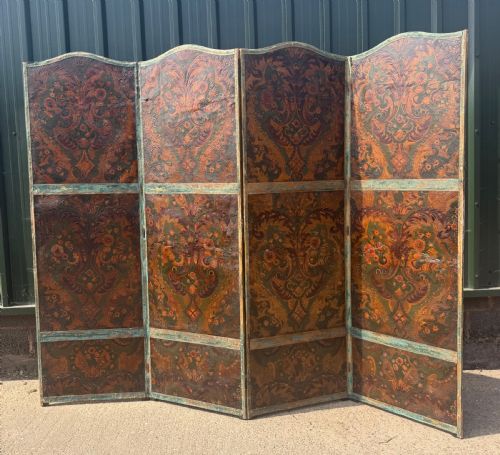
Hinges connected three or four folding panels together to allow flexible positioning within a room. Craftspeople decorated the leather and canvas panels either directly with hand-painting or through tooling techniques mimicking eighteenth-century Dutch leather.
Floral Room Divider Retail Price Guide 2026
Typical asking prices for floral room divider among the pieces listed under this phrase on Sellingantiques today, from the lower quarter to the upper quarter. They describe what is for sale here now, not the wider market.
Materials recorded on this page include silk cotton, oil paint, metal, and painted leather.
Assessing quality in folding screens
Quality rests upon the execution of the hand-painted botanical artwork and the durability of the underlying materials. Finer examples display meticulous brushwork on supple leather or taut canvas, while simpler items feature coarser painted decoration.
The integrity of the wooden frames and the smooth operation of the connecting hinges determine the physical stability of each multi-fold screen. Superior pieces maintain rich pigment retention across the panels without extensive flaking.
WILLIAM MORRIS
The Floral Room Divider Glossary
- Folding screen
- A movable partition composed of multiple panels joined by hinges. They adjust to block drafts or divide open spaces.
- Polychrome
- Decorated in a variety of colours. This technique appears frequently on nineteenth-century canvas and leather panels.
- Table screen
- A smaller decorative screen designed to sit on top of furniture rather than standing on the floor.
- Anglo-Indian
- Describing items made in India during the British period, often featuring intricate woodwork like the Hoshiarpur pieces.
Floral Room Divider: Frequently Asked Questions
How do I place a room divider?
Position the hinged panels at slight angles to ensure the screen stands securely on a flat floor surface.
Fold or unfold the sections to fit the specific width of the space you want to partition.
Were these screens used for privacy?
Victorian households utilised these panels to create secluded dressing areas or block draughts in large rooms.
They also served as photographic backdrops and decorative room partitions.
How do I clean painted leather?
Dust the surface gently with a dry, soft cloth to remove everyday particles without disturbing the paint.
Avoid using water or chemical cleaners that might damage the historical pigments on canvas or leather.
What periods do these screens date from?
The available selection primarily dates from the nineteenth century, including Victorian examples and pieces from the eighteen-eighties and nineties.
Some items extend into the early twentieth century around nineteen-thirty.