

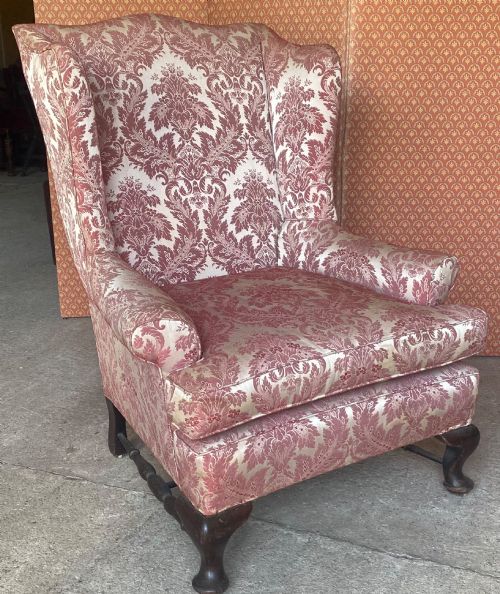
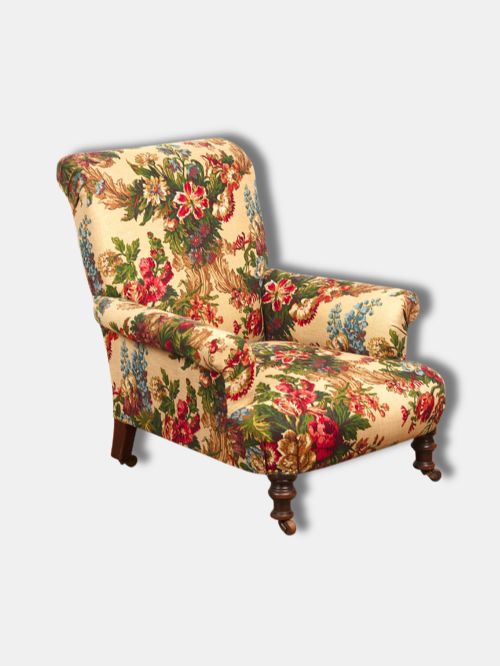
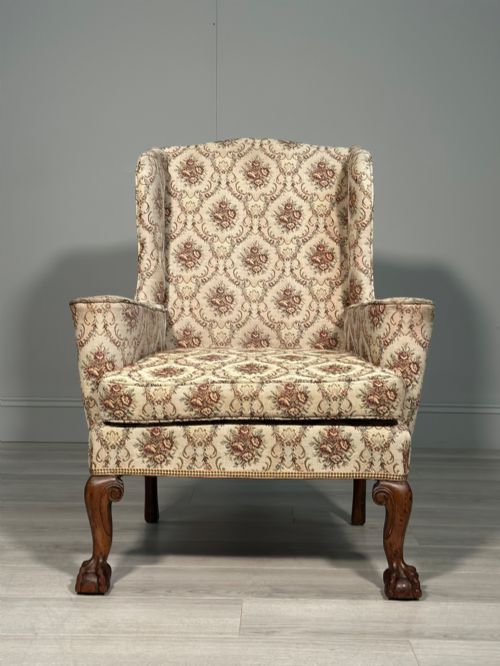
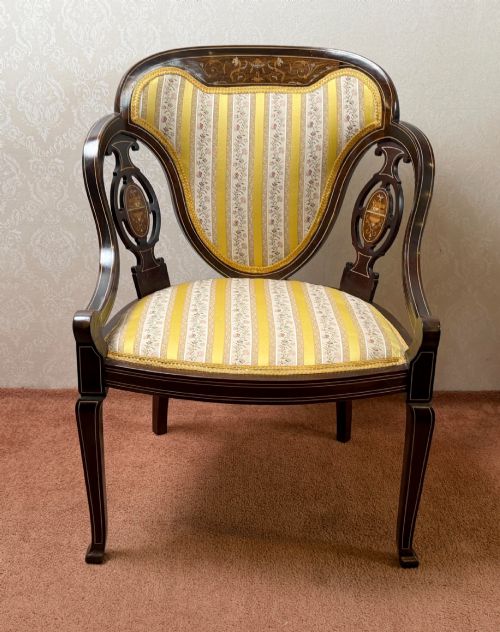
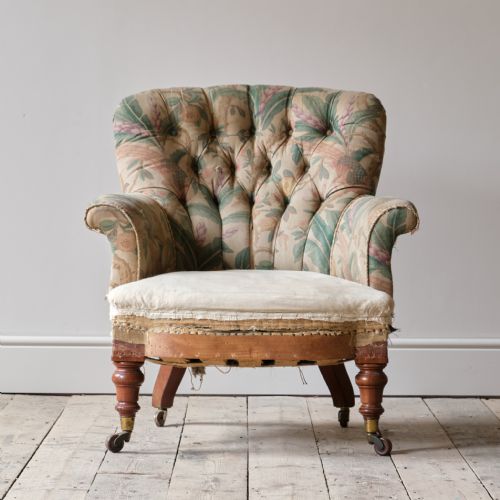
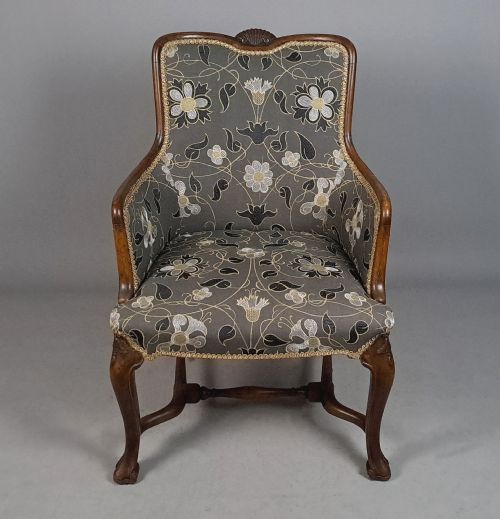
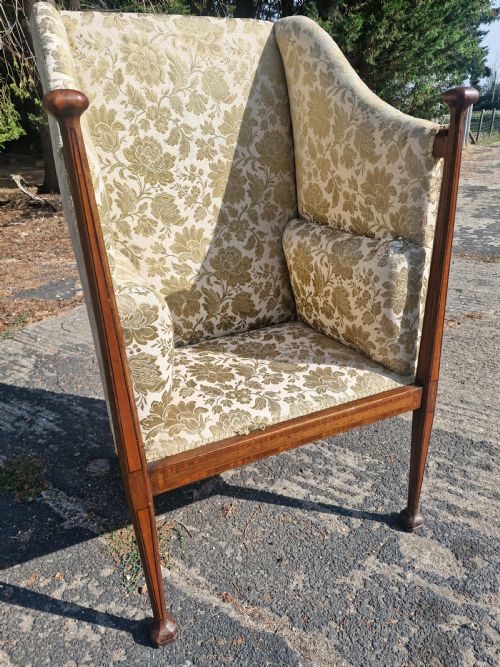

Floral Reading Chair
A floral reading chair provides a comfortable seat for long hours with a book, drawing on traditional wingback and country house forms.
Floral Reading Chair
A floral reading chair draws together deep-seated armchairs, wingbacks, and fireside seating designed for comfort. Buyers seek these pieces to anchor a traditional study or sitting room with substantial seating.
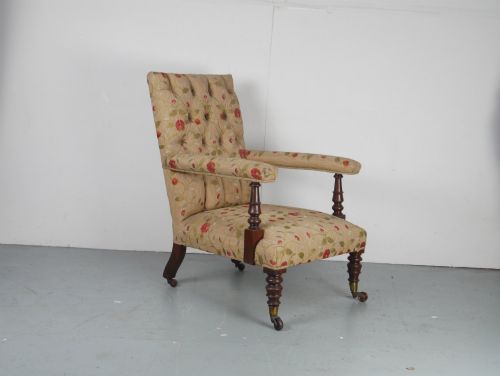
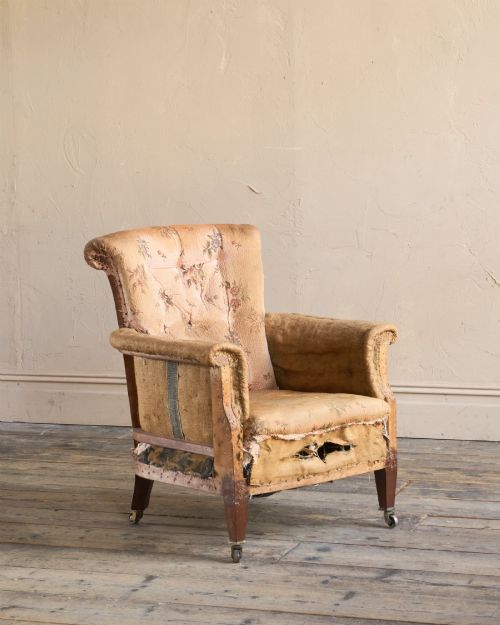
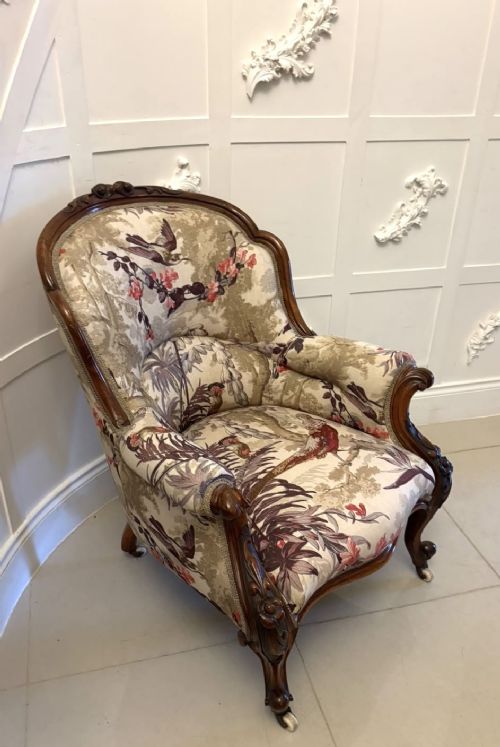
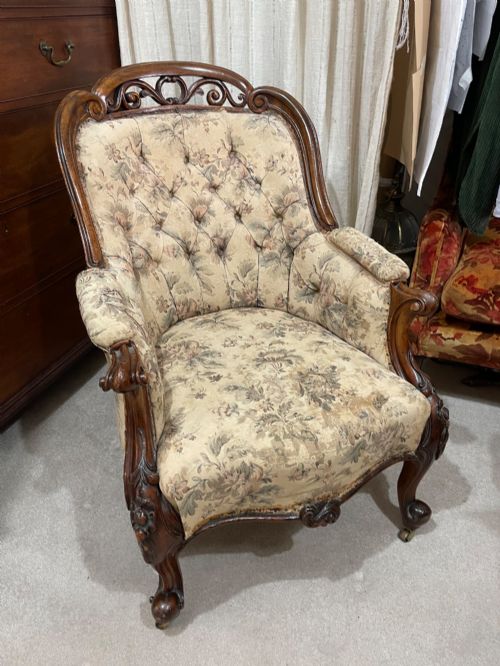
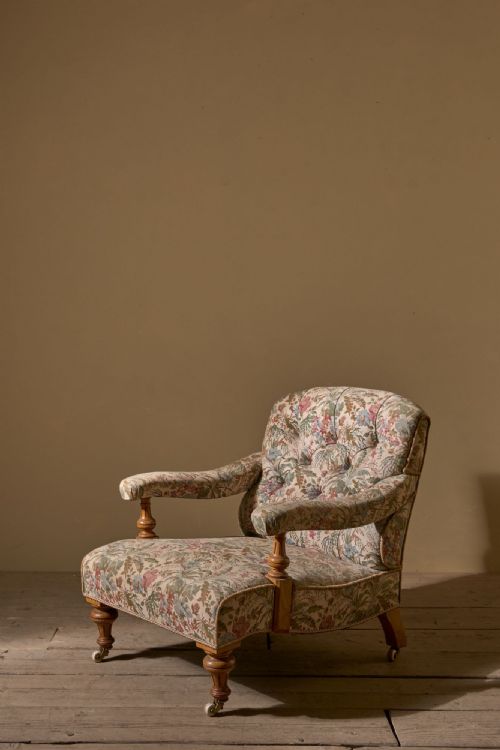
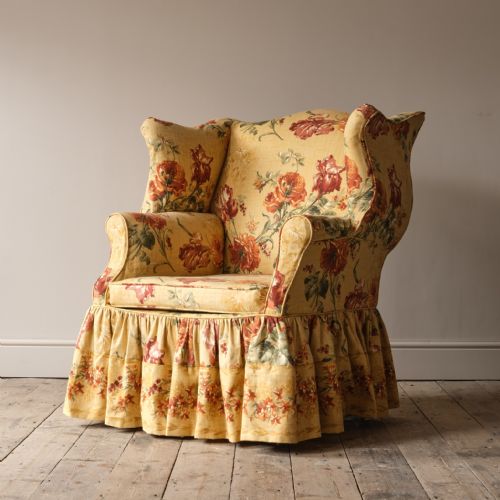
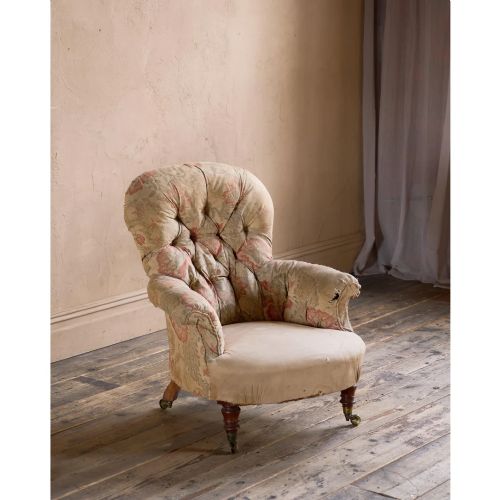
The pieces appearing on this page span the nineteenth century, the Edwardian period, and the nineteen-twenties. Common forms include barrel backs, spoon backs, and library chairs with upholstered frames.
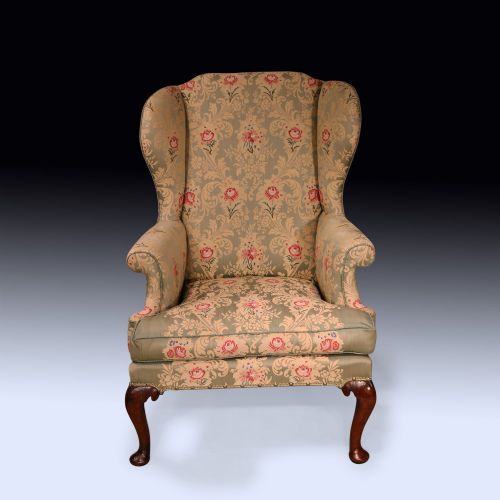
Makers and styles range from plain country house models to pieces influenced by Queen Anne, Chippendale, and Art Nouveau designs. Frames often stand on timber legs in mahogany, walnut, or oak.
How they were made
Makers constructed the structural frames of these armchairs using hardwoods such as mahogany, walnut, and oak, often shaping timber for legs and arm supports. Brass fittings and castors occasionally appear on the feet to aid movement.
Upholstery techniques involved dense stuffing, feather filling, and the application of fabric, tapestry, or ribbed textiles over sprung or webbed bases. Showwood frames expose polished timber around the edges of the upholstered shell.
Floral Reading Chair Retail Price Guide 2026
Typical asking prices for floral reading chair among the pieces listed under this phrase on Sellingantiques today, from the lower quarter to the upper quarter. They describe what is for sale here now, not the wider market.
Some nineteenth-century chairs arrived with feather filling so plump they practically swallowed the reader whole.
What varies in quality
The substance of the internal frame and the integrity of the joinery set the foundation for durability. Solid mahogany or walnut framing provides greater permanence than lighter timbers.
The execution of the upholstery, from feather filling to fabric selection, determines the comfort and finish of the seat. Hand-carving on showwood elements also distinguishes standard production from finer workshop output.
George Jack For Morris & Co·Holland & Sons·Howard and Sons·Thomas Chippendale
The Floral Reading Chair Glossary
- Wingback
- An armchair with high sides attached to the arms to shield the sitter from draughts. This form dates back to the seventeenth century and remains popular for fireside seating.
- Bergere
- An enclosed armchair with rattan or upholstered sides and a padded seat. The style originates from France and appears in nineteenth-century mahogany frames.
- Spoon back
- An armchair featuring an oval upholstered backrest shaped like the bowl of a spoon. This design gained favour during the Victorian era for parlor seating.
- Showwood
- Timber framing left visible around the upholstered portions of an armchair. This treatment highlights the polished grain of walnut or mahogany.
Floral Reading Chair: Frequently Asked Questions
What is a floral reading chair?
A floral reading chair is a comfortable armchair upholstered in patterned fabric designed for relaxing with books. These pieces include wingbacks, barrel backs, and library chairs.
Buyers select them for studies, libraries, and sitting rooms where traditional seating adds character and comfort.
How do I identify the period?
Identifying the period involves looking at timber types, leg shapes, and upholstery styles. Pieces from the nineteenth century often feature mahogany or walnut frames with hand-carved details.
Edwardian and later examples show lighter construction or specific revival styles like Queen Anne and Chippendale.
Where were they used?
These armchairs served in country houses, libraries, and parlours as primary seats for reading and fireside relaxation. Large wingbacks kept draughts away from the sitter.
Open armchairs and library chairs were placed near desks or reading tables for daily use.
How do I care for the upholstery?
Caring for upholstered armchairs involves regular gentle vacuuming to remove dust from fabric and crevices. Keeping the chair away from direct sunlight prevents the textile colours from fading.
Treating exposed timber frames with appropriate furniture wax maintains the finish of mahogany, walnut, or oak.