


Floral Porcelain Trio
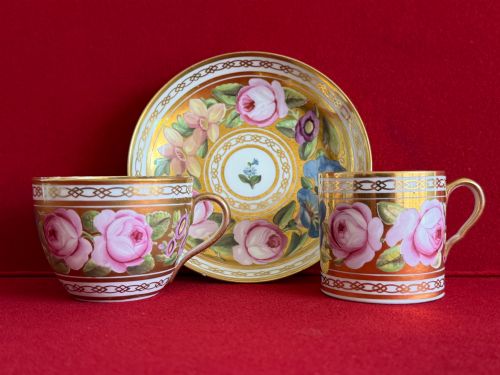
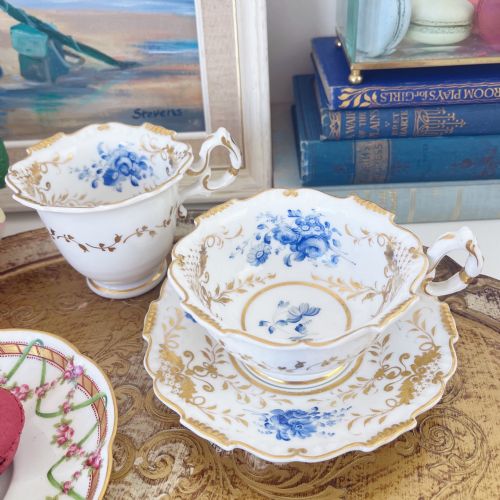
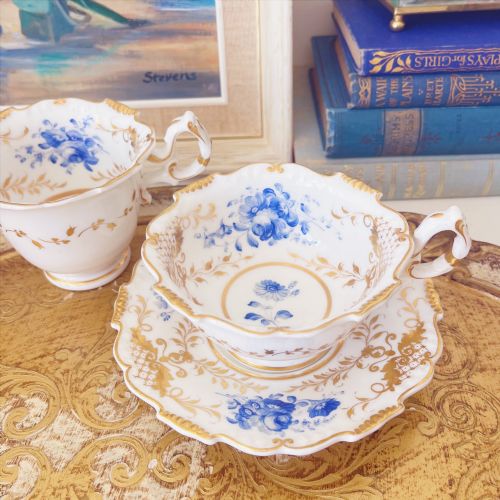
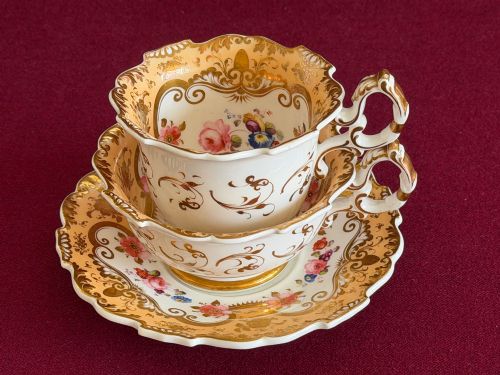
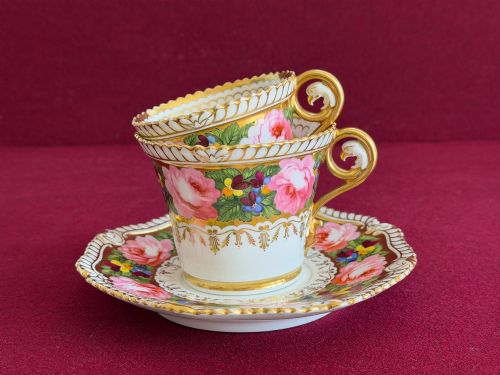
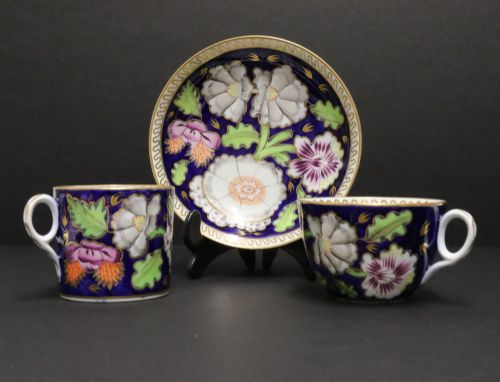
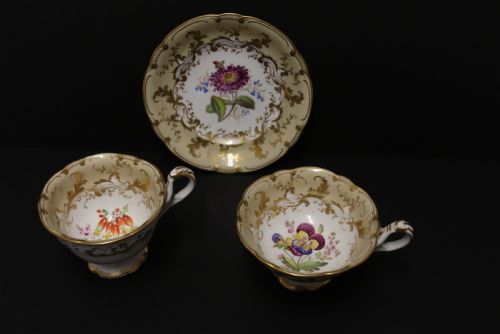
A floral porcelain trio brings together matching tea-drinking vessels hand-painted with botanical motifs for a complete tabletop set.
Floral Porcelain Trio
A floral porcelain trio comprises a matched set of three pieces, usually a teacup, coffee cup, and saucer, created for the tea table. When you search for a floral porcelain trio, you encounter English cabinet pieces and tea sets dating from the eighteenth century through to the early twentieth century.
The selections span distinct periods including Georgian, Regency, nineteenth century, and late Victorian eras. Makers construct these sets using bone china and porcelain, finished with hand-painted enamel glazes and gold leaf gilding.
Most examples take the form of teacups and saucers or tea and coffee cup trios. Styles range from Regency and Georgian designs to Japanese Imari interpretations.
How they were made
Potters shaped these vessels using porcelain or bone china before applying intricate hand-painted enamel designs. Artisans frequently enhanced the surfaces with gold leaf, gilt, and gold gilding to highlight the floral motifs.
Production methods involved firing the ceramic body and subsequently fixing the enamel glaze and metallic details in a kiln. Individual workshops such as H & R Daniel, Chamberlain Worcester, and Newhall employed distinct porcelain bodies and pattern numbers.
Listings feature porcelain and bone china pieces spanning the 18th century, Regency period, and 19th century.
What varies in quality
The refinement of the porcelain body and the precision of the hand-painted enamel work define the grade of each piece. Finer examples display meticulous brushwork in the floral details and expertly applied gold leaf gilding rather than mass-produced transfer prints.
The integrity of the form, whether a Shrewsbury shape or a cabinet trio, distinguishes standard production from superior output. Well-preserved gilding and crisp enamel glaze without excessive wear indicate higher artistic execution.
H & R Daniel Shrewsbury·Chamberlain Worcester·Newhall·Minton·Wileman Foley Shelley
The Floral Porcelain Trio Glossary
- Trio
- A set of three related ceramic pieces designed for tea or coffee service, typically consisting of a teacup, coffee cup, and saucer.
- Porcelain
- A ceramic material made by heating raw materials, generally including kaolin, in a kiln to a high temperature. It provides a dense, white, and translucent body suitable for fine decoration.
- Bone china
- A type of porcelain composed of bone ash, feldspathic material, and kaolin. It offers high strength and chip resistance while maintaining a delicate appearance.
- Enamel glaze
- A glossy, coloured vitreous composition fused to the surface of the porcelain through firing. It provides the vibrant background for hand-painted floral decoration.
- Gilt
- A thin layer of gold applied to the surface of the porcelain for ornamentation. It accentuates rims, handles, and floral borders.
Floral Porcelain Trio: Frequently Asked Questions
What pieces make up a trio?
A trio consists of three matched items intended for hot beverages, specifically a teacup, a coffee cup, and a saucer.
This configuration allowed drinkers in the eighteenth and nineteenth centuries to enjoy different beverages from coordinating vessels at the same table.
How do I date a porcelain set?
Dating relies on identifying maker marks, pattern numbers, stylistic periods, and the composition of the porcelain body.
Porcelain from the Regency and Georgian eras often exhibits specific potting techniques and hand-painted motifs characteristic of active years for factories like Worcester and Newhall.
Were these sets used daily?
Many early trios served as functional tableware for affluent households during tea and coffee services.
Cabinet trios and finely gilded examples were also displayed on shelves or kept in glazed cupboards to showcase the owner's taste.
What is a Shrewsbury shape?
The Shrewsbury shape refers to a specific moulded ceramic contour utilised by the H & R Daniel factory during the Regency period.
It provides distinct handle designs and cup profiles that distinguish these pieces from standard tea wares of the era.